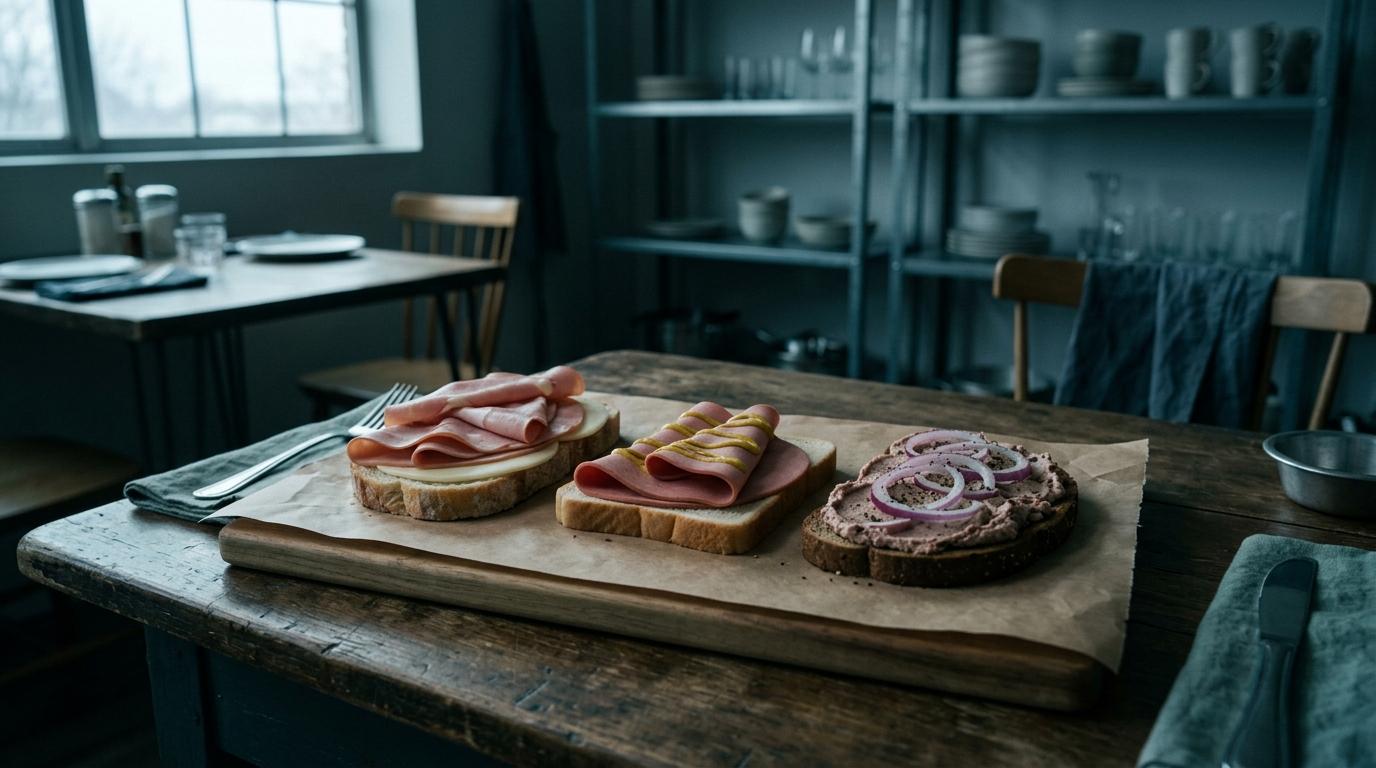
Mortadella is an Italian cured sausage made from finely ground pork studded with fat cubes and pistachios, while bologna is an Americanized version with a smoother, blended texture and milder flavor, and liverwurst is a spreadable German sausage made primarily from pork liver. All three look similar at the deli counter, but they taste completely different - and knowing the distinction helps you build a far better sandwich.
If you've ever stood at a deli counter and pointed at a log of something pink without quite knowing what you were getting, this guide is for you. These three cold cuts each have their own history, flavor profile, texture, and ideal pairings. Let's break them all down.
Mortadella: The Original Italian Classic
Mortadella originates from Bologna, Italy - yes, the same city that gave bologna its name - and it has been produced there since at least the 15th century. True Mortadella di Bologna holds a Protected Geographical Indication (PGI) status in the European Union, meaning authentic versions must be made in specific Italian regions.
What makes mortadella distinctive:
- Texture: Smooth but slightly dense, with visible cubes of white pork fat (lardelli) and often whole pistachios or peppercorns
- Flavor: Rich, savory, faintly sweet, and delicately spiced with coriander, myrtle berries, and black pepper
- Fat content: Higher than bologna, which contributes to its silky mouthfeel
- Serving temperature: Best served at room temperature or very slightly warmed, sliced thin
Mortadella is having a serious moment in Philadelphia delis and sandwich shops right now. Sliced thin and layered on a crusty roll with provolone and hot peppers, it's one of the best sandwiches you can build. The best cheese for a mortadella sandwich is sharp provolone or aged pecorino - both cut through the richness without overpowering the sausage's delicate spice.
Bologna: America's Take on an Italian Original
American bologna (often spelled "baloney" in casual usage) is what happened when Italian immigrants brought mortadella-making techniques to the United States and adapted the product for mass production. The result is something considerably different from its ancestor.
Key characteristics of American bologna:
- Texture: Very smooth and uniform - no fat cubes, no nuts, no visible inclusions
- Flavor: Mild, slightly salty, and somewhat smoky depending on the brand
- Ingredients: Typically a blend of pork, beef, and chicken, with seasonings like garlic, coriander, and paprika
- Sodium: Traditional bologna tends to be high in sodium - a 2-ounce serving often contains 500–600mg
If you're watching your sodium intake, this is one of the first deli meats to reconsider. Many Philadelphia deli catering services now stock low sodium deli meat options, including reduced-sodium bologna and turkey-based alternatives that clock in under 300mg per serving. When you're ordering breakfast catering or lunch spreads for a large office group, low-sodium options aren't just a health consideration - they're increasingly what employees actually request.
Liverwurst: The Spreadable Underdog
Liverwurst (also called Leberwurst in German) is a spreadable sausage made from pork liver blended with pork fat, onions, and spices like marjoram, thyme, and allspice. It's a staple of German and Eastern European deli traditions and has a devoted following - though its name alone is enough to make some people walk past it entirely.
Here's what you need to know about liverwurst:
- Texture: Soft and spreadable, similar to pâté
- Flavor: Earthy, rich, and distinctly savory with a noticeable liver note - bold, not subtle
- Nutrition: High in iron, Vitamin A, and B12, making it one of the more nutrient-dense deli options
- Best served: Spread on rye or pumpernickel with mustard, sliced red onion, and cornichons
Liverwurst is not a beginner's deli meat. But for anyone who grew up eating it, there's nothing quite like it. The best cheese pairing for liverwurst is a sharp aged cheddar or Gruyère - the nutty, firm character of both cheeses complements the liver's earthiness without getting lost.
Side-by-Side Comparison: Mortadella vs. Bologna vs. Liverwurst
Feature Mortadella Bologna Liverwurst Origin Bologna, Italy United States (Italian-inspired) Germany / Eastern Europe Primary Ingredient Finely ground pork Blended pork, beef, chicken Pork liver + pork fat Texture Smooth with visible fat/nuts Very smooth, uniform Soft and spreadable Flavor Profile Rich, lightly spiced, savory-sweet Mild, slightly smoky Bold, earthy, liver-forward Sodium (per 2 oz) ~400–500mg ~500–620mg ~350–450mg Best Cheese Pairing Sharp provolone, aged pecorino American, mild cheddar Aged cheddar, Gruyère Best Bread Crusty Italian roll Soft white, potato roll Rye, pumpernickelA Quick Note on Prosciutto vs. Serrano
While we're talking deli meat types, this comparison comes up constantly at the counter. Prosciutto is an Italian dry-cured ham, aged anywhere from 12 to 36 months, with a buttery texture and a delicate, slightly sweet flavor. Serrano ham is the Spanish equivalent - cured for a similar length of time but with a drier, firmer texture and a more intense, nutty flavor. Both are served sliced paper-thin.
The practical difference: prosciutto melts on the palate and pairs beautifully with fresh mozzarella and melon. Serrano stands up better to bold flavors - manchego cheese, marinated olives, and crusty bread. For deli catering services in Philadelphia, both show up on charcuterie boards, but prosciutto is by far the more requested of the two for corporate catering spreads.
What This Means for Your Next Catered Lunch
When Philadelphia catering companies build out deli spreads for business lunches, the best ones don't just throw a few logs of mystery meat on a tray. They think about balance: something rich (mortadella), something accessible (turkey or mild bologna), something for the adventurous guest (liverwurst on the side with rye), and something elevated (prosciutto or serrano on the charcuterie board).
For businesses ordering catering for businesses in Center City Philadelphia, these details matter. A well-curated deli spread signals that whoever ordered the food actually knows food. And when you're ordering breakfast catering or a working lunch for 20 to 200 people, the difference between a forgettable tray and a genuinely memorable spread often comes down to exactly this kind of knowledge.
If you're working with a cafe catering Philly provider or a full-service deli catering operation, ask specifically about these options by name. A team that can talk confidently about the difference between mortadella and bologna - and stock both - is a team that takes what they do seriously.
Deli Meat Types FAQ
What is mortadella, and is it the same thing as bologna?
Mortadella is an Italian PGI-protected cured sausage from Bologna, Italy, made from finely ground pork with visible cubes of fat and often pistachios. American bologna is an Americanized spin-off with a smoother, more uniform texture and a milder flavor. They share an ancestor but taste and feel distinctly different - mortadella is richer, more complex, and considerably more interesting.
What is the best cheese for a deli meat sandwich?
It depends on the meat. Sharp provolone or aged pecorino pairs best with mortadella. Mild American or cheddar works with bologna. Aged cheddar or Gruyère complements liverwurst. For prosciutto, fresh mozzarella or burrata is the classic Italian pairing. For serrano ham, manchego is the definitive Spanish match.
What low sodium deli meat options are available?
Turkey breast is typically the lowest-sodium option at the deli counter, with many reduced-sodium versions coming in under 270mg per 2-ounce serving. Roast beef and chicken breast are also generally lower in sodium than bologna or salami. When ordering catering for large groups, specifically request low-sodium selections - most quality Philadelphia deli catering services carry them as standard options.
What's the difference between prosciutto and serrano ham?
Prosciutto is Italian dry-cured ham with a buttery, delicate flavor and silky texture. Serrano is Spanish dry-cured ham with a drier, firmer texture and a more pronounced, nutty intensity. Both are sliced paper-thin and eaten uncooked. Prosciutto pairs best with mild, fresh flavors; serrano holds up to bolder accompaniments like manchego and olives.
How do Philadelphia catering companies typically handle charcuterie and deli meat selections for business events?
Quality philly catering businesses build deli and charcuterie spreads with a range of flavor profiles - mild, rich, bold, and elevated - to accommodate a diverse group. For corporate catering in Center City Philadelphia, a well-built spread typically includes 3 to 5 deli meat types, 2 to 3 cheese options, and accompaniments like mustards, pickles, and sliced bread. The best providers will work with you on dietary needs, sodium preferences, and portion sizing based on headcount.