The best breakfast catering for a Philadelphia morning meeting is a hot-and-cold spread ordered 5–7 days ahead, sized at roughly 1.25 items per person, and delivered 20–30 minutes before your start time. Budget about $12–$22 per person for a continental setup and $18–$32 for a hot breakfast, depending on the caterer and add-ons.
That's the short version. Below is how to turn it into an actual order: what to pick for each type of event, how to count heads, and how to avoid the Center City traffic and loading dock problems that wreck an otherwise good breakfast.
Match the Menu to the Meeting Type
A 7:30 a.m. client pitch and an all-day seminar need different food. Here's how the common formats compare:
| Event type | Best breakfast style | Typical per-person range | Key consideration |
|---|---|---|---|
| Client meeting (6–12 people) | Premium continental with bagels, pastries, fruit, yogurt parfaits | $14–$24 | Low-mess food people can eat while talking |
| Conference or seminar (40+) | Continental plus one hot item, coffee station | $15–$26 | Fast self-service so registration lines don't stall |
| Team all-hands (15–40) | Hot breakfast buffet or sandwich platters | $18–$32 | Fills people up before a long session |
| Private early event (workshop, retreat, donor breakfast) | Plated or full-service buffet | $25–$45 | Presentation and staffing matter more |
Prices vary by caterer and menu, so treat these as planning ranges and get a written quote.
Continental vs. Hot Breakfast: Which One to Choose
A continental breakfast is cold and room-temperature food: bagels with cream cheese, muffins, croissants, sliced fruit, yogurt, granola, juice, and coffee. It is cheaper, sets up in minutes, and holds well if the meeting starts late.
A hot breakfast adds items like scrambled eggs, breakfast sandwiches, roasted potatoes, bacon, or sausage. It feels more substantial, but it needs chafing dishes and fuel, and hot eggs lose quality after about 60–90 minutes.
Here is the practical rule: choose continental for meetings under two hours or when people are arriving in a staggered way. Choose hot when the meeting runs past 10 a.m. or when attendees skipped breakfast to get there. A hybrid works well for most corporate events: a continental base plus one hot item, such as breakfast sandwiches wrapped individually in foil. They stay warm for about 45 minutes in an insulated box and require no serving utensils.
How Much Food to Order
Underordering is the most common mistake. Use these numbers:
- Continental: 1.5 pieces of bakery or bagel per person if it's the only food, 1 piece if there are also hot items.
- Hot breakfast: one sandwich or one serving of eggs per person, plus 1 side per person.
- Fruit: about 4–5 oz per person.
- Coffee: 1 cup per person at morning meetings, but 1.5 cups for early starts before 8 a.m. A standard 96 oz box serves about 10 cups.
- Juice and water: 1 beverage per person, split between the two.
For headcount, order for 90–95% of confirmed RSVPs for internal meetings, since a few people always skip. For client-facing or paid events, order for 100% plus 5%. Running short in front of a client is worse than having leftover bagels.
Timing and Delivery in Center City
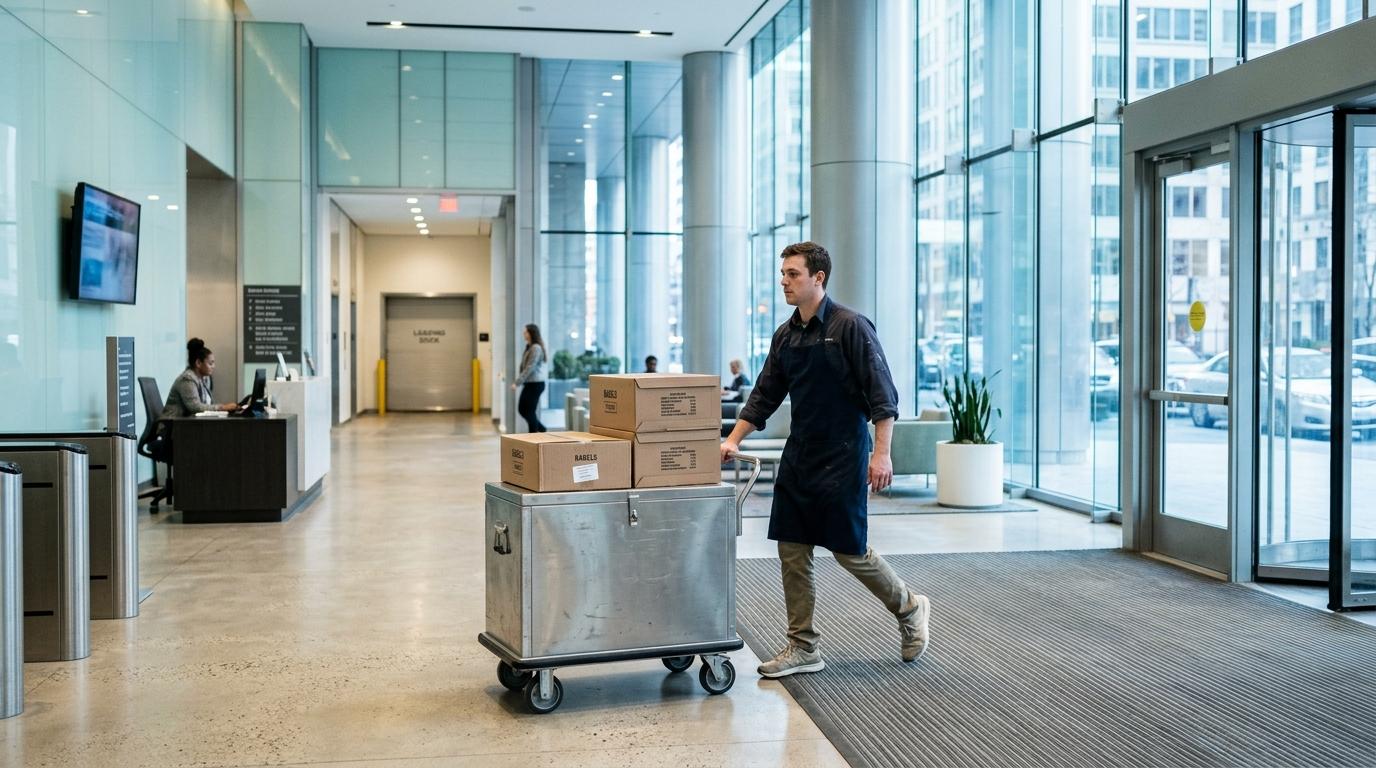
Delivery logistics deserve as much attention as the menu. Center City has loading restrictions, building security desks, and morning rush traffic on Market Street, JFK Boulevard, and Broad Street.
- Book delivery 20–30 minutes before the start time. That's enough to set up without the food sitting out too long.
- Send the building's loading dock and security rules to your caterer. Many office towers require a certificate of insurance or a visitor pass for outside vendors.
- Name an on-site contact with a cell number. Drivers lose 10–15 minutes at lobby desks when no one is expected.
- Specify the exact floor and room. Don't just give the street address.
- Ask about the lead time for cancellations or changes. Most caterers lock the final count 48–72 hours out.
For events before 7 a.m., confirm the caterer's earliest delivery window. Not every kitchen runs that early, and those that do sometimes charge an early-delivery fee.
Dietary Needs You Should Plan For
Plan on at least 10–15% of a group needing something other than the standard menu. Collect restrictions on the RSVP form, not at the door. Cover these categories at minimum:
- Vegetarian: egg-and-cheese sandwiches, yogurt parfaits, fruit, and bagels with spreads.
- Vegan: fruit, oatmeal, dairy-free spreads, and dairy-free milk for coffee.
- Gluten-free: request individually labeled items. A separate package prevents cross-contact, which matters for guests with celiac disease.
- Halal and kosher: these need to be certified, so confirm with the caterer well before ordering. Don't assume a pork-free menu qualifies.
- Nut allergies: ask the caterer to label every item and separate nut-containing pastries.
Ask for labeled cards at the buffet. They cut down on the "what's in this?" questions that slow a line.
Make the Setup Work for the Room
Place food away from the presentation area so people don't crowd the door or block the screen. For groups over 30, set up two serving lines or put coffee on a separate table. Coffee is where bottlenecks form.
Decide on serviceware. Disposable compostable plates are the usual choice for office meetings. For client meetings or executive breakfasts, ask for real plates or premium disposables. Request napkins, utensils, stirrers, and a trash bag, since not all quotes include them.
Include a drop-off versus full-service decision. Drop-off means the caterer delivers and sets up, and you handle the rest. Full-service adds a server who refills, clears, and breaks down. For fewer than 25 people, drop-off is almost always enough. For 50+ guests, or any event with VIPs, staffing is worth the cost, usually $25–$40 per staff hour.
Questions to Ask Before You Book
- What is your minimum order, and what's the lead time?
- Are delivery, setup, and serviceware included in the quote?
- How do you label allergens?
- What happens if the guest count changes the day before?
- Do you have experience delivering to my building?
Local Philadelphia business catering teams that deliver to Center City offices regularly will know the answers to most of these without checking.
Breakfast Catering FAQ for Philadelphia Meetings
How far in advance should I order breakfast catering in Philadelphia?
Order 5–7 days ahead for groups under 50 and 2 weeks ahead for groups over 50 or for busy seasons such as September and December. Many caterers accept orders with 48 hours' notice, but selection narrows.
How much does corporate breakfast catering cost per person?
Continental breakfast typically runs $12–$22 per person. Hot breakfast buffets run $18–$32. Plated or full-service events start around $25 and can reach $45 or more.
What is the difference between continental and full breakfast catering?
Continental breakfast is cold and room-temperature food such as bagels, pastries, fruit, and yogurt. A full breakfast adds hot items like eggs, potatoes, and meats, and requires heating equipment.
How much coffee do I need for a morning meeting?
Plan on 1 cup per person for a standard morning and 1.5 cups for early-morning starts. A 96 oz coffee box serves roughly 10 cups, so 30 people need about 3–4 boxes.
When should breakfast arrive for an 8:00 a.m. meeting?
Schedule delivery for 7:30–7:40 a.m. That leaves time for building security and setup, and food is ready as the first guests arrive.