
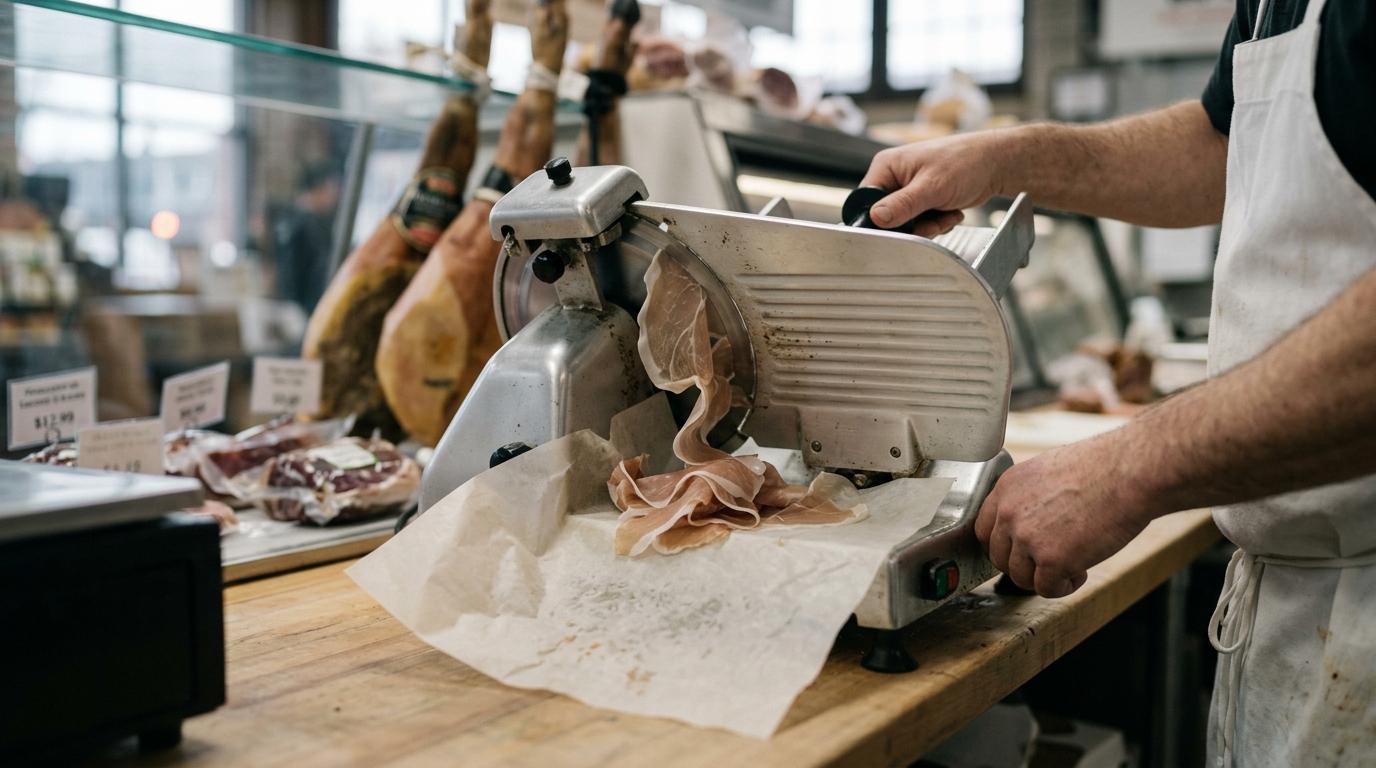
Prosciutto vs. Serrano vs. Jamón Ibérico: A Plain-English Guide to Cured Ham
Prosciutto, Serrano, and Jamón Ibérico are all dry-cured hams, but they differ in breed, diet, cure time, fat marbling, and flavor intensity - and those differences directly affect which one belongs on your sandwich, charcuterie board, or catering spread. Here's exactly what sets them apart.
If you've ever stood at a deli counter in Philadelphia and felt slightly overwhelmed by the cured meat options, you're not alone. The labels sound fancy, the price points vary wildly, and nobody wants to guess wrong when they're ordering breakfast catering for the whole office. This guide breaks it all down in plain English - no culinary degree required.
The Big Three: What They Actually Are
Prosciutto (Italy)
Prosciutto is Italy's most famous cured ham. The name simply means "ham" in Italian, but when Americans say prosciutto, they almost always mean Prosciutto di Parma or Prosciutto di San Daniele- both protected by DOP (Denominazione di Origine Protetta) status. Made from the hind leg of a pig, it's salt-cured, air-dried, and aged anywhere from 12 to 36 months. The result is a thin, silky slice with a mild, buttery sweetness and delicate salt. Fat content is moderate, and the fat itself practically melts on your tongue.
Serrano Ham (Spain)
Jamón Serrano is Spain's everyday cured ham - "serrano" means "from the mountains," referencing the cool, dry air where it traditionally cured. It's made from white-breed pigs, salt-cured, and aged between 9 and 24 months. The flavor is firmer, drier, and saltier than prosciutto, with a more pronounced savory bite. Serrano is typically less expensive than its Italian counterpart and holds up well in sandwiches and cooked dishes alike.
Jamón Ibérico (Spain)
Jamón Ibérico is in a league of its own. It comes from the Ibérico pig, a heritage breed native to the Iberian Peninsula with a unique ability to store fat within its muscle fibers - creating extraordinary marbling. The top tier, Jamón Ibérico de Bellota, comes from free-range pigs that roam oak forests and feed almost exclusively on acorns (bellotas) during the final months before slaughter. Cure times run from 24 to 48 months. The flavor is nutty, complex, and deeply rich. It's the wagyu beef of the cured ham world.
Side-by-Side Comparison: Prosciutto vs. Serrano vs. Jamón Ibérico
Feature Prosciutto di Parma Jamón Serrano Jamón Ibérico de Bellota Country of Origin Italy Spain Spain Pig Breed White breed (Landrace, Duroc cross) White breed Ibérico (black-hoofed heritage breed) Pig Diet Grain and whey Grain Acorns + pasture (bellota grade) Cure Time 12–36 months 9–24 months 24–48 months Flavor Profile Mild, buttery, lightly sweet Firm, salty, savory Nutty, complex, deeply rich Fat Marbling Moderate Low Exceptional (intramuscular) Sodium Level Moderate Higher Moderate-low for a cured meat Best Use Boards, wrapped melon, light sandwiches Sandwiches, cooked dishes, tapas Solo tasting, premium boards Relative Price Moderate–High Low–Moderate Premium (highest)What About Sodium? A Note on Low-Sodium Deli Meat Options
All three of these hams are salt-cured, so none qualify as truly low-sodium deli meat. That said, Jamón Ibérico de Bellota often has a more balanced salt level relative to its depth of flavor, because the fat and complexity carry the taste without leaning hard on salt. Prosciutto di Parma sits in the middle. Serrano tends to run saltiest of the three.
If you or a guest is watching sodium intake, ask your deli counter for sliced turkey breast, low-sodium roast beef, or fresh-roasted chicken - these are consistently lower in sodium than any traditional cured meat. A good Philadelphia catering company can build a spread that accommodates different dietary needs without sacrificing variety.
What Is Mortadella, and Where Does It Fit?
While we're demystifying the deli case: mortadella is not a cured ham - it's a cooked, emulsified sausage from Bologna, Italy (yes, that's where "bologna" comes from). It's made from finely ground pork, studded with cubed pork fat and sometimes pistachios, and gently steamed in large casing. The texture is smooth and creamy, the flavor is mild and subtly spiced with myrtle berries, black pepper, and nutmeg. Mortadella is having a genuine moment on sandwich menus across Philadelphia right now, and for good reason - it pairs beautifully with sharp provolone and a smear of mustard.
The Best Cheese Pairings for Each Ham
Choosing the best cheese for sandwiches and boards depends on matching flavor intensity. Here's a reliable pairing guide:
- Prosciutto di Parma → Fresh burrata, young mozzarella, mild Fontina, or a young Pecorino. The goal is to let the ham's delicacy shine - avoid anything too sharp or pungent.
- Jamón Serrano → Manchego (a classic Spanish pairing), aged Gouda, or sharp provolone. Serrano's assertive salt stands up to bolder cheese flavors.
- Jamón Ibérico de Bellota → Serve it alone or with the most minimal accompaniment: a small wedge of aged Manchego or Idiazábal. Over-pairing masks the nuance you're paying for.
- Mortadella → Sharp provolone, Taleggio, or aged Asiago. Mortadella's creaminess loves contrast from a firm, assertive cheese.
Which One Should You Order for Business Catering?
For catering for businesses in Center City Philadelphia, the answer depends on your audience and your budget:
- Prosciutto is the crowd-pleaser. Nearly everyone knows it, most people love it, and it photographs beautifully on a board. It's the safe, impressive choice for executive meetings and client lunches.
- Serrano is the value play. It delivers genuine quality and a distinct flavor at a lower price point - smart for larger groups where volume matters.
- Jamón Ibérico makes a statement. If you're hosting a VIP event or a tasting experience, including a portion of Ibérico signals that you didn't cut corners. Even a small amount goes a long way.
For breakfast catering in Philadelphia or morning meetings, prosciutto pairs especially well with egg dishes, fresh fruit, and mild cheeses. It's light enough not to overwhelm early-morning palates, and it elevates any spread from basic to memorable.
How to Store Sliced Cured Ham
Once sliced, all three hams should be wrapped tightly in parchment or wax paper (not plastic wrap, which traps moisture and softens the texture), then sealed in an airtight container and refrigerated. Consume within 3 to 5 days. A whole leg of Ibérico stored properly at room temperature with the cut face covered in its own fat will last significantly longer - but that's a conversation for serious enthusiasts.
Deli Meat Types FAQ
What is the difference between prosciutto and Serrano ham?
Prosciutto comes from Italy, uses white-breed pigs fed grain and whey, and delivers a mild, buttery flavor after 12 to 36 months of curing. Serrano ham comes from Spain, also uses white-breed pigs, cures for 9 to 24 months, and produces a firmer, saltier, more savory result. Serrano is generally less expensive and holds up better in cooked applications, while prosciutto is preferred for raw presentations like charcuterie boards.
Is Jamón Ibérico worth the higher price?
For a tasting experience or premium catering event, yes - unambiguously. The Ibérico pig's unique genetics and acorn-based diet produce a fat profile rich in oleic acid (similar to olive oil), creating flavor complexity that no other cured ham matches. For everyday sandwiches, Serrano or prosciutto deliver excellent value. Reserve Ibérico for moments where the meat itself is the focal point.
What is mortadella, and is it the same as bologna?
Mortadella is the original - a cooked, emulsified Italian pork sausage from Bologna, seasoned with myrtle berries, black pepper, and nutmeg, and studded with cubed pork fat and sometimes pistachios. American bologna is a simplified, industrialized derivative that omits the fat cubes, the pistachios, and most of the nuanced spicing. Authentic Italian mortadella and grocery-store bologna are related in origin but dramatically different in quality and flavor.
What are the best low-sodium deli meat options?
Traditional cured hams (prosciutto, Serrano, Ibérico) all carry significant sodium from the curing process. For genuinely lower-sodium deli choices, look for freshly sliced roasted turkey breast, low-sodium roast beef, or house-roasted chicken. Many quality delis and Philadelphia catering companies can specify low-sodium options when you place your order - just ask.
What cheese pairs best with prosciutto on a sandwich?
Fresh mozzarella and young burrata are the classic pairings because their mild, creamy texture complements prosciutto's delicate sweetness without overpowering it. For a more structured sandwich, mild Fontina or a young Pecorino also work well. Avoid very sharp or pungent cheeses with prosciutto - the ham's subtle flavor gets lost. For Serrano, aged Manchego is the traditional Spanish pairing and a reliable choice.