
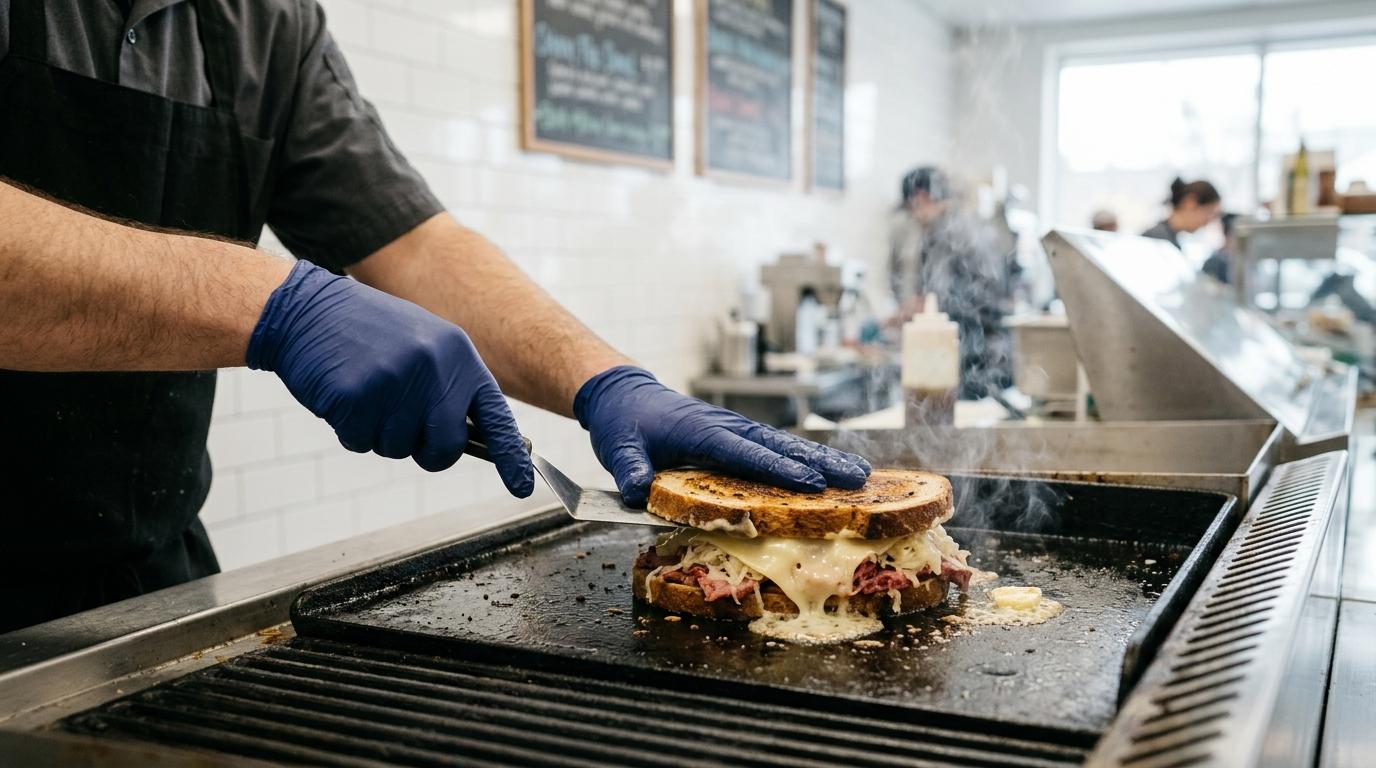
The Reuben sandwich is a layered stack of corned beef or pastrami, Swiss cheese, sauerkraut, and Russian or Thousand Island dressing on grilled rye bread - one of the most iconic deli sandwiches ever created, and still fiercely debated in delis from New York to Philadelphia.
If you've ever ordered a Reuben at a great deli counter and stood there for a moment just watching it come together - the sizzle of the griddle, the pull of the melted Swiss, the tang of the kraut hitting the air - you already know this sandwich hits different. It's not just lunch. It's a whole experience. And for anyone who loves deli catering in Philadelphia, the Reuben is practically a cultural touchstone.
Let's break down everything you need to know: where it came from, what makes it great, and how it stacks up against other beloved deli classics.
Two Cities, Two Stories: The Origins of the Reuben
Here's where things get delicious and complicated. There are two serious origin stories for the Reuben sandwich, and both have legitimate claims.
The Omaha Story
The most documented origin traces back to Reuben Kulakofsky, a Lithuanian-born grocer in Omaha, Nebraska. The story goes that Kulakofsky assembled the first Reuben sometime between 1920 and 1935 during late-night poker games held at the Blackstone Hotel. The hotel's owner, Charles Schimmel, liked it so much he put it on the menu. In 1956, a Blackstone Hotel employee named Fern Snyder entered the sandwich in a national competition - and won. That victory gave the Reuben national exposure and cemented the Omaha claim in the history books.
The New York Story
The competing origin points to Arnold Reuben, a German-born deli owner who ran Reuben's Restaurant on Broadway in Manhattan. His supporters say he created a signature sandwich in the early 1900s - though accounts vary on whether his original version even included sauerkraut and rye. Some food historians argue that what Arnold Reuben made was closer to a club sandwich, and that the Omaha version is the true ancestor of what we eat today.
The honest answer? The modern Reuben as we know it - corned beef, Swiss, kraut, dressing, rye, grilled - almost certainly evolved from multiple influences over decades. That's how the best food usually works.
What Actually Goes Into a Great Reuben
A Reuben is only as good as its components. Every element has a job to do, and when one is off, the whole sandwich suffers. Here's a breakdown of what makes each layer matter:
- The Meat: Traditionally corned beef, though pastrami is a popular and equally valid choice. Corned beef is brine-cured brisket - beefy, salty, and tender. Pastrami is cured and then smoked and spiced, giving it a deeper, more complex flavor with a peppery crust. Neither is wrong. They're just different conversations.
- The Cheese: Swiss. No substitutions. Its mild nuttiness and clean melt don't compete with the sauerkraut or the dressing - they complement both.
- The Sauerkraut: Fermented cabbage that brings acid, funk, and crunch. It's the ingredient that makes the Reuben more than just a hot meat sandwich. Good sauerkraut is tangy and bright, not soggy or overly sour.
- The Dressing: Russian or Thousand Island - both work, and the difference is subtle. Russian dressing tends to be spicier and more savory. Thousand Island leans slightly sweeter. The dressing is the glue that holds the flavor profile together.
- The Bread: Rye bread, grilled until it's golden and has just enough structure to hold everything without crumbling. Seeded rye adds an aromatic depth that plain white or wheat simply can't replicate.
Reuben vs. the Classic Italian Hoagie: How They Compare
At any great Philadelphia deli, you'll find the Reuben sharing menu space with another legend: the Italian hoagie. These are both iconic sandwiches, but they couldn't be more different in approach. Here's a direct comparison:
Feature Reuben Italian Hoagie Bread Grilled rye Long Italian roll, untoasted Primary Meat Corned beef or pastrami Ham, salami, capicola, provolone Temperature Hot, grilled Cold, fresh-built Flavor Profile Smoky, tangy, savory, rich Bright, herby, briny, fresh Key Condiment Russian or Thousand Island dressing Oil, vinegar, oregano Origin Omaha / New York (contested) Italian-American immigrant tradition Best For Catering Plated or hot boxed lunches Tray setups, large-group ordersBoth sandwiches have their place. If you're setting up a business catering spread for a Center City Philadelphia office, offering both is the move - the Reuben satisfies the hot-sandwich crowd, and the Italian hoagie covers the cold-cut loyalists.
The Reuben in Philadelphia Deli Culture
Philadelphia has always had a serious deli culture. The city's history with Jewish delis, Italian markets, and neighborhood sandwich shops created generations of opinionated eaters who know exactly what they want. When a Philly deli puts a Reuben on the menu, there's an expectation: the corned beef has to be generously sliced and tender, the rye has to have real structure, and nothing should be swimming in dressing.
For deli catering services in Philadelphia, the Reuben is one of the most-requested sandwiches for corporate lunches, office breakfasts, and event spreads. It's a crowd-pleaser that also reads as elevated - it signals that whoever ordered the food actually thought about it. That matters when you're feeding a boardroom or a team of 40.
Building the Perfect Reuben: Step-by-Step
- Start with quality rye bread. Seeded or unseeded - either works - but it needs to be a firm, deli-style loaf. Pre-sliced sandwich bread won't hold up to the griddle.
- Spread the dressing generously on both slices. Don't be shy. The dressing is doing a lot of flavor work here.
- Layer the Swiss cheese directly on the bread. This creates a moisture barrier so the bread doesn't get soggy from the sauerkraut.
- Pile on the corned beef or pastrami. A proper Reuben has at least 4 to 6 ounces of meat. Anything less and you're just eating a salad on bread.
- Add the sauerkraut, well-drained. Squeeze out the extra moisture - wet kraut is the enemy of crispy bread.
- Grill on a buttered griddle over medium heat. Press it down slightly. Cook until the bread is deep golden brown and the cheese is fully melted - about 3 to 4 minutes per side.
- Rest for 60 seconds before cutting. This lets everything settle and keeps the fillings from sliding out on the first bite.
Why the Reuben Belongs on Every Catering Menu
Whether you're planning breakfast catering in Philadelphia or a full lunch spread for a corporate event, the Reuben earns its spot on the menu every time. It's satisfying, it's memorable, and it sparks conversation - people always have opinions about Reubens. That kind of energy is exactly what you want at a catered event.
For café catering in Philly, the Reuben also photographs beautifully, which matters more than people admit. A well-built Reuben cut on the diagonal, with the layers visible and the cheese pulling slightly - that's the kind of image that makes people genuinely excited to eat.
If you're searching for the best sandwiches near you or looking to build a catering order that goes beyond the standard turkey-and-swiss, start with the Reuben. It's been earning its reputation for over a century, and it's not slowing down.
Frequently Asked Questions About the Reuben Sandwich
What is the difference between a Reuben made with corned beef versus pastrami on rye?
Corned beef is wet-cured in a salt brine, giving it a clean, salty, beefy flavor with a tender texture. Pastrami on rye brings a smokier, spicier profile because the meat is also rubbed with black pepper and coriander before smoking. Both are authentic Reuben options - the choice comes down to personal flavor preference.
Is Russian dressing or Thousand Island dressing more traditional on a Reuben?
Russian dressing is considered the more traditional choice, historically used in deli-style Reubens on the East Coast. It's tangier and spicier than Thousand Island. Thousand Island dressing is slightly sweeter and more widely available, which is why many modern delis default to it. Either is accepted - just make sure whichever you use is applied generously.
Can a Reuben sandwich be made ahead of time for catering?
The best approach for catering is to grill Reubens fresh or within 20 to 30 minutes of service and keep them in an insulated hot-hold container. Pre-assembling the sandwich and grilling it to order produces the best results. Avoid building them too far in advance, as the sauerkraut moisture will soften the bread and compromise texture.
What sides pair best with a Reuben for a business catering order?
Classic pairings include dill pickle spears, kettle chips, coleslaw, and potato salad. For a Center City Philadelphia business catering setup, individual chip bags and pickle cups work well for easy grab-and-go service. A light pasta salad or a simple green salad also balances the richness of the sandwich without overwhelming the meal.
Is a Rachel sandwich the same as a Reuben?
Not quite. A Rachel sandwich swaps out the corned beef for turkey or pastrami and replaces sauerkraut with coleslaw. It uses the same Swiss cheese and Thousand Island or Russian dressing on grilled rye. The Rachel is a popular variation found at many Philadelphia deli catering menus, but it's a distinct sandwich - lighter in flavor and less pungent than the original Reuben.