
How to Build a Perfect Sandwich: Structure, Flavor, and the Science Behind Every Layer
The perfect sandwich starts with one non-negotiable rule: structure before flavor. Bread selection, layering order, and sauce-to-meat ratio determine whether a sandwich holds together and tastes balanced - or falls apart after the first bite. This guide breaks down every element so you can build gourmet sandwiches with confidence, whether you're making one for lunch or planning breakfast catering for a Philadelphia office.
Step 1: Choose the Right Bread for Your Sandwich
Bread is the foundation, and the wrong choice undermines everything that goes on top of it. The best bread for sandwiches matches the moisture level and weight of the fillings inside.
- Ciabatta: Open crumb structure absorbs sauces without getting soggy fast. Ideal for meatball subs, Italian beef, or pressed sandwiches.
- Sourdough: Dense crumb and a tangy crust. Best for cold cuts, smoked salmon, or anything with a creamy spread.
- Brioche: Soft and slightly sweet. Pairs well with fried chicken, pulled pork, or bacon-forward builds.
- Rye: Earthy, firm, and assertive. Classic for pastrami, corned beef, or smoked turkey with mustard.
- Hoagie roll: Structured enough for heavy fillings. The standard for deli catering services in Philadelphia for good reason - it travels well and holds up under volume.
- Focaccia: Oily exterior creates a natural moisture barrier. Excellent for roasted vegetables and fresh mozzarella.
The rule: Wet fillings need denser bread. Dry fillings can use softer bread. Never put a juicy meatball on sandwich-thin white bread.
Step 2: Master the Sauce-to-Meat Ratio
Condiment ratio is the most under-discussed variable in sandwich building. Too little sauce and the sandwich tastes dry. Too much and it collapses structurally and overwhelms the protein.
Sauce-to-Meat Ratio by Sandwich Type
Sandwich Type Sauce Volume (per 6-inch sandwich) Best Application Method Club / Deli cold cut 1–1.5 tbsp mayo or aioli Spread directly on bread Hot pressed (panini, Cuban) 1 tbsp mustard, thin layer Coat bread evenly to edge BBQ / Pulled pork 2–3 tbsp sauce mixed into meat Toss with protein, not on bread Italian hoagie 1 tsp olive oil + 0.5 tsp red wine vinegar Drizzle on vegetables, not meat Gourmet open-face 2 tbsp compound butter or spread Applied thick as the base layerThe key insight: sauce belongs on bread, not on protein- with the exception of wet-style proteins like pulled pork or saucy meatballs, where the sauce is integrated into the filling itself.
Step 3: Understand Sandwich Layering Technique
Layering isn't just aesthetic. It directly affects bite cohesion, flavor distribution, and structural integrity. Here's the correct order for a standard stacked sandwich:
- Sauce on both bread faces- creates a moisture barrier so the bread doesn't absorb liquid from fillings immediately.
- Cheese directly on bottom bread- for hot sandwiches, cheese on the bottom melts upward into the protein. For cold sandwiches, it acts as a grip layer.
- Protein layer- the heaviest single element goes in the center of gravity, closest to the bottom half.
- Vegetables and pickles- go above the protein. Their moisture releases downward into the meat, not into the bread.
- Greens and herbs- always the final interior layer, directly under the top bread. This keeps them from wilting and insulates them from wet elements below.
This sequence gives every bite a consistent hit of each ingredient. If you stack randomly, the top half of the sandwich tastes like lettuce and the bottom tastes like bread.
Step 4: Apply Melted Cheese Correctly
Cheese melting behavior varies dramatically by fat content and moisture level. The science matters more than people think - especially for café catering in Philadelphia where hot sandwiches need to hold quality across service windows.
- American cheese: Melts at 150°F (66°C). Smooth, creamy, and emulsifies into a sauce-like texture. Best for smash burgers and classic cheesesteaks.
- Provolone: Melts at around 170°F (77°C). Stretchy but not gooey. Standard for hoagies and Italian beef.
- Gruyère: Melts cleanly at 160°F (71°C) with nutty flavor. Ideal for French dip or pressed sandwiches.
- Fresh mozzarella: High moisture; releases water as it melts. Keep it on open-face applications where runoff is acceptable, or pat dry before using in pressed sandwiches.
- Cheddar: Sharp varieties with low moisture can break and turn oily above 180°F (82°C). Use medium cheddar for melted applications.
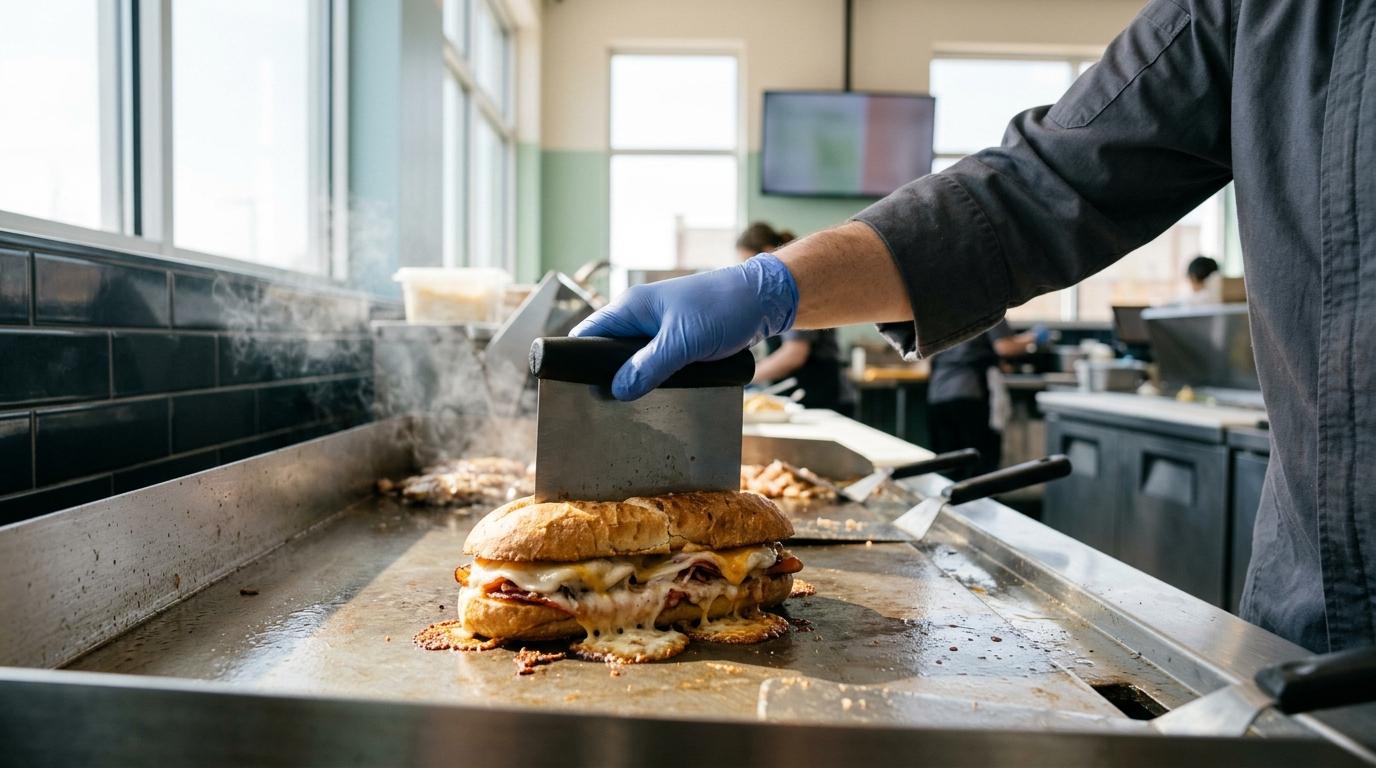
For best results on hot sandwiches: add cheese to the protein while it's still on heat, then tent with a lid or cover for 30–45 seconds. This method melts cheese onto the filling rather than onto the bread, which prevents the bread from steaming and softening prematurely.
Step 5: Explore Gourmet Sandwich Ideas Worth Building
Once you've internalized the structure, the variations are endless. These builds apply every principle above:
- Mortadella and pistachio spread on focaccia- savory fat-on-fat pairing, balanced by a thin layer of pickled peppers.
- Smoked turkey, Gruyère, whole grain mustard, and arugula on rye- dry build with assertive flavors on a bread that can hold them.
- Roast beef, caramelized onions, horseradish cream, and crispy shallots on a hoagie roll- a textural contrast sandwich with three different crunch and softness points.
- Fried egg, sharp cheddar, hot honey, and prosciutto on brioche- breakfast build where sweetness from honey offsets salt from the cured meat.
- Tuna conserva, castelvetrano olives, arugula, and lemon aioli on sourdough- Mediterranean-forward with acid doing the heavy lifting in place of vinegar-based condiments.
Gourmet sandwich ideas don't require exotic ingredients - they require deliberate contrast between fat, acid, salt, and texture in every bite.
Sandwich Principles for Catering at Scale
When you're building sandwiches for a team breakfast or business catering in Center City Philadelphia, individual craft has to translate to volume. The same structural rules apply, but execution shifts:
- Apply sauce to bread immediately before assembly - not in advance - to prevent sogging during transit.
- Wrap pressed sandwiches in parchment, not plastic, to maintain crust integrity.
- Separate wet ingredients (tomatoes, pickles) and add them at delivery rather than pre-assembly when sandwiches are made more than 90 minutes in advance.
- Label by protein and allergen - this is non-negotiable in any professional Philadelphia catering operation.
What is the best bread for sandwiches?
The best bread matches the moisture and weight of the filling. Dense breads like sourdough and rye suit wet or heavy proteins. Softer breads like brioche work for lighter, drier fillings. Hoagie rolls are the top choice for deli-style builds because they handle volume and travel without falling apart.
What is the correct sauce-to-meat ratio for a sandwich?
For a standard 6-inch cold cut sandwich, 1 to 1.5 tablespoons of mayo or aioli is the right range. Wet proteins like pulled pork take 2 to 3 tablespoons mixed directly into the meat. The sauce should coat bread evenly to the edges - it creates a moisture barrier, not just flavor.
Does sandwich layering order actually matter?
Yes. Correct layering keeps moisture moving away from the bread, ensures every bite hits all flavors, and prevents structural collapse. Protein goes in the center, cheese goes below the protein on hot sandwiches, and greens always go last, directly under the top bread slice.
Which cheese melts best for hot sandwiches?
American cheese melts smoothest at 150°F and is ideal for cheesesteaks and smash burgers. Gruyère melts cleanly at 160°F with better flavor complexity. Avoid sharp cheddar in high-heat applications - it breaks and turns greasy above 180°F. Medium cheddar or provolone are safer high-heat choices.
How do you keep catered sandwiches from getting soggy?
Apply sauce at assembly, not in advance. Wrap in parchment rather than plastic to allow moisture to escape. Pack wet ingredients like tomatoes and pickles separately and add them at delivery if sandwiches are made more than 90 minutes before service. Denser bread choices also significantly extend hold time.