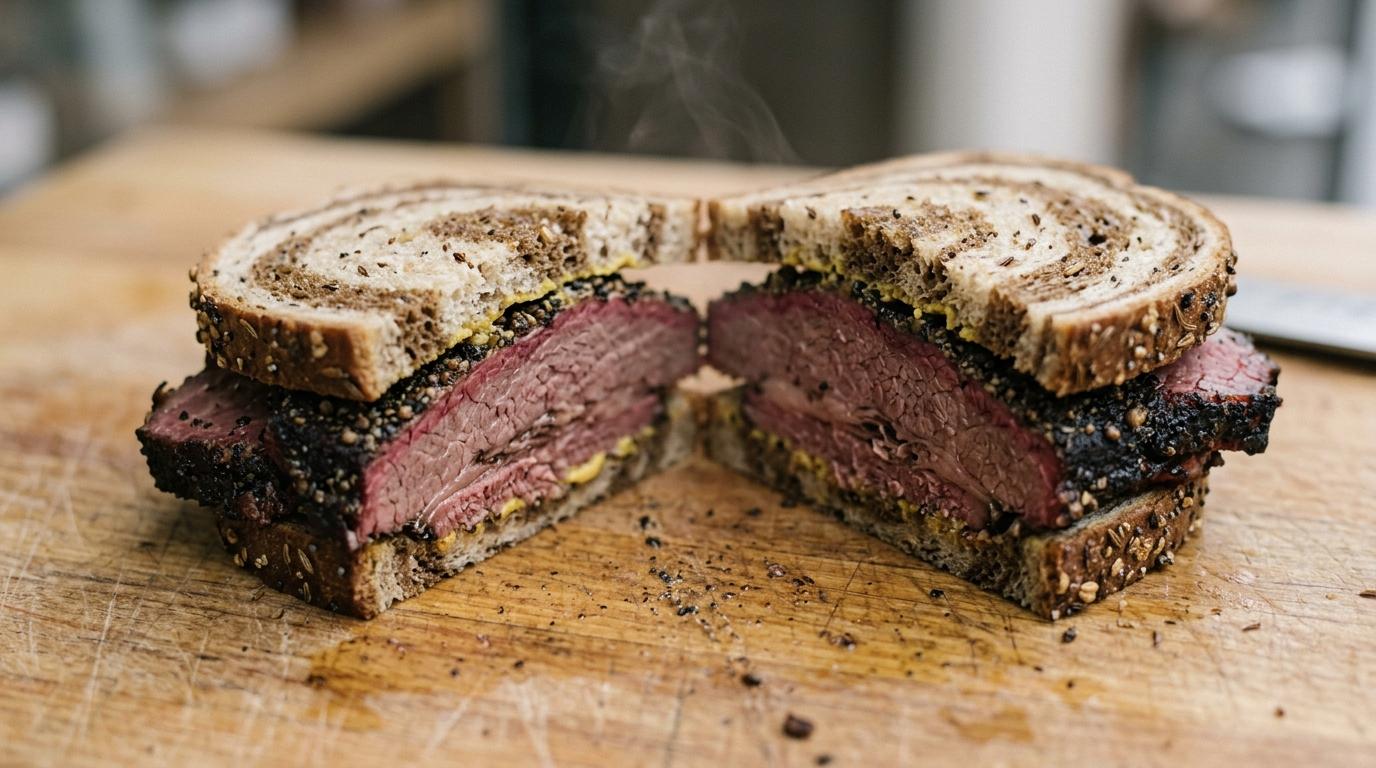
A great pastrami on rye delivers exactly four things in every bite: deeply spiced, smoke-cured beef with a peppery bark, tangy mustard that cuts through the fat, chewy-yet-sturdy rye bread that holds its structure, and nothing else getting in the way. That's the whole formula - and every element has to earn its place.
If you've ever bitten into a pastrami sandwich and felt underwhelmed, one of those four things was off. Maybe the meat was sliced too thick and turned chewy instead of tender. Maybe the bread was too soft and collapsed under the steam. Maybe there was too much going on and the pastrami itself got lost in the noise.
We're breaking down every layer - pastrami, rye, mustard, and the details in between - so you know exactly what separates a forgettable deli sandwich from one you'll be thinking about on the drive home.
The Pastrami Itself: Where Everything Starts
Pastrami starts as beef brisket or navel cut, brined for days in a mixture of salt, sugar, garlic, and pickling spices - the same basic cure used for corned beef. The difference is what happens next. After brining, the beef gets rubbed with a heavy coating of cracked black pepper and coriander, then cold-smoked and finally steamed until the fat renders and the meat becomes pull-apart tender.
That smoke-plus-steam combination is non-negotiable. The smoke builds the bark and the flavor depth. The steam does the heavy lifting on texture, breaking down the collagen so each slice is moist rather than dry and fibrous. A pastrami that skips the steam will be tough. A pastrami that skips the smoke will taste like corned beef - which is a fine thing, but it's not the same thing.
Slice thickness matters more than most people realize. The ideal cut is thin enough that it folds and bunches when stacked, creating layers of texture in every bite. A thick-cut slab is harder to chew and the smoke flavor hits all at once instead of building. Ask any serious deli - the meat goes on the bread generously, piled high, never pressed flat.
The Rye Bread: Structure and Flavor in One
Seeded rye is the classic choice, and there's a real reason for it. Caraway seeds add an earthy, slightly anise-forward flavor that plays directly against the black pepper and coriander crust on the pastrami. They're not a garnish - they're a flavor counterpart.
The bread also has to have structure. A soft sandwich loaf will absorb the meat's moisture and turn into a soggy mess within minutes. Rye bread with a tighter crumb and a firmer crust holds up to a hot pile of steamed meat without losing its integrity. That slight chewiness also forces you to slow down the bite, which means more time experiencing all the flavors together.
Marble rye - the swirl of rye and pumpernickel - is a legitimate upgrade. The pumpernickel brings a slightly sweet, molasses-adjacent note that adds complexity without overwhelming. Either version works. What doesn't work: white sandwich bread, brioche, or anything labeled "artisan" that prioritizes airiness over density.
The Mustard: One Condiment, No Debate
Spicy brown mustard. That's it. The acidity cuts through the fat in the pastrami, the heat adds another layer of spice alongside the pepper crust, and the texture is thick enough to stay put on the bread instead of running out the sides.
Yellow mustard is too mild - it disappears. Dijon works in a pinch but brings a wine-forward sharpness that competes with the smoke rather than complementing it. Honey mustard adds sweetness that muddies the flavor profile. Spicy brown is the answer that's been arrived at over more than a century of New York deli tradition, and it hasn't been improved upon.
The application matters too: mustard goes on both slices of bread, spread edge to edge. This isn't about quantity - it's about ensuring every bite has the same balance rather than one end being dry and the other being overwhelmed.
Pastrami vs. Corned Beef vs. Reuben: A Direct Comparison
These three sandwiches show up on every deli menu and get confused regularly. Here's exactly how they differ:
- Pastrami on Rye: Smoked and steamed brisket or navel cut, heavy pepper-coriander rub, served on rye with spicy brown mustard. No cheese. No sauerkraut. Clean and direct.
- Corned Beef Special: Brine-cured brisket, no smoke, milder flavor profile. Often served on rye with mustard as well, sometimes with Swiss cheese added. The meat is softer and less intensely flavored than pastrami.
- Reuben Sandwich: Corned beef (sometimes pastrami) on rye, with Swiss cheese, sauerkraut, and Russian or Thousand Island dressing, grilled until the bread is toasted and the cheese melts. More complex flavor - the dressing adds creaminess, the sauerkraut adds fermented tang, the grill adds crunch.
Where the Italian Hoagie Fits Into This Conversation
The Italian hoagie is a different animal entirely - and Philadelphia has one of the strongest claims to defining what that sandwich should be. Where the pastrami on rye is about restraint and a single flavor focus, a proper Italian hoagie is about layering multiple cured meats - typically capicola, salami, and ham - with provolone, shredded lettuce, tomato, raw onion, and a hit of red wine vinegar and oil.
The roll is doing serious work here. A hoagie roll in the Philadelphia tradition has a thin, crackly crust and a soft interior - enough structure to hold the oil without going soggy, but yielding enough that the whole sandwich compresses into a cohesive bite. The bread is not interchangeable. A sub roll from a grocery chain doesn't deliver the same result.
Both sandwiches - the pastrami on rye and the Italian hoagie - share the same underlying principle: every ingredient is chosen because it contributes something specific. Remove any one element and the balance shifts.
What to Look for When Searching "Best Sandwiches Near Me"
When you're looking for the best sandwiches near you in Philadelphia, three things separate a serious deli from a place that just puts meat between bread:
- The meat is sliced to order. Pre-sliced pastrami sitting in a steam tray for hours loses moisture and texture. Fresh-cut makes a measurable difference.
- The bread is sourced with intention. A place that uses a real seeded rye - not a generic sandwich loaf - is paying attention to the whole sandwich, not just the protein.
- The ratio is right. A proper pastrami on rye is at least 60% meat by volume. If you can see more bread than filling, that's your answer.
Philadelphia's deli and café catering scene takes these details seriously, and the best spots - especially those doing deli catering services in Philadelphia for offices and events - apply the same standards to every sandwich whether they're making one or one hundred.
Reuben Sandwich FAQ
What is the difference between pastrami and corned beef?
Both start with brine-cured beef brisket, but pastrami is additionally coated in a black pepper and coriander rub, cold-smoked, and then steamed. Corned beef skips the smoking step entirely, which gives it a milder, less complex flavor. Pastrami has a distinctive bark on the outside from the rub and smoke; corned beef does not.
What kind of mustard goes on a pastrami on rye?
Spicy brown mustard is the traditional and correct choice. Its acidity and heat balance the fat in the pastrami and complement the pepper-forward crust. Yellow mustard is too mild to stand up to the meat; honey mustard adds sweetness that disrupts the flavor balance.
Is a Reuben sandwich made with pastrami or corned beef?
Traditionally, a Reuben is made with corned beef. However, many delis - including spots across Philadelphia - offer a pastrami Reuben as a variation. Both versions are grilled on rye with Swiss cheese, sauerkraut, and Russian or Thousand Island dressing. The pastrami version delivers more smoke and spice; the corned beef version is milder and slightly more tender.
What makes a Philadelphia Italian hoagie different from a regular sub?
A Philadelphia-style Italian hoagie uses a specific roll with a thin, crackly crust and soft interior, layered with capicola, salami, and ham, topped with provolone, shredded lettuce, tomato, onion, and dressed with red wine vinegar and oil. The key differences from a generic sub are the roll quality, the specific combination of Italian cured meats, and the use of oil and vinegar rather than mayonnaise-based dressings.
Can pastrami on rye be ordered for office catering in Philadelphia?
Yes - many Philadelphia deli catering companies offer pastrami on rye as part of boxed lunch or sandwich tray packages for corporate events, office meetings, and business lunches in Center City and surrounding neighborhoods. The best providers slice the meat fresh for catering orders rather than using pre-packaged portions, which makes a significant quality difference at scale.