Boxed lunches give every guest an individual, pre-portioned meal delivered and ready to eat; buffet catering puts shared dishes on a table for guests to serve themselves. That single structural difference ripples into cost, logistics, menu options, and the overall feel of your office event. Choosing the wrong format can mean cold food, long lines, or a catering bill that surprises you. Here is how to make the right call.
How Each Format Actually Works
With boxed lunches, the caterer assembles individual containers, typically a sandwich or wrap, a side, and a dessert, before delivery. Each box is labeled and handed out. There is no shared serving equipment, no chafing dishes, and no setup beyond a table to stack the boxes on. For office lunch delivery in Center City Philadelphia, this format is common for law firms, financial offices, and healthcare teams that need a meal people can grab and take back to their desks or eat during a working session.
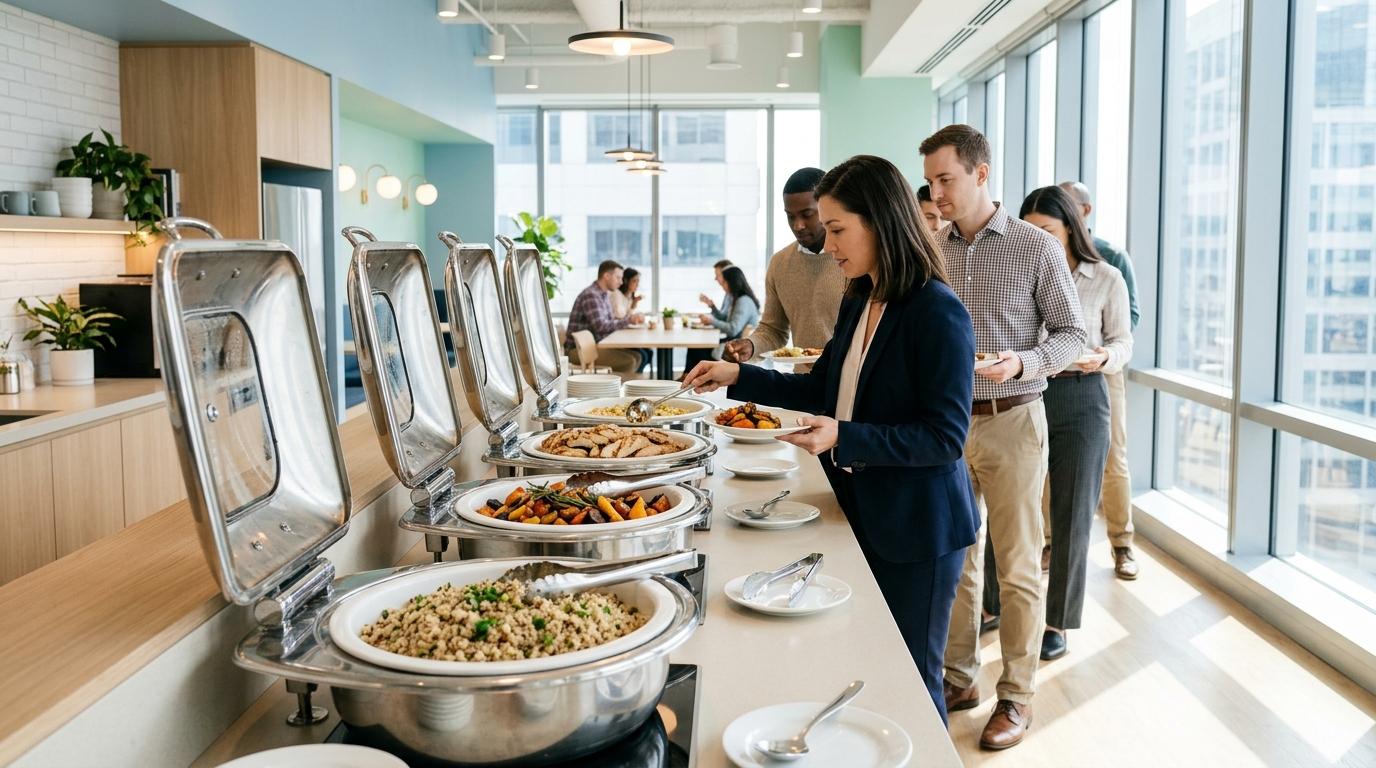
Buffet catering is a service model where food is laid out in bulk, usually in chafing dishes, platters, or large bowls, and guests walk through a line to build their own plates. The caterer either sets up and departs or provides staff to serve from the line. Cleanup involves collecting equipment, which means either the caterer returns or you arrange pickup. The mechanical difference matters: buffets require a defined setup window (usually 30–45 minutes before service), a physical space wide enough for a serving line and guest traffic, and a breakdown plan.
Cost Comparison: Where the Numbers Land
Pricing structures are genuinely different, and understanding them prevents sticker shock when you get a quote.
| Factor | Boxed Lunches | Buffet Catering |
|---|---|---|
| Base pricing model | Per person, fixed | Per person, with minimums |
| Equipment fees | Rarely applies | Chafing dishes, serving utensils, linen rental |
| Staffing needs | Delivery only | Setup crew, optional serve staff |
| Food waste risk | Low (exact count ordered) | Moderate (bulk overage common) |
| Guest count flexibility | Easy to adjust up to 48 hours out | Changes affect bulk quantities and cost |
| Best group size | 10–150 guests | 30–200+ guests |
For a catering for business meeting scenario with 20–40 people, boxed lunches almost always land at a lower total cost because you eliminate equipment rental and staffing overhead. Buffets become more cost-competitive at larger headcounts, where the per-person food cost drops as bulk purchasing advantages kick in, but those savings are partially offset by setup and breakdown fees.
Menu Options and What Each Format Handles Well
This is where caterers sometimes steer clients in the wrong direction. The format should follow the menu, not the other way around.
Boxed lunches excel with cold or room-temperature items: event sandwich platters built to order, wraps, grain bowls, deli-style combinations, and snack packs. A good Philadelphia deli caterer can produce dozens of dietary variations in individual boxes, labeling each one with the guest's name or dietary tag. That individual labeling is practically impossible with a buffet. If your office has guests with serious allergies, boxed lunches give you tighter control over cross-contamination.
Buffets handle hot food better. Roasted proteins, pasta dishes, carved meats, and soup service all hold temperature better in chafing dishes than they would in a box sitting in a delivery bag. If your corporate catering menu leans toward a full hot meal with sides and bread service, a buffet is structurally the better choice. That said, cold buffet spreads, including antipasto stations, salad bars, and charcuterie, work well too, provided the room temperature is controlled.
One underused middle option: a drop-off buffet. The caterer delivers bulk items in disposable or borrowed containers and sets them on a table with serving tongs, but there is no chafing equipment and no staff. This works for casual team lunches with 15–40 people and keeps costs close to boxed lunch pricing while giving guests some variety to build their own plate.
Logistics Inside a Philadelphia Office Building
Catering for businesses in Center City Philadelphia involves constraints that suburban offices do not face. Loading docks have time windows. Elevators have freight restrictions. Some buildings require a certificate of insurance from the caterer before they allow setup. These logistics affect which format is practical.
Boxed lunches require minimal building access. A delivery person brings sealed bags or boxes, often on a cart, takes the elevator, and is out in under 15 minutes. That is a straightforward operation even in a high-security office tower.
A full buffet setup is more involved. Chafing dishes, fuel cans, serving equipment, and bulk food containers require a larger cart, a longer elevator window, and someone to stay on-site during service. In buildings with strict lobby policies or narrow service corridors, this can create real friction. Always confirm with your building management whether your caterer needs advance notice or a COI before you book a buffet format for your next office event.
Breakfast catering in Philadelphia presents its own timing challenge. Most office breakfast orders need to arrive by 8:00 or 8:30 AM, before the building is fully staffed and while loading docks are often backed up with other deliveries. Boxed breakfast items, individually wrapped pastries, yogurt parfaits, and breakfast sandwiches in labeled bags, move through a building lobby far more efficiently than a hot buffet requiring setup time.
Guest Experience and Event Tone
Format sends a signal. A boxed lunch says the host thought about each person individually. A buffet says come together, fill your plate, and linger. Neither is wrong. They serve different meeting cultures.
For a working lunch where attendees are reviewing a document or listening to a presentation, boxed lunches win. No one has to get up, no one is waiting in a serve line while the presenter talks, and there is no noise from serving spoons and clinking plates mid-session. The meal happens in the background.
For a team celebration, an all-hands meeting, or a client appreciation lunch where the social dimension matters, a buffet encourages people to stand, move around, and interact. The serving line itself becomes a natural mixer. Philadelphia catering companies frequently recommend buffets for end-of-quarter events and onboarding days for exactly this reason.
If your meeting runs back-to-back sessions with a tight 30-minute lunch window, choose boxed lunches. If you have a 90-minute block and want people to decompress and connect, a buffet serves that goal better.
How to Order and What to Tell Your Caterer
Whichever format you choose, give your caterer four pieces of information upfront: headcount with dietary breakdown, delivery or setup time, building address with any access notes, and whether you need labeled individual meals. The dietary breakdown is important because a good deli catering service in Philadelphia will build out your options, vegetarian, gluten-free, dairy-free, around your actual audience rather than defaulting to a standard mix.
For boxed lunches, finalize your count 48 hours before the event. Most caterers will allow small adjustments up to 24 hours out, but last-minute additions are harder to accommodate when boxes are pre-built and labeled.
For buffets, confirm your headcount 72 hours out and clarify whether you want staff to remain on-site during service or whether it is a drop-and-go setup. Knowing this upfront prevents miscommunication on the day of your event.
Philadelphia Office Catering FAQ
What is the minimum order size for boxed lunches from a Philadelphia catering company?
Most Philadelphia deli caterers set a minimum of 10 boxes for office lunch delivery, though some require 15–20 depending on the distance and menu complexity. Always confirm minimums when you request a quote, especially for smaller team meetings.
Can a buffet work for a small office meeting of 15–20 people?
Yes, but a drop-off buffet with disposable serving containers is more practical than a full chafing-dish setup at that size. It keeps costs lower and eliminates the need for a caterer to stay on-site.
Which format is better for a corporate catering menu with multiple dietary restrictions?
Boxed lunches give you the best control. Each box is built and labeled individually, so guests with allergies or specific dietary needs receive exactly what was specified. Buffet service relies on guests to self-select correctly, which introduces risk.
How far in advance should I book catering for a business meeting in Center City Philadelphia?
For boxed lunches, 48–72 hours is usually sufficient for orders under 50 people. For a full buffet with staffing and equipment, book at least 5–7 business days out, and allow extra lead time for events over 100 guests or dates near major holidays.
Do Philadelphia catering companies handle breakfast catering in the same formats?
Yes. Breakfast catering is available in both boxed and buffet formats. Boxed breakfast service, individually wrapped items like sandwiches, muffins, and fruit cups, is the most popular choice for early morning meetings because it requires no setup time and moves quickly through office security and lobby check-in.