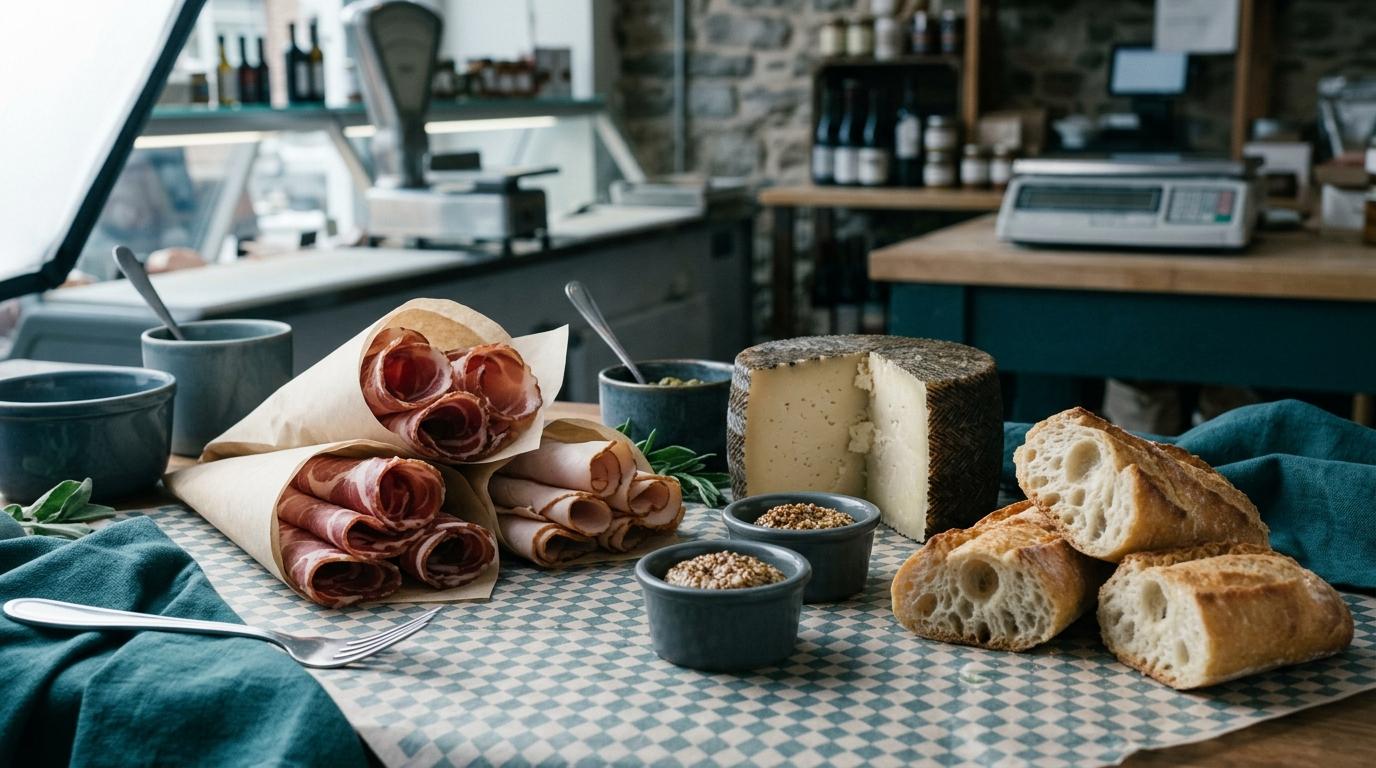
Deli meats and cheeses are among the most versatile party foods you can buy - they work as standalone appetizers, sandwich fillings, skewer toppings, and more. While a classic charcuterie board is always a crowd-pleaser, there are at least five distinct formats that make deli spreads feel fresh, interactive, and genuinely impressive without requiring professional catering skills.
Whether you're hosting a backyard gathering, a corporate lunch, or a casual dinner party in Philly, these ideas take deli staples well beyond the cutting board and into seriously shareable territory.
1. The Classic (But Elevated) Deli Meat and Cheese Board
Let's start with the foundation. A well-built deli meat and cheese board isn't just about piling food onto a plank - it's about balance, texture, and visual flow. Here's how to build one that looks like it came from a professional Philadelphia catering company:
- Anchor with 3–4 cheeses: Choose at least one hard cheese (aged cheddar or Manchego), one soft cheese (brie or fresh mozzarella), one semi-firm (Gouda or Gruyère), and one bold or funky option (blue cheese or aged Pecorino).
- Layer in 3–4 deli meats: Prosciutto, soppressata, capicola, and smoked turkey give you a range of textures and saltiness levels.
- Fill the gaps purposefully: Honey, whole-grain mustard, cornichons, fresh grapes, fig jam, and candied walnuts all serve real pairing functions - they aren't just decorative.
- Use odd numbers: Stylists group items in threes and fives because it reads as more natural and abundant to the eye.
Serve the board at room temperature. Cold cheese is dense and flavorless - pull everything from the refrigerator at least 30 minutes before guests arrive.
2. Interactive Mini Sandwich Station
One of the smartest party sandwich ideas is to stop pre-making sandwiches and let guests build their own. Set up a tiered station with small rolls, sliced baguettes, and lettuce cups as bases, then arrange fillings in small ramekins or bowls.
Station essentials:
- 3–4 deli meats, fanned or folded on a tray
- 2–3 sliced cheeses (provolone, Swiss, and pepper jack work great here)
- Condiment bar: whole-grain mustard, garlic aioli, hot honey, and classic deli mustard
- Toppings: thinly sliced red onion, roasted peppers, arugula, tomato, and pickled jalapeños
- Bread variety: slider rolls, pretzel buns, mini ciabatta, and seeded rye
This format is especially popular for breakfast catering setups and late-morning brunches. Swap in smoked salmon, egg salad, and herbed cream cheese alongside the deli meats for a spread that covers all the bases.
3. Deli Skewers and Antipasto Cups
Skewers transform easy entertaining appetizers into fully self-contained bites that guests can grab and eat without a plate. Thread each skewer in a pattern - for example: fresh basil leaf → cherry tomato → fresh mozzarella ball → folded prosciutto → marinated artichoke heart. Each bite delivers the full flavor profile in one shot.
For antipasto cups, stand 3–4 skewers upright in small glasses or clear plastic cups filled with a tablespoon of olive oil or a pickle as a base. This presentation looks sophisticated, photographs beautifully, and eliminates the awkward "hovering over the board" moment at parties.
Best deli meats for skewers:
- Prosciutto (fold into rosettes)
- Salami (fold in half twice to create a cup shape)
- Capicola (roll into a tube)
- Smoked turkey (fold and layer with cheese)
4. Wine and Cheese Pairing Station
A dedicated wine and cheese pairing guide displayed at your party is both a conversation starter and a genuine upgrade to the guest experience. You don't need to be a sommelier - you just need a few reliable rules.
Quick Wine and Cheese Pairing Reference
Cheese Best Wine Pairing Why It Works Aged Cheddar Cabernet Sauvignon Tannins cut through fat and salt Brie Champagne or Brut Sparkling Bubbles cleanse the creamy texture Blue Cheese Sauternes or Port Sweetness balances the sharp funk Gouda Pinot Noir Light earthiness mirrors the smokiness Fresh Mozzarella Pinot Grigio or Sauvignon Blanc Bright acidity highlights the milky freshness Manchego Tempranillo or Rosé Spanish heritage pairing; the red fruit complements nuttinessPrint this chart on a small tent card and place it near the wine bottles. Guests will spend more time at the table, graze more mindfully, and genuinely appreciate the thought behind the setup.
Add a curated deli meat component to the wine station - specifically, pair prosciutto with the sparkling wine section, and spicy soppressata near the bold reds. The fat and salt in cured meats bring out the fruit notes in red wine the same way cheese does.
5. Themed Grazing Tables
A full grazing table takes the charcuterie board concept and scales it to a surface - a table, a door laid flat on sawhorses, or even a kitchen island. This is the format that local Philadelphia catering companies and cafe catering specialists have made a centerpiece of corporate events and private parties across Center City.
The key to a grazing table that doesn't look chaotic is to pick a flavor theme and stick to it:
- Mediterranean theme: Prosciutto, soppressata, feta, fresh mozzarella, kalamata olives, roasted red peppers, hummus, pita, and grape clusters
- Classic Philly Deli theme: Roast beef, smoked turkey, sharp provolone, hoagie rolls, sweet peppers, long hots, and cherry peppers - a nod to the city's deep deli catering heritage
- Brunch spread theme: Smoked salmon, cream cheese, capers, red onion, bagel chips, sliced cucumbers, dill, and hard-boiled eggs alongside light deli selections
Anchor each zone with a large visual centerpiece - a whole wheel of cheese, a bread boule, or a tall jar of pickles - and radiate outward from there. Keep savory and sweet items in distinct zones so guests can navigate the table without accidentally pairing prosciutto with chocolate.
Pro Tips for Any Deli Spread
- Quantity rule: Plan for 2–3 oz of deli meat and 1.5–2 oz of cheese per person per hour for appetizer-style service.
- Label everything: Small cards naming the meats and cheeses eliminate repeated questions and help guests with dietary restrictions.
- Refresh, don't replace: Add fresh items to the board rather than swapping out the whole thing - it keeps the spread looking abundant throughout the party.
- Temperature matters: Keep soft cheeses on a cool marble slab and hard cheeses on wood. Deli meats stay safe at room temperature for up to 2 hours - rotate fresh trays from the refrigerator on a schedule.
If you're planning a larger event in Philadelphia - a corporate luncheon, a team breakfast, or an office party - working with a professional deli catering service in Philadelphia takes the logistics off your plate entirely. Local catering teams can handle volume, freshness, and presentation at a scale that home entertaining simply can't match.
How To Make A Charcuterie Board FAQ
How do I know how much food to buy for a charcuterie board?
For a standalone appetizer board, plan on 2–3 oz of deli meat and 1.5–2 oz of cheese per guest per hour. If the board is one of several appetizers, reduce those amounts by about 30%. For a party of 20 people with a 2-hour cocktail hour, you'd want roughly 2.5–3 lbs of deli meat and 2 lbs of assorted cheese as a starting baseline.
What's the best way to fold deli meats on a charcuterie board?
Thin slices like prosciutto look best loosely ruffled into ribbon shapes. Salami folds into a "book fold" (in half twice) to create a cup shape that holds its form. Capicola and coppa roll into loose tubes. Rounder, thicker cuts like mortadella can be quartered and fanned. Varying the fold style across your board prevents the spread from looking flat or repetitive.
What cheeses pair best with red wine at a party?
Aged hard cheeses pair best with red wine because their fat and protein content softens the tannins. Aged cheddar with Cabernet Sauvignon, Gruyère with Merlot, and Manchego with Tempranillo are three pairings that work reliably for a crowd. Avoid pairing fresh or very young cheeses - like ricotta or fresh chèvre - with full-bodied reds, as the acidity clash becomes distracting.
Can I build a deli meat and cheese board the night before a party?
You can prep components the night before - slice cheeses, portion meats, prep accompaniments - but assemble the board no more than 1–2 hours before serving. Cover assembled boards tightly with plastic wrap and refrigerate, then pull them out 30 minutes before guests arrive so everything reaches proper serving temperature. Boards assembled too far in advance lose visual freshness and the meats can dry out.
What's the difference between a charcuterie board and a grazing table?
A charcuterie board is a single serving surface - typically a wooden board or slate - focused primarily on cured meats, cheeses, and a limited set of accompaniments. A grazing table is a full table-scale spread that incorporates those same elements alongside bread, dips, fruit, vegetables, and sweets arranged across a much larger surface area. Grazing tables are designed to serve as a full station guests return to throughout an event, while a charcuterie board functions more as a focused appetizer presentation.