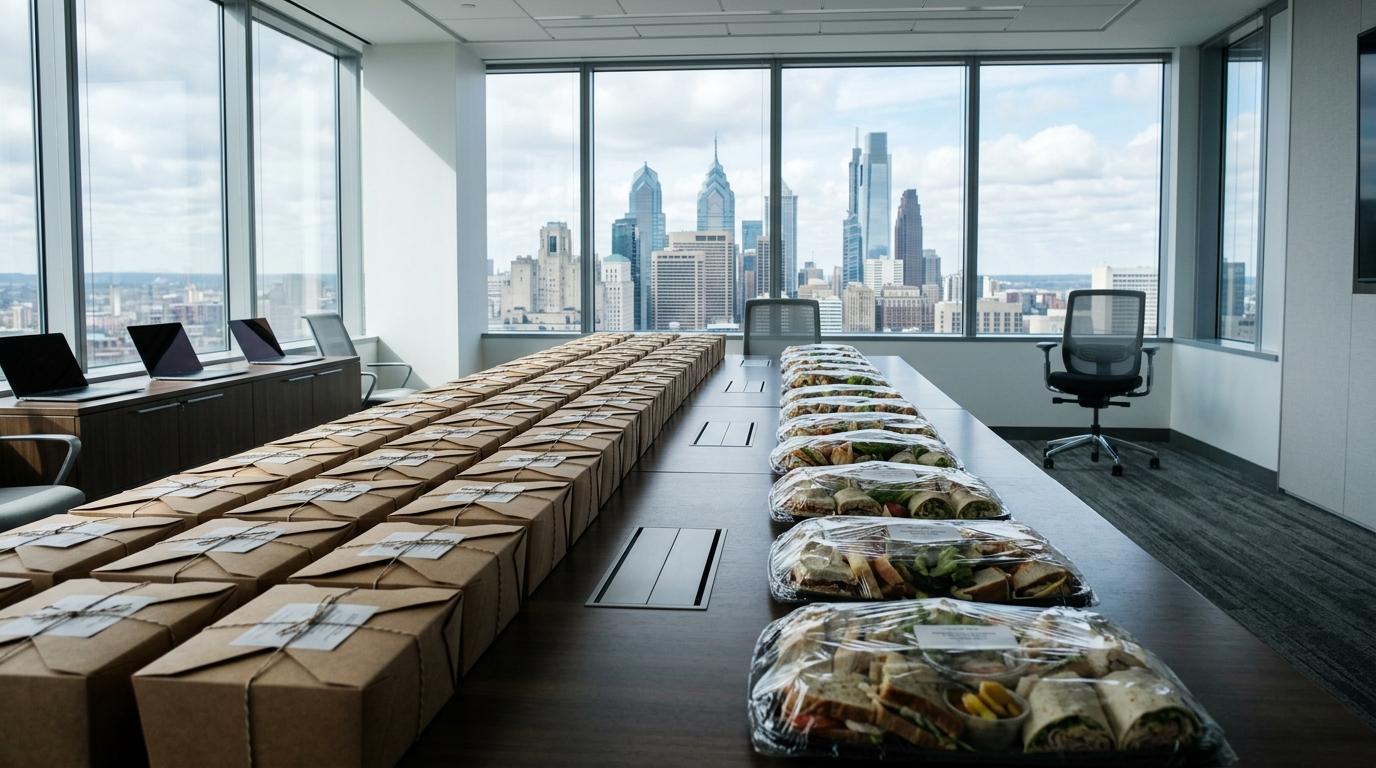
Planning a catered lunch in Center City Philadelphia with little notice is absolutely doable when you know which levers to pull. The key variables are lead time, headcount accuracy, and menu flexibility: nail those three and most reputable Philadelphia catering companies can turn around a polished business lunch in 24–48 hours.
Define "Last-Minute" So You Can Set Realistic Expectations
In the catering industry, "last-minute" means something different depending on who you ask. For large-format events with hot stations and staffed service, caterers typically need five to seven business days minimum. But for a deli-style or café-format catered lunch for a corporate group, 24–48 hours is a workable window with the right vendor. For orders placed before 10 a.m., some Center City catering operations will deliver the same afternoon.
Before you make a single phone call, pin down three numbers: how many people are eating, what time lunch must be ready, and your total budget. Caterers field dozens of inquiries daily, and the ones who get fast responses are the ones who come in with specifics. "Around 20 people, somewhere between noon and one" is far more actionable than "a medium-sized office." The tighter your brief, the faster a vendor can confirm availability and pricing.
Also clarify delivery logistics upfront. Center City buildings vary widely on freight elevator access, loading dock hours, and lobby sign-in requirements. If your building requires a certificate of insurance from vendors, ask for it at the same time you request the menu proposal. Discovering that requirement two hours before delivery is one of the most common reasons last-minute lunches go sideways.
Choose the Right Menu Format for a Short Turnaround
The single biggest factor that separates a smooth last-minute order from a chaotic one is menu format. Some formats are naturally faster to execute and safer to transport than others.
| Format | Typical Lead Time | Best For | Key Trade-Off |
|---|---|---|---|
| Deli sandwich trays | 12–24 hours | Working lunches, 10–50 people | Lower visual impact; high reliability |
| Boxed individual lunches | 24–48 hours | All-day meetings, dietary control | Higher per-person cost; minimal spillage risk |
| Café-style buffet spreads | 24–48 hours | Casual team lunches, mixed dietary needs | Requires setup space; self-serve reduces labor cost |
| Hot entrée buffet with chafing dishes | 48–72 hours | Executive lunches, client presentations | Longer setup time; more complex delivery logistics |
| Breakfast-for-lunch spreads | 12–24 hours | Morning-adjacent meetings running late | Limited protein variety; crowd-pleasing format |
For genuine last-minute situations under 24 hours, deli catering services and café-style trays are your most reliable options. Items like sliced sandwich platters, wraps, grain salads, and mixed fruit trays are prepped in high volumes by experienced deli catering services in Philadelphia and can be assembled quickly without compromising quality. Hot food adds complexity because it requires temperature-controlled transport and, in many cases, a longer prep window to ensure food safety compliance.
If you need to impress a client rather than just feed a team, consider upgrading the sides and presentation rather than changing the main format. A well-dressed deli spread with artisan bread, a composed salad, and a dessert tray reads far more polished than a basic sandwich platter, and it still fits a short lead time.
How to Vet a Philadelphia Catering Company Quickly
When you have limited time to research, focus on three signals that separate reliable caterers from risky ones.
Responsiveness is itself a quality signal. A catering company that takes four hours to reply to an inquiry probably won't be lightning-fast on delivery day either. When you reach out, note whether they respond within an hour during business hours and whether they ask clarifying questions about your order. Caterers who immediately confirm availability without asking about dietary restrictions, delivery address specifics, or headcount should raise a flag.
Check for a history with business catering in Center City. Center City Philadelphia presents specific logistical challenges: parking restrictions on major corridors like Market, Chestnut, and Walnut Streets, building security protocols in high-rises near City Hall, and high-volume lunch competition that can slow even experienced drivers. Ask vendors directly whether they regularly deliver to your zip code or building type. A caterer who has done dozens of deliveries to offices near Broad Street or the Avenue of the Arts will handle those logistics on autopilot.
Confirm what's included in the price. Some Philadelphia business catering quotes include delivery, setup, and disposable serviceware. Others charge separately for each. For a last-minute order, you rarely have time to shop around once the quote comes in, so ask the all-in question directly: "What does my total cost include, and what would add to it?"
Managing Dietary Restrictions Under Time Pressure
Dietary accommodations are the detail most likely to fall through the cracks in a rushed order. Handle them proactively rather than reactively. Before you contact any vendor, send a quick message to your attendee list asking for allergies and dietary preferences. You don't need every person to respond. You need to know whether anyone has a severe allergy (nuts, shellfish, gluten sensitivity requiring dedicated prep) because those require a different conversation with the caterer than a preference-level restriction.
Most established breakfast catering and lunch catering vendors in Philadelphia can accommodate vegetarian, vegan, and gluten-friendly options within a standard lead time. Severe allergen protocols, like nut-free kitchen preparation, may require more notice or a different vendor entirely. Be transparent about this early. Disclosing a severe nut allergy after a caterer has already confirmed your order creates a real food safety problem and can unravel the whole booking.
A practical approach for mixed groups: ask your caterer to label everything clearly and to separate allergen-sensitive items in their own packaging. This adds minimal cost and eliminates the confusion that happens when 25 people converge on a buffet table at once.
Logistics Checklist for Day-Of Delivery in Center City
The hour before delivery is where last-minute lunches either succeed or collapse. Run through this checklist the morning of your order:
- Confirm the delivery window directly with the caterer, not just via email confirmation. A quick call or text removes ambiguity.
- Designate one person in your office as the delivery contact. That person should have the caterer's direct phone number and know where to direct them upon arrival.
- Clear the setup area before the caterer arrives. For tray and buffet setups, a six-foot table is the standard footprint. Have it uncovered and accessible.
- Confirm elevator or loading dock access with your building management if deliveries are time-restricted. Many Center City high-rises restrict freight elevator use during peak hours (8–9 a.m. and 12–1 p.m.).
- Have a point of contact for payment or tip if your caterer doesn't charge everything in advance. Some local philly catering businesses invoice after delivery; others require a card on file.
If the delivery is going to a conference room on an upper floor, account for setup time in your delivery window. A caterer arriving at 11:45 a.m. for a noon lunch needs roughly 15 minutes of unobstructed access to lay out a buffet properly. Build that buffer in when you confirm the time.
What to Budget for a Last-Minute Catered Lunch
Last-minute orders sometimes carry a rush surcharge of 10–20% above standard pricing, particularly for orders placed fewer than 12 hours out. That's a reasonable trade-off for on-demand service, but it's worth asking the caterer directly whether a rush fee applies. For cafe catering in Philadelphia, a per-person estimate for a well-rounded lunch spread typically includes a main, two sides, beverages, and serviceware. Individual boxed lunches run higher per person but eliminate setup labor and reduce food waste on small groups.
For groups under 15 people, some caterers have a delivery minimum that makes per-person costs feel elevated. In those cases, adding an extra item like a dessert tray or a fruit and cheese board can help you hit the minimum while actually improving the spread.
Last-Minute Catered Lunch in Philadelphia FAQ
How much notice does a Philadelphia caterer actually need for a business lunch?
For deli trays, sandwich platters, and café-style spreads, most established Philadelphia catering companies need 24–48 hours. Some vendors accept same-day orders placed before 10 a.m. for afternoon delivery. Hot entrée buffets with chafing dishes typically require 48–72 hours minimum due to prep and transport logistics.
What's the most reliable menu format for a last-minute order?
Deli-style sandwich and wrap trays are the most reliable format for short-notice catering. They have long prep histories with high-volume vendors, transport safely at room temperature, and accommodate dietary variety easily. Breakfast catering spreads are a close second for their speed and simplicity.
Do Center City Philadelphia caterers charge extra for last-minute orders?
Some do and some don't. A rush surcharge of 10–20% is common for orders placed fewer than 12 hours before delivery. Always ask directly whether a rush fee applies when you first contact the vendor, so it's factored into your budget from the start.
How do I handle dietary restrictions when I don't have time for a detailed survey?
Send a single message to attendees asking only about severe allergies and hard dietary requirements (vegetarian, vegan, halal). Skip preferences. Use that information to request clearly labeled items and, where relevant, separately packaged allergen-sensitive options. Most experienced caterers can accommodate this with little added cost.
What should I tell building management before a catered delivery?
Notify your building management or front desk that a delivery is expected, confirm the freight elevator or service entrance is accessible during your delivery window, and check whether the vendor needs to provide a certificate of insurance in advance. In many Center City high-rises, unannounced vendor deliveries face delays that can push a noon lunch past 12:30.