Yes, there is a difference - and where you grew up probably determines which name you'll defend with your whole heart. A hoagie, sub, and hero are all long sandwiches built on a roll, but the ingredients, construction traditions, and regional loyalties that define each one are genuinely distinct. In Philadelphia, the Italian hoagie reigns supreme, and for good reason.
Whether you're ordering lunch for a team meeting in Center City or just grabbing a quick bite, understanding what separates these sandwiches helps you order smarter - and appreciate what goes into each one. Let's break it all down, then talk about some of the other sandwich legends worth knowing: the Reuben, pastrami on rye, and the corned beef special.
The Name Game: Hoagie vs. Sub vs. Hero
These three terms all describe a sandwich built on an elongated roll, but the geography and the ingredients tell very different stories.
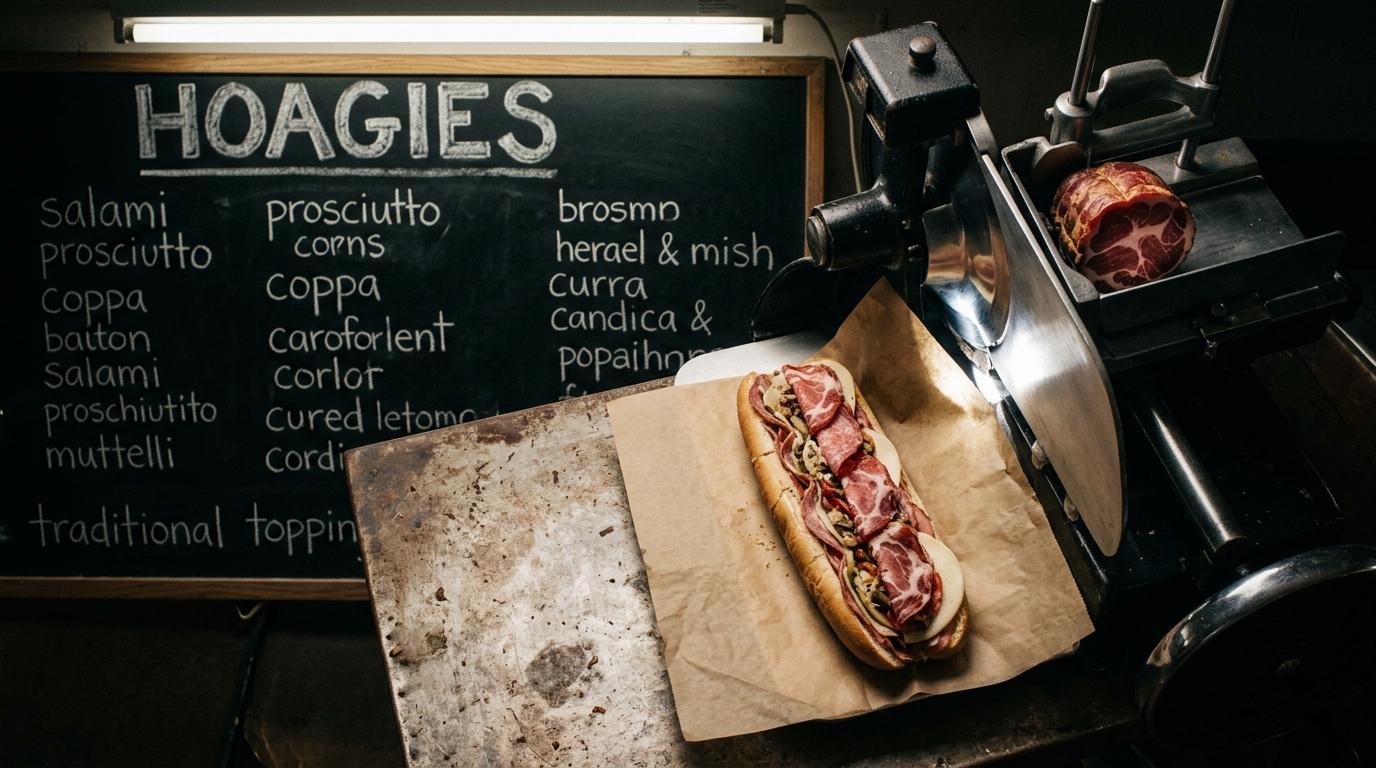
- Hoagie- Philadelphia's word, full stop. The name is believed to trace back to Hog Island, a Philadelphia shipyard where workers in the early 20th century ate large meat-and-vegetable sandwiches. The Italian hoagie specifically features a combination of cured Italian meats, provolone, and fresh toppings - all on a specific style of long roll with a soft interior and a slight crust.
- Sub- The dominant term across most of the United States, short for "submarine sandwich," named for its torpedo-like shape. Subs tend to be more loosely defined and can include hot or cold preparations. The bread is often softer and the build can vary widely by region or chain.
- Hero- New York's preferred term. Heroes often skew toward heartier, sometimes hot constructions - think meatball, chicken parm, or Italian cold cuts piled high. The roll tends to be crustier than a typical sub roll.
What Makes an Italian Hoagie an Italian Hoagie
In Philadelphia, the Italian hoagie has a specific anatomy. Swap out any one of the core components and a true Philly deli person will notice.
- The roll: A proper Philadelphia hoagie roll has a thin, slightly crackly crust and a soft, airy interior. It needs to hold up under wet toppings without going soggy in thirty seconds.
- The meats: Genoa salami, capicola (often called "cappy"), and ham are the classic trio. Some shops add pepperoni or prosciutto. The meats are layered - not piled randomly - so every bite hits the same flavor profile.
- The cheese: Sharp provolone. Not American, not Swiss. Provolone.
- The toppings: Shredded iceberg lettuce, tomato, onion, and either hot or sweet peppers. Dressed with oil, red wine vinegar, and dried oregano. Some add salt and black pepper.
That dressing - the oil and vinegar - is what separates the Italian hoagie from nearly everything else in the sandwich universe. It unifies the meats and the vegetables into something greater than the sum of its parts.
The Reuben: A Different Sandwich Entirely
The Reuben sandwich belongs to its own category. Where the Italian hoagie is cold, fresh, and bright, the Reuben is warm, rich, and deeply savory. A classic Reuben is built on griddled or toasted rye bread with four key components:
- Corned beef or pastrami (the great debate - more on that in a moment)
- Swiss cheese, melted
- Sauerkraut, drained and warmed
- Russian or Thousand Island dressing
The sandwich is pressed or griddled until the bread is golden and the cheese binds everything together. The result is tangy from the sauerkraut, creamy from the dressing, and deeply savory from the meat. It's a completely different flavor profile from the Italian hoagie - one isn't better, they're just solving different hunger problems.
Pastrami on Rye vs. Corned Beef Special: 5 Key Differences
These two sandwiches are closely related and frequently confused, but they are not the same thing. Here's how they actually compare:
Factor Pastrami on Rye Corned Beef Special Cut of beef Typically navel or brisket Always brisket Curing method Brined, then rubbed with black pepper and coriander, smoked Brined in a salt and spice solution (no smoking) Flavor profile Smoky, peppery, intensely savory Salty, tender, mild with a clean beefy finish Texture Fattier, more marbled, sliced thin and steamed before serving Leaner, sliced thin, sometimes slightly firmer Classic accompaniments Yellow mustard on rye bread Mustard, swiss cheese, pickles - often dressed up into a Reuben-style buildBoth sandwiches deserve respect. Pastrami on rye is a bolder, smokier experience - the kind of sandwich that announces itself. A corned beef special is more subtle, letting the quality of the meat speak quietly but clearly. At a great Philadelphia deli, you'll find both done properly.
Why Sandwich Ingredients Actually Matter
There's a real difference between a sandwich made with quality deli meats sliced fresh off the block and one made with pre-packaged product sitting in a cooler. Fresh-sliced meat has better texture, cleaner flavor, and holds up differently under toppings and dressings. The bread matters just as much- a hoagie roll that's a day old loses the structural integrity that makes the eating experience work.
For businesses ordering catering in Center City Philadelphia, these details are especially important. A conference room full of sandwiches made with real, fresh-sliced deli meats on proper rolls makes a completely different impression than a boxed lunch with limp bread and mystery turkey. Your team notices.
Philadelphia's Sandwich Culture Is Worth Celebrating
Philadelphia has always taken sandwiches seriously. The city's deli and catering scene is built on specific, unapologetic opinions about ingredients and technique. When you order from a real Philadelphia catering company or deli, you're getting the benefit of that culture - people who genuinely care whether the provolone is sharp, whether the roll has the right chew, and whether the oil-and-vinegar ratio on an Italian hoagie is actually correct.
That's not small stuff. It's the reason people have strong feelings about where they order lunch.
Whether you're searching for the best sandwiches near me in Philadelphia, planning a working lunch for your office, or just trying to settle a debate about what exactly you're eating - the answer comes down to ingredient quality, preparation method, and a whole lot of regional pride.
Reuben Sandwich FAQ
What is the difference between an Italian hoagie and a sub?
An Italian hoagie is a Philadelphia-specific sandwich built with cured Italian meats (Genoa salami, capicola, ham), sharp provolone, fresh vegetables, and an oil-and-vinegar dressing on a specific style of Philadelphia roll. A sub is a broader, nationally used term for any long sandwich on a roll, with far less standardized ingredients or dressing conventions. The hoagie has a defined recipe; the sub is a category.
What makes a Reuben sandwich different from a corned beef special?
A Reuben is a hot, griddled sandwich that combines either corned beef or pastrami with Swiss cheese, sauerkraut, and Russian or Thousand Island dressing on toasted rye bread. A corned beef special is typically a cold or lightly dressed sandwich featuring sliced corned beef - often with mustard, swiss, and pickles - without the full Reuben treatment. The Reuben is a specific, heated preparation; the corned beef special is more straightforward.
Is pastrami or corned beef better for a Reuben sandwich?
This is a genuine debate with no universal answer. Pastrami brings a smoky, peppery intensity that many deli purists prefer, while corned beef offers a cleaner, saltier flavor that lets the sauerkraut and dressing shine more. New York-style delis have historically used pastrami; other traditions lean corned beef. Order both and decide for yourself.
Why is Philadelphia hoagie bread different from regular sub rolls?
Philadelphia hoagie rolls are made with a specific dough formula that produces a thin, slightly crackly crust and a soft, airy interior. This structure is designed to hold up under wet toppings like oil, vinegar, and tomato without becoming soggy. Standard sub rolls are typically softer throughout, which changes both the texture and the structural performance of the sandwich.
Can I get Italian hoagies and deli sandwiches catered for a Philadelphia office?
Yes. Many Philadelphia deli catering services offer full sandwich catering for Center City offices and businesses, including individual-wrapped hoagies, deli platters, and specialty sandwiches like Reubens and pastrami on rye. For business catering in Philadelphia, look for a catering company that slices meats fresh and uses proper Philadelphia-style rolls - the quality difference in a catered lunch setting is immediately noticeable.