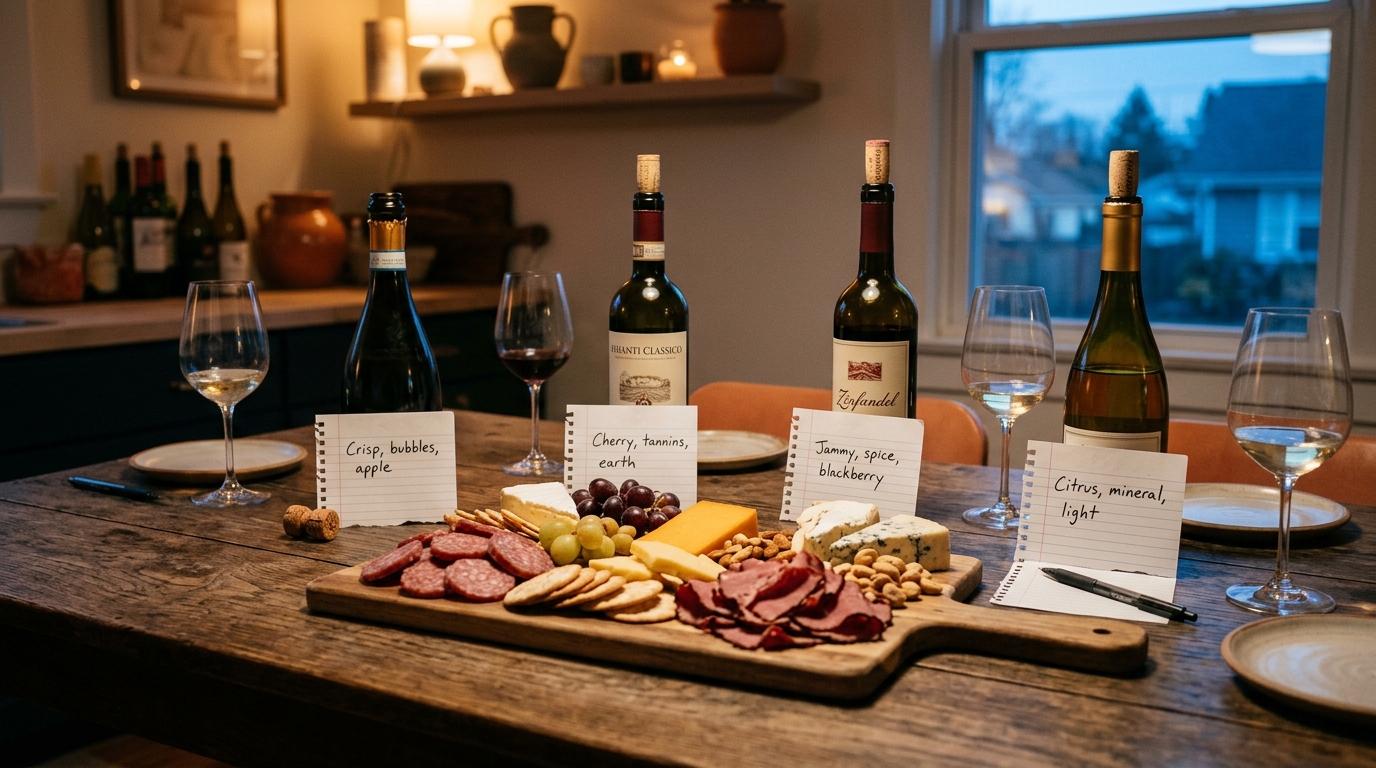
The best wine and deli meat pairings match fat content and salt intensity in the meat to the acidity, tannin, and body of the wine. Prosciutto pairs with Pinot Grigio, salami with Chianti, pastrami with Zinfandel, and smoked turkey with unoaked Chardonnay - and getting these combinations right transforms a simple deli meat and cheese board into a genuinely impressive spread.
Whether you're planning a low-key Friday night at home or pulling together easy entertaining appetizers for a crowd, a well-built charcuterie board is one of the most flexible and crowd-pleasing options available. Here's everything you need to know to do it right in 2026.
Why Pairing Matters More Than You Think
Salt amplifies tannins, which is why a big, tannic Cabernet Sauvignon can taste harsh and bitter next to a slice of intensely salty pastrami. Fat, on the other hand, softens acidity - which is exactly why a fatty, silky prosciutto di Parma practically begs for a crisp, high-acid white wine. Once you understand those two principles, building a pairing becomes intuitive rather than intimidating.
The goal on a charcuterie board isn't to find one wine that works for everything. It's to create a spread where guests can move through flavors - light to bold, mild to smoky - and find a natural pairing along the way.
The Core Pairings: Deli Meat by Deli Meat
Prosciutto → Pinot Grigio or Prosecco
Prosciutto is delicate, sweet, and lightly salty. A dry, high-acid Pinot Grigio from the Alto Adige region cuts through the fat cleanly without overpowering the meat's subtle flavor. Prosecco works beautifully too - the bubbles act as a palate cleanser between bites, keeping each slice tasting as fresh as the first.
Soppressata or Genoa Salami → Chianti or Barbera d'Asti
These Italian dried salamis carry bold spice, garlic, and a pronounced savory depth. Chianti Classico - built on Sangiovese grapes - has enough acidity and medium tannins to stand up to that intensity without bulldozing it. Barbera d'Asti is a slightly softer pick with bright cherry fruit that plays well against the salami's peppery notes.
Pastrami → Zinfandel or a dry Riesling
This is the pairing that surprises people most. Pastrami is smoky, heavily spiced, and boldly salty - a combination that would wreck a delicate wine. California Zinfandel brings jammy dark fruit and enough body to match the smoke. If you prefer white wine, a dry German Riesling (look for "trocken" on the label) offers high acidity and mineral notes that cut through the richness.
Smoked Turkey → Unoaked Chardonnay or Rosé
Smoked turkey is milder than most charcuterie, with a clean, savory smoke that doesn't need a heavyweight wine. An unoaked Chardonnay - Chablis is the classic choice - brings lemon and green apple notes that complement without competing. A dry Provençal rosé is equally at home here and keeps the board feeling light and summery.
Mortadella → Lambrusco or light Pinot Noir
Mortadella's creamy fat and mild pork flavor pair beautifully with the lightly sparkling, slightly sweet-tart profile of a dry Lambrusco. This is a regional pairing rooted in Emilia-Romagna, and it's one of those combinations that simply makes sense. If sparkling red isn't your crowd's style, a lighter Pinot Noir from Oregon or Burgundy does the job gracefully.
Coppa or Capicola → Nero d'Avola or Grenache
Coppa has a rich, slightly sweet fat cap and a depth that sits between prosciutto and salami. It wants a wine with enough body to match - Nero d'Avola from Sicily brings dark fruit and a hint of earthiness that works in tandem with coppa's complexity. Grenache-based blends from the Rhône or Spain are another strong option.
How to Make a Charcuterie Board That Works
Building a deli meat and cheese board doesn't require a culinary degree - it requires a system. Follow this framework and you'll have a board that looks intentional and tastes even better.
- Choose 3–5 meats with varying textures and intensities. Anchor the board with one cured whole-muscle meat (prosciutto or coppa), one dried salami (soppressata or Genoa), and one cooked option (pastrami, smoked turkey, or mortadella). That range covers every wine on the table.
- Select 2–3 cheeses that contrast. Pair each cheese type with a nearby meat: a fresh chèvre next to prosciutto, an aged Parmigiano near the salami, a sharp cheddar beside the pastrami. Cheese doesn't just fill space - it bridges flavors between meat and wine.
- Add texture with crackers and bread. Offer at least two options: a neutral cracker (water crackers or flatbreads) and something with more character, like a seeded rye crispbread. For party sandwich ideas that extend the board, add sliced baguette and let guests build open-faced bites.
- Include sweet and acidic accents. Honeycomb, fig jam, whole-grain mustard, and pickled cornichons give guests something to play with. These condiments also act as unofficial pairing bridges - a dot of honey on prosciutto makes Prosecco even more effective.
- Fill space with fresh and dried fruit plus nuts. Grapes, sliced pear, dried apricots, marcona almonds, and candied walnuts round out the board visually and flavor-wise.
Quick Comparison: 6 Deli Meats and Their Best Wine Matches
Deli Meat Flavor Profile Best Wine Match Why It Works Prosciutto Delicate, sweet, lightly salty Pinot Grigio / Prosecco Acidity cuts fat without overpowering Genoa Salami Bold, garlicky, spiced Chianti Classico Matching intensity; acidity balances salt Pastrami Smoky, heavily spiced, salty Zinfandel / dry Riesling Jammy fruit or mineral acidity tames smoke Smoked Turkey Mild, clean, lightly smoky Chablis / dry Rosé Light body complements without overwhelming Mortadella Creamy, mild, fatty Dry Lambrusco / light Pinot Noir Regional pairing; acidity cuts the fat Coppa / Capicola Rich, complex, slightly sweet Nero d'Avola / Grenache Body and dark fruit match richnessScaling Up: From Home Board to Business Catering
The same pairing logic that works for a Friday night board scales directly to a corporate setting. deli catering services in Philadelphia often build charcuterie-style platters for office events and corporate lunches, and the approach mirrors what works at home - a range of meats, complementary cheeses, and condiment variety that lets attendees graze without needing a full meal.
For breakfast catering and business catering in Center City Philadelphia, charcuterie boards pair naturally with mimosa service or a curated wine selection for after-hours events. The key difference at scale is portion planning: figure on roughly 3–4 ounces of combined deli meat per person for an appetizer spread, and 5–6 ounces if the board is serving as the primary food.
How To Make A Charcuterie Board FAQ
What wine goes best with a mixed charcuterie board?
A dry sparkling wine - Prosecco, Crémant d'Alsace, or Cava - is the single most versatile choice for a mixed charcuterie board. The acidity and bubbles reset the palate between bites of different meats, making it compatible with everything from prosciutto to soppressata without clashing. If you're offering one still wine, a medium-bodied Pinot Noir bridges both white-meat and red-meat options effectively.
How do you make a charcuterie board for a party of 10 or more?
For 10 guests, plan on 30–40 ounces of combined deli meat (3–4 oz per person), 20–25 ounces of cheese (2–2.5 oz per person), and at least 3 types of crackers or bread. Use a large wooden board or two smaller boards side by side. Anchor with bowls of condiments - cornichons, mustard, honey - and fill gaps with grapes and nuts. Replenish the board every 45–60 minutes rather than loading everything at once.
What cheeses pair best with pastrami on a board?
Sharp cheddar, aged Gouda, and Swiss (Emmental) are the three cheeses that work best alongside pastrami. Sharp cheddar matches the intensity; aged Gouda brings a nutty sweetness that balances the spice rub; Swiss is the classic deli pairing and adds a mild, creamy contrast. All three hold their own next to a glass of Zinfandel or dry Riesling.
Can you build a charcuterie board the night before a party?
You can prep most components the night before - slice and wrap the meats, portion the cheeses, and prepare condiment bowls - but assemble the board no more than 2 hours before serving. Deli meats dry out and curl when exposed to air overnight. Store prepped components in airtight containers or wrapped tightly in plastic, then assemble fresh on the day of the event.
What are easy party sandwich ideas using deli meats from a charcuterie board?
The easiest approach is an open-faced "build your own" station using baguette slices, ciabatta rounds, or crostini as the base. Lay out prosciutto, smoked turkey, and Genoa salami alongside cream cheese, fig jam, arugula, and sliced cornichons. Guests build two-bite sandwiches directly from the board. For a more structured option, pre-roll prosciutto around a breadstick or wrap mortadella around a cube of provolone for a self-contained appetizer that requires no assembly.