
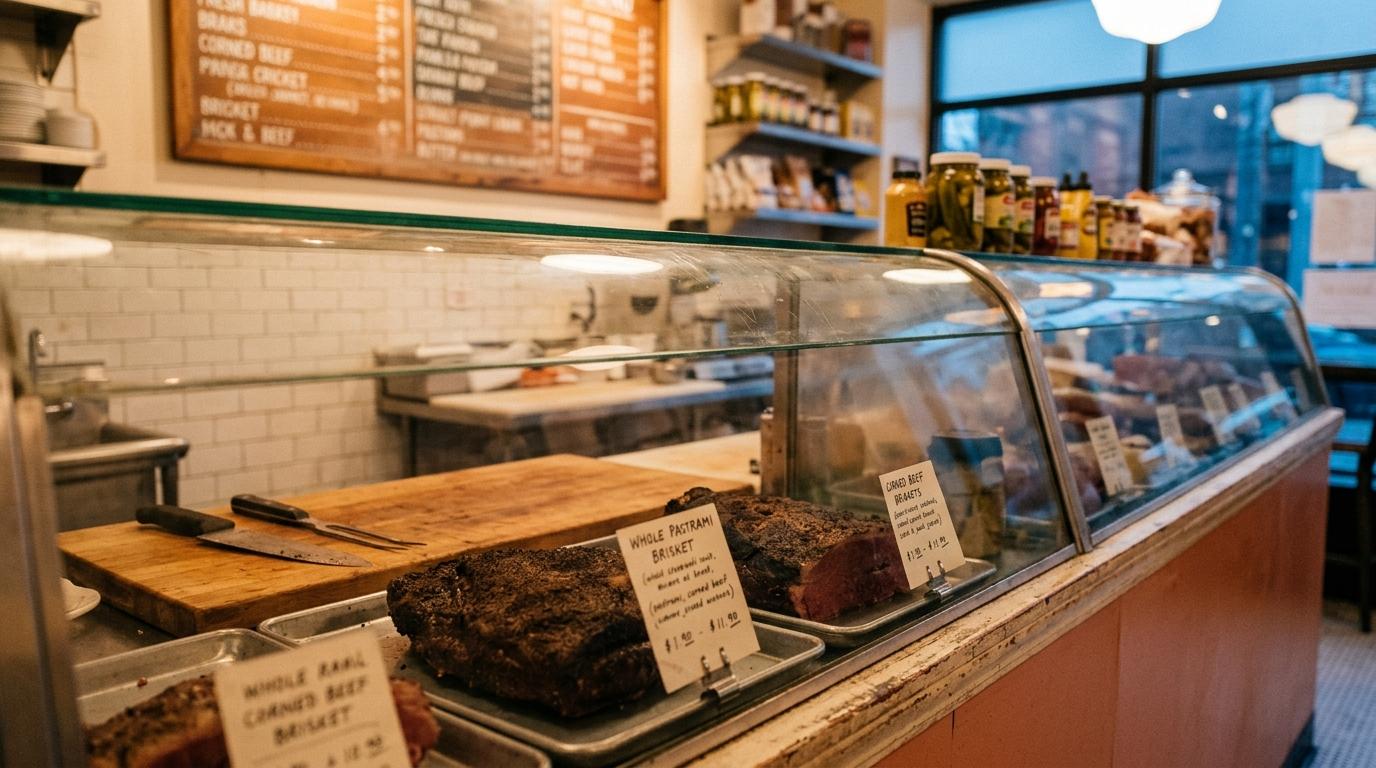
The American deli is one of the most enduring food institutions in the country - a neighborhood anchor built on cured meats, hand-stacked sandwiches, and a no-nonsense approach to feeding people well. From its immigrant roots in the late 19th century to its status as a cultural touchstone in cities like Philadelphia and New York, the deli has survived every food trend, recession, and fast-food wave thrown at it. Here's the full story.
Where It All Started: European Roots and the Great Immigration Wave
The American deli traces its origins directly to the massive wave of Eastern European Jewish immigration between roughly 1880 and 1924. Ashkenazi Jews arriving from Poland, Russia, Romania, and Hungary brought their food traditions with them - specifically, the practice of curing, smoking, and pickling meats as a method of preservation and preparation that complied with kosher dietary laws.
The word "delicatessen" itself comes from the German Delikatessen, meaning "fine foods" or "delicacies." German Jewish immigrants had already established small delicatessen shops in American cities by the 1850s, but it was the flood of Eastern European arrivals in the following decades that transformed the deli into a true institution. By 1900, New York City's Lower East Side alone had hundreds of deli shops serving the dense immigrant neighborhoods.
These early delis were not just restaurants - they were community spaces. They served food rooted in a specific cultural memory: brisket, pickled herring, rye bread, chicken soup, and the cured meats that would become the deli's defining products.
What Is a Jewish Deli, Exactly?
A Jewish deli - also called a kosher-style deli or simply a "deli" in American shorthand - is a delicatessen rooted in Ashkenazi Jewish culinary tradition. The defining characteristics are specific:
- Cured and smoked meats: Pastrami, corned beef, tongue, salami, and brisket are the anchors of the menu.
- Rye bread: Seeded or unseeded, always fresh, always the foundation of a proper sandwich.
- House-made pickles: Full sour, half sour, or new pickles, brined in-house and served alongside every sandwich.
- Deli mustard: Spicy brown mustard, not yellow, is the condiment of record.
- No mixing of meat and dairy: Traditional kosher delis maintain strict separation; kosher-style delis may serve both but usually keep meat dishes meat-forward.
The Jewish deli became so embedded in American culture that it eventually outgrew its purely ethnic identity. By the mid-20th century, the deli had become simply "American" - a beloved format adopted and adapted by Italian, Greek, and other immigrant communities who added their own meats, cheeses, and breads to the lineup.
The History of Pastrami: The King of the Deli Counter
Pastrami is arguably the most iconic deli meat in American food culture, and its history is a perfect case study in immigrant culinary adaptation. The word "pastrami" likely derives from the Romanian pastramă, a preserved meat made from pork or mutton. Jewish immigrants adapted the technique to beef - specifically the navel cut - to keep it kosher.
The process involves curing the beef in a spiced brine, coating it in a crust of black pepper and coriander, smoking it low and slow, and then steaming it to tenderness before slicing. This multi-step method, developed out of necessity as a preservation technique, produces the deeply flavored, tender-but-sliceable meat that became the signature of the New York deli.
Pastrami sandwiches on rye with mustard became one of New York's defining foods by the early 20th century. Katz's Delicatessen, opened in 1888 on the Lower East Side, remains one of the most famous pastrami destinations in the world and still operates today.
Corned Beef: Irish-American or Jewish? The Real Story
Corned beef has a complicated identity. Many Americans associate it with Irish heritage - particularly the St. Patrick's Day tradition of corned beef and cabbage. But the cut and preparation most Americans know came largely through Jewish deli culture.
Traditional Irish food centered on pork, not beef. When Irish immigrants arrived in large numbers in the 19th century and settled alongside Jewish communities in cities like New York, they encountered the Jewish practice of brining and curing beef brisket. Corned beef was cheaper and more accessible than pork in certain urban neighborhoods, and the Irish-American community adopted it enthusiastically.
The "corned" in corned beef refers to the large rock salt crystals - called "corns" of salt - historically used to cure the meat. The brisket is packed in this salt brine along with spices, cured for days, then simmered low and slow until tender. At the deli counter, it's sliced thick and piled high on rye.
The Golden Age of the American Deli
The mid-20th century - roughly the 1930s through the 1970s - represented the peak of American deli culture. Major cities had hundreds of deli shops. In Philadelphia, delis anchored neighborhoods throughout the city, from South Philly to Northeast Philly, serving both Jewish communities and the broader working-class population. The deli was accessible, affordable, and fast - lunch counter service at its finest.
These decades also saw the deli become deeply embedded in American popular culture. Delis appeared in films, television, and literature as shorthand for authenticity and urban life. The image of a guy behind a counter slicing pastrami to order became an American archetype.
How the Deli Shaped American Sandwich Culture
It's almost impossible to overstate the deli's influence on the American sandwich tradition. The architectural logic of the deli sandwich - generous portions of quality protein, the right bread, a sharp condiment, a minimal but complementary garnish - became the blueprint for how Americans think about a proper sandwich.
The deli also introduced Americans to the idea that the quality of each individual ingredient matters. Good rye bread. Meat sliced to the right thickness. A pickle that's actually been made correctly. These standards shaped a generation of sandwich shops, cafes, and delis across the country.
In Philadelphia specifically, deli culture merged with the city's own food traditions - the hoagie, the Italian roast pork sandwich, the cheesesteak - to create a local sandwich culture that remains one of the strongest in the country. Philadelphia catering companies that understand this tradition bring that same commitment to quality to corporate and event catering, carrying the deli's DNA into a modern context.
The Modern Deli: Reinvention Without Abandoning the Roots
The American deli faced real challenges starting in the 1980s and accelerating through the 1990s and 2000s. Rising real estate costs, the retirement of immigrant founders without successors, and changing eating habits put pressure on traditional deli shops. The number of classic Jewish delis in New York dropped from over 1,500 at mid-century to fewer than 30 by the early 2020s.
But the deli never disappeared - it evolved. A new generation of deli operators emerged, bringing updated menus, modern sourcing practices, and fresh energy while holding onto the core values: quality cured meats, handmade preparations, and the kind of sandwich that actually satisfies. In Philadelphia, the deli tradition lives on in neighborhood shops, deli catering services built for the office lunch market, and cafe-delis that blend the morning coffee stop with serious sandwich work.
The deli's durability makes sense when you understand what it fundamentally offers: real food, made with care, served without pretension. That formula doesn't go out of style.
Why the Deli Still Matters for Business Catering
For companies ordering breakfast catering in Philadelphia or lunch for a team meeting, the deli format remains one of the most practical and universally popular options available. A well-built deli spread - a mix of sandwich options, sides, and pickles - accommodates a wide range of preferences without requiring elaborate menu planning. It's crowd-tested food with a 130-year track record.
The best Philadelphia business catering operations draw directly on deli traditions: quality proteins, fresh bread, and a commitment to getting the fundamentals right. That's not a coincidence. It's the deli's lasting influence on how good catering food is supposed to work.
History Of The Deli FAQ
What is the difference between a Jewish deli and a regular deli?
A Jewish deli - or kosher-style deli - is specifically rooted in Ashkenazi Jewish culinary traditions, featuring cured meats like pastrami and corned beef, rye bread, house pickles, and spicy brown mustard. A "regular" or general delicatessen may carry similar items but typically also includes Italian deli meats, cheeses, and sandwiches outside the Jewish deli tradition. Many modern delis blend both traditions.
Where did pastrami originate?
Pastrami originated from pastramă, a cured meat preparation from Romania and surrounding Eastern European regions. Jewish immigrants adapted the technique to beef brisket or navel cut to comply with kosher laws, and the cured, smoked, and steamed version became the defining deli meat of New York's Jewish deli culture by the early 20th century.
Why is corned beef associated with both Irish and Jewish cuisine?
Corned beef's association with both cultures developed in 19th-century American cities, where Irish and Jewish immigrant communities lived in close proximity. Irish immigrants, whose traditional cuisine centered on pork, adopted the Jewish practice of brining and curing beef brisket because it was affordable and accessible. The dish became embedded in Irish-American tradition while remaining a cornerstone of the Jewish deli menu.
What makes a deli sandwich different from a regular sandwich?
A proper deli sandwich is defined by the quality and quantity of its protein - meat that has been cured, smoked, or roasted using traditional methods and sliced to order - combined with the right bread (typically rye), a sharp condiment like spicy brown mustard, and minimal but quality accompaniments. The ratio of meat to bread is notably generous compared to most commercial sandwiches, and the emphasis is on the quality of individual ingredients rather than complex layering.
Are there still authentic delis in Philadelphia?
Yes. Philadelphia has a strong deli and sandwich culture that draws on both Jewish deli traditions and the city's own deep sandwich heritage. The city supports neighborhood deli shops, cafe-delis, and professional deli catering services in Philadelphia that serve businesses and events throughout Center City and the surrounding neighborhoods.