
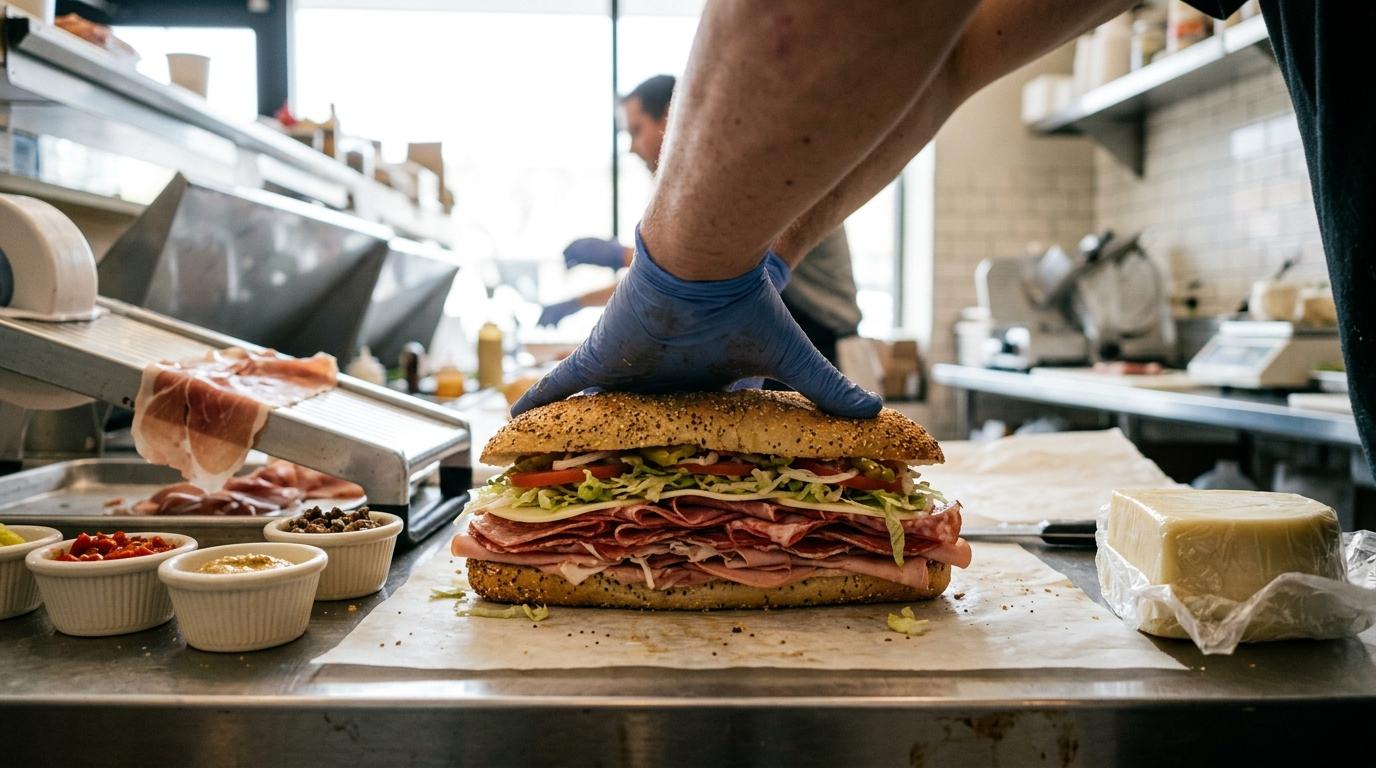
Choosing the right bread is the single most important decision you make when building a sandwich. The bread determines structural integrity, flavor balance, and the overall eating experience - get it wrong, and even premium fillings fall flat.
Whether you're assembling a quick lunch at home, designing a menu for a Philadelphia business catering spread, or just trying to level up your deli game, understanding how bread interacts with every other component is what separates a forgettable sandwich from one people talk about. Let's break it all down.
Why Bread Structure Changes Everything
Before you even think about meat, cheese, or condiments, you need to think about load capacity. Bread has to do three jobs simultaneously: hold the filling, deliver texture contrast, and contribute flavor without overpowering everything else.
Here's a practical way to think about it - match the bread's density to the weight and moisture content of your filling:
- Light, airy breads (brioche, soft potato rolls) work best with lighter fillings like chicken salad, egg salad, or thinly sliced turkey.
- Medium-density breads (sourdough, ciabatta, rye) handle medium-weight fillings like roast beef, pastrami, or grilled vegetables with cheese.
- Dense, crusty breads (baguette, semolina, hoagie rolls) are built for heavy, wet fillings - Italian cold cuts, meatballs, pulled pork, or anything with a generous sauce.
Putting a heavily dressed Italian sub on brioche isn't adventurous - it's structural collapse waiting to happen by the third bite.
Best Bread for Sandwiches: A Direct Comparison
Use this guide to match bread to filling type, toasting preference, and occasion:
Bread Type Best Filling Match Toast It? Ideal Occasion Sourdough Turkey, avocado, BLT, grilled cheese Yes - always Everyday lunch, café catering Brioche Chicken salad, egg salad, lobster roll Lightly Upscale breakfast catering, brunch Ciabatta Caprese, roasted peppers, prosciutto Optional Business catering platters Rye Pastrami, corned beef, Reuben Yes Deli catering services Hoagie Roll Italian cold cuts, cheesesteaks, meatball Optional Philly-style catering, large events Baguette Ham and butter, roast beef, muffuletta No - keep it crusty Gourmet sandwich boards Multigrain/Whole Wheat Hummus, roasted vegetables, turkey Yes Health-focused corporate lunchesHow to Build a Sandwich: The Correct Layering Order
Sandwich layering technique isn't just about aesthetics - it directly affects how flavors hit your palate and how structurally sound the sandwich holds up through the last bite. Here's the proven order:
- Sauce on the bread first. Both slices. Condiments act as a moisture barrier, protecting the bread from wet ingredients. Spread all the way to the edges - no dry corners.
- Leafy greens next. Lettuce, spinach, or arugula sit directly on the condiment layer and add another barrier between bread and wet proteins.
- Cheese on the bottom half. Placing cheese close to the bread anchors heavier ingredients and, if the sandwich is pressed or toasted, the cheese melts into the structure rather than sliding out.
- Protein in the center. This is your heaviest layer and belongs in the middle of the stack for even weight distribution.
- Vegetables and toppings above the protein. Tomatoes, onions, pickles, and peppers sit on top of the meat. Their moisture drips down through the protein rather than directly into the bread.
- Top bread, condiment-side down. Press lightly to compress and unify the layers.
Getting the Sauce-to-Meat Ratio Right
The sauce to meat ratio is where most home sandwich builders go wrong in one of two directions: too dry (skimping on condiments) or too wet (drowning the bread before it reaches the table).
A reliable starting ratio is 1 tablespoon of condiment per 3 ounces of protein. For a standard 6-ounce sandwich, that's approximately 2 tablespoons of sauce total, split between both bread faces. For richer condiments like aioli or pesto, reduce that to 1.5 tablespoons - they carry more flavor per gram than mustard or mayo.
For deli catering services in Philadelphia, this ratio matters even more because sandwiches often sit in trays for 30 to 60 minutes before serving. In those cases, reduce condiments by about 25% and serve additional sauce on the side. It keeps the bread from going soggy while giving guests control over their experience.
Flavor Architecture: Matching Bread Flavor to Filling Profile
Beyond structure, bread contributes a distinct flavor profile to every sandwich. Ignoring this is like ignoring the base note in a perfume - the entire composition suffers.
- Sourdough's tang complements fatty proteins (bacon, prosciutto, aged cheddar) by cutting through richness.
- Rye's earthiness amplifies the savory depth of cured meats like pastrami and corned beef- it's not a coincidence that every great Reuben comes on rye.
- Brioche's butter and sweetness contrasts beautifully with briny or acidic fillings (pickled onions, capers, citrus-dressed proteins).
- Ciabatta's mild, open crumb is a neutral canvas - it lets fresh, herbaceous ingredients like basil, fresh mozzarella, and sun-dried tomatoes lead.
- A hoagie roll's neutral chew is designed specifically not to compete with the filling - it's the workhorse of Philly catering for a reason.
Gourmet Sandwich Ideas That Start With the Right Bread Choice
Great gourmet sandwich ideas almost always begin with an intentional bread decision, not a last-minute one. Here are three combinations that demonstrate the principle in action:
- The Philly Green Goddess: Ciabatta + herb-roasted turkey + avocado + cucumber + green goddess dressing + sprouts. The ciabatta's mild flavor lets the herbal dressing lead without competition.
- The Corner Deli Classic: Seeded rye + pastrami + Swiss + whole grain mustard + dill pickles. Every component amplifies the rye's earthiness rather than fighting it.
- The Upscale Breakfast Build: Toasted brioche + smoked salmon + whipped cream cheese + capers + shaved red onion + everything bagel seasoning. The brioche's richness mirrors the salmon's fat content while staying light enough for a breakfast catering setting.
A Note on Toasting
Toasting is not always the answer - but for sandwiches that include wet ingredients like tomatoes, pickles, or saucy proteins, toasting creates a surface seal that buys the bread an extra 15 to 20 minutes of structural integrity. For catered events, that window matters enormously.
For sandwiches served immediately and eaten fresh, skip toasting when using an already-crusty bread like a baguette or a quality hoagie roll. Toasting a baguette twice (the bakery already did it once) can make the crust so hard it cuts the roof of your mouth - not the experience anyone is going for.
How To Build A Sandwich FAQ
What is the best bread for sandwiches that need to hold up for a few hours?
Sourdough, ciabatta, and hoagie rolls are the most structurally stable options for sandwiches that sit before serving. Their denser crumb resists moisture absorption significantly longer than soft sandwich bread or brioche. Toasting the interior face of the bread adds another protective layer.
How do I build a sandwich so it doesn't fall apart when I eat it?
Follow the correct layering order: condiments directly on bread, greens next as a moisture barrier, cheese close to bread, protein in the center, and wet vegetables (tomatoes, pickles) toward the top. Press the sandwich lightly before cutting to compress the layers. Cutting diagonally also increases structural stability by distributing pressure across a wider surface area.
What is the correct sauce-to-meat ratio for a sandwich?
Use approximately 1 tablespoon of condiment per 3 ounces of protein. For richer spreads like aioli, pesto, or flavored mayo, reduce by about 25%. For catered sandwiches that sit before serving, reduce overall sauce by 25% and serve extra on the side to prevent sogginess.
Should I toast my bread for every sandwich?
No - toasting depends on filling moisture and bread type. Toast sourdough, rye, and multigrain breads when using wet fillings. Skip toasting on already-crusty breads like baguettes or when serving sandwiches immediately with fresh, low-moisture fillings. Brioche benefits from light toasting to prevent it from compressing under filling weight.
How do Philadelphia catering companies handle sandwich prep for large events?
Most experienced Philadelphia catering companies reduce condiment volume by 20–25% for tray-served sandwiches, pre-toast where appropriate, and keep wet ingredients like tomatoes separated until closer to service. They also select heartier breads - ciabatta, hoagie rolls, and sourdough - over soft options that degrade quickly at room temperature.