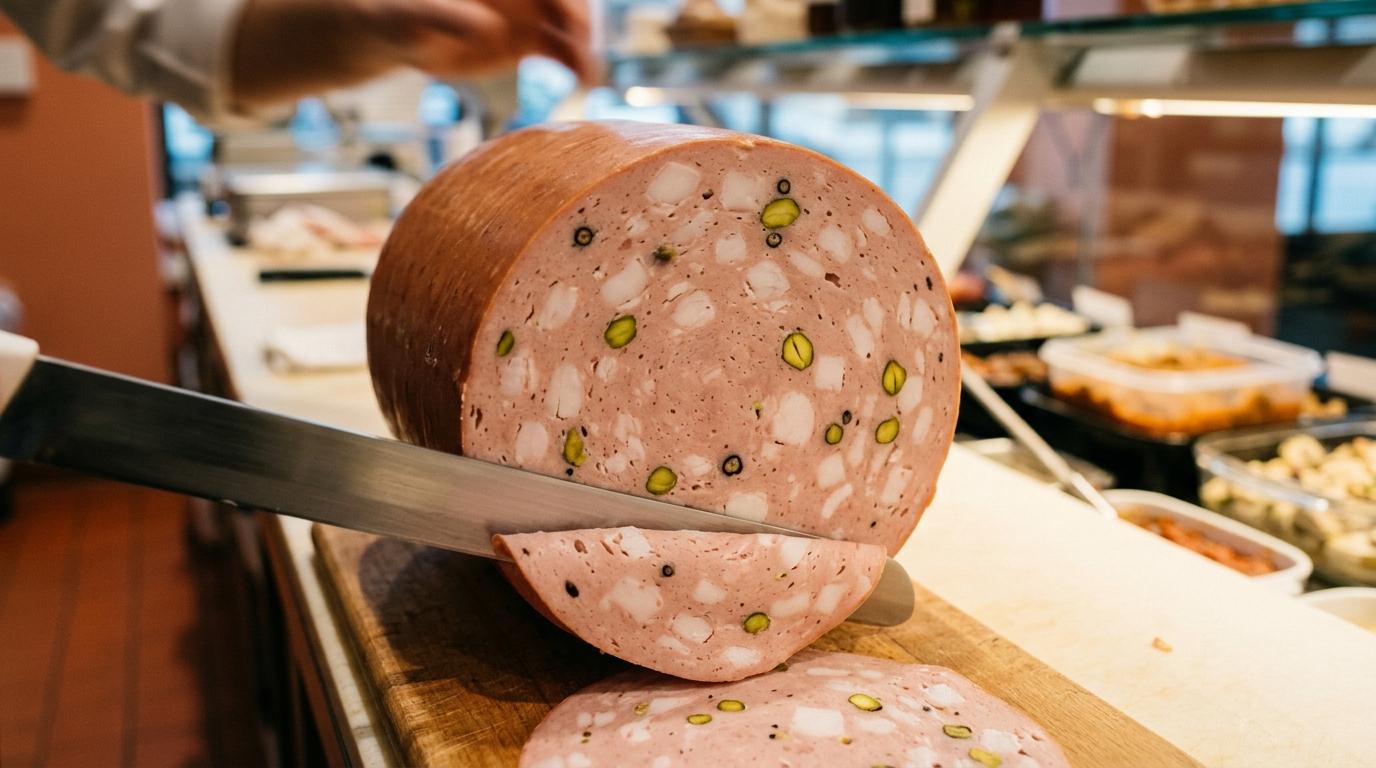
Mortadella is a finely ground, heat-cured Italian pork sausage originating from Bologna, Italy, studded with white fat cubes, whole peppercorns, and sometimes pistachios. It is the direct ancestor of American bologna - and it blows its descendant completely out of the water.
If you've been sleeping on mortadella, you're not alone. It tends to get overlooked at the deli counter in favor of more familiar deli meat types like turkey, ham, or salami. But once you try a thin-sliced, properly imported or house-made mortadella on a good roll with the right cheese, it's almost impossible to go back. Here's everything you need to know about this underrated Italian classic - including how it stacks up against other cured meats and how to build the perfect sandwich around it.
A Brief History of Mortadella
Mortadella di Bologna holds Protected Geographical Indication (PGI) status under European Union law, meaning authentic mortadella can only be produced in specific regions of Italy, primarily Emilia-Romagna. The name likely derives from the Latin word murtatum, referring to myrtle berries once used to season the sausage, or from mortarium, the mortar used to grind the pork. Either way, this cold cut has been around for centuries - documented records of production in Bologna date back to at least the 17th century.
American bologna emerged as a budget-friendly, shelf-stable version during mass industrialization. The two products share a lineage, but authentic Italian mortadella is a fundamentally different eating experience: silkier texture, more complex seasoning, and a richness that comes from the signature white fat inclusions.
What Makes Mortadella Different From Other Deli Meat Types
Walk up to any deli counter in Philadelphia and you'll find a wide range of cured and cooked meats. Here's how mortadella compares to the most common deli meat types you'll encounter:
Deli Meat Origin Texture Flavor Profile Curing Method Mortadella Bologna, Italy Smooth, silky Mild, savory, lightly spiced Heat-cured (cooked) Prosciutto di Parma Parma, Italy Delicate, paper-thin Salty, sweet, nutty Dry-cured (raw) Serrano Ham Spain Firm, slightly chewy Earthy, robust, saltier than prosciutto Dry-cured (raw) Capicola Italy / Calabria Marbled, tender Spicy or sweet, bold Dry-cured (raw) American Bologna United States Uniform, dense Mild, slightly smoky Heat-cured (cooked)Prosciutto vs. Serrano: How Do They Compare to Mortadella?
The prosciutto vs. serrano debate is one of the great charcuterie conversations - but mortadella occupies its own lane entirely. Here's the quick breakdown:
- Prosciutto di Parma is aged a minimum of 12 months, dry-cured with sea salt only, and produces a buttery, melt-in-your-mouth slice. It's the go-to for charcuterie boards and light sandwiches.
- Serrano ham is Spain's answer to Italian prosciutto - aged between 9 and 24 months, with a firmer texture and more pronounced saltiness. It's excellent but distinct, with an earthier flavor that can stand up to stronger cheeses and condiments.
- Mortadella is cooked, not cured, which means it's more accessible, generally more affordable, and lower in sodium than dry-cured competitors. It's also much more versatile as a sandwich ingredient because its neutral-to-savory flavor pairs well with nearly anything.
If you're building a charcuterie spread, the smart move is to include all three - they contrast beautifully in texture, color, and flavor.
Is Mortadella a Low Sodium Deli Meat?
Compared to most dry-cured meats, mortadella is genuinely one of the better low sodium deli meat options at the counter. A standard 2-ounce serving of imported Italian mortadella typically contains around 450–550 mg of sodium, compared to prosciutto at roughly 700–900 mg for the same serving size. Serrano ham often runs even higher.
That said, "lower sodium" doesn't mean sodium-free. If you're watching your intake closely, ask your deli counter team for the nutritional specifics on the brand they carry. At a quality Philadelphia deli catering service, the staff should be able to walk you through exactly what you're getting - that's part of what separates a real deli from a grocery store meat department.
The Best Cheese for Sandwiches with Mortadella
Choosing the best cheese for sandwiches with mortadella comes down to balancing richness without overpowering that delicate pork flavor. Here are the top pairings, ranked by how well they complement mortadella specifically:
- Provolone (sharp or mild)- The classic Italian deli pairing. Sharp provolone cuts through the fat beautifully. Mild provolone keeps things smooth and crowd-pleasing.
- Fresh mozzarella- Creamy and subtle, this lets the mortadella do the talking. Add basil and a drizzle of olive oil and you have something close to perfect.
- Aged Asiago- Nutty and firm, Asiago adds complexity without stealing the show.
- Fontina- Mild, buttery, and slightly funky, Fontina is an underused gem on any Italian-style sandwich.
- Taleggio- For the adventurous eater. Taleggio is washed-rind, pungent, and creamy - it pairs with mortadella the way blue cheese pairs with a steak.
How to Order Mortadella at the Deli Counter
Mortadella should be sliced to order - always. A few practical tips:
- For sandwiches: Ask for thin slices, around 1/16 inch. This gives you those beautiful folds and layers that make an Italian sub feel luxurious.
- For charcuterie boards: Request medium thickness, about 1/8 inch, so it holds its shape and the fat cubes are visible and visually impressive.
- For cooking: Thick-cut cubes of mortadella are incredible sautéed in pasta, folded into scrambled eggs, or crisped in a pan like pancetta.
At a quality deli catering service in Philadelphia, mortadella is a smart addition to any office breakfast spread or sandwich tray. It's affordable, universally appealing, and visually distinctive - which matters when you're feeding a conference room full of people with varying tastes.
Why Philadelphia Delis Are Embracing Mortadella
Philadelphia has always had a deep Italian-American food culture, stretching from the Italian Market in South Philly to neighborhood sandwich shops throughout Center City. That foundation means Philly diners are primed to appreciate authentic imports like PGI-certified mortadella.
More Center City Philadelphia catering companies are now featuring mortadella on their sandwich and deli trays alongside the usual turkey and roast beef - and clients notice. It signals that you've put genuine thought into the food, not just filled a tray with the cheapest available proteins. For business catering in Philadelphia, that kind of attention to detail builds goodwill with clients and employees alike.
Whether you're ordering a breakfast spread, a working lunch, or a full sandwich station for an office event, asking for mortadella by name is one of the easiest ways to upgrade the entire spread.
Deli Meat Types FAQ
What is mortadella made of?
Mortadella is made from finely ground pork, including lean cuts and fat, seasoned with black pepper, myrtle berries, and spices, then heat-cured in large cylindrical casings. Authentic Italian mortadella must contain at least 15% cubed pork fat by weight, and many varieties also include whole pistachios or olives.
Is mortadella the same as bologna?
No. American bologna is loosely derived from mortadella but is a significantly different product. Bologna is typically made from mechanically processed meat with a uniform texture and milder seasoning. Mortadella is made from higher-quality cuts, has a silkier texture, contains visible fat cubes and whole spices, and is held to strict PGI production standards in Italy.
Is mortadella safe to eat if you're pregnant or immunocompromised?
Mortadella is a cooked, heat-cured product - not a raw, dry-cured meat. This makes it generally safer than prosciutto or serrano ham for people who are pregnant or immunocompromised, though you should always consult your doctor or dietitian for personal medical guidance. Heat the slices to 165°F if you want to be fully certain.
How does mortadella fit into a catering order for a Philadelphia office?
Mortadella works exceptionally well on deli sandwich trays, Italian-style sub platters, and charcuterie boards. For Philadelphia business catering orders, it pairs naturally with provolone, fresh mozzarella, crusty rolls, and giardiniera. It's cost-effective for large orders and appeals to a broad range of palates, including guests who don't eat beef or turkey.
What's the difference between prosciutto and serrano ham?
Prosciutto di Parma is an Italian dry-cured ham aged at least 12 months, with a sweeter, more delicate flavor and a melt-in-your-mouth texture. Serrano ham is a Spanish dry-cured ham aged between 9 and 24 months, with a firmer texture and earthier, saltier flavor. Both are raw (not cooked), which distinguishes them from mortadella. Prosciutto is generally more widely available in U.S. delis; serrano offers a slightly more robust alternative at a comparable price point.