What Is Mortadella? Italy's Most Underrated Cold Cut, Explained
Mortadella is a finely ground, emulsified Italian pork sausage - originating from Bologna, Italy - studded with white fat cubes, whole peppercorns, and sometimes pistachios, then slow-cooked in a casing until silky-smooth. It is the direct ancestor of American bologna, but the two products are worlds apart in flavor, texture, and quality.
If you've ever walked past the deli case and wondered what that massive, pale-pink cylinder was sitting next to the prosciutto, you were probably looking at mortadella. Most people walk right by it. That's a mistake. Let's break down everything you need to know about this underappreciated Italian classic - including how to eat it, what to pair it with, and how it stacks up against other popular deli meat types.
Where Does Mortadella Come From?
Mortadella has been made in the Emilia-Romagna region of northern Italy for centuries. The city of Bologna is so closely associated with it that the sausage is legally protected under the European Union's Protected Geographical Indication (PGI) designation. Authentic Mortadella Bologna IGP must be produced in a specific geographic area using strict production standards - including a minimum fat content, specific spice ratios, and that signature slow-cooking process.
The name itself likely derives from the Latin word murtatum, meaning meat seasoned with myrtle berries, though some food historians trace it to mortarium, the mortar used to grind the pork. Either way, this is a product with deep roots - and a taste that reflects centuries of refinement.
What Makes Mortadella Different From Other Deli Meats?
Most deli meats are either whole-muscle cuts (like prosciutto or turkey breast) or coarsely ground and formed (like some salamis). Mortadella is unique because it's made from an ultra-fine pork emulsion - meaning the meat is ground so finely it becomes almost paste-like before being mixed with larger fat cubes and spices, then cooked low and slow. The result is a texture that's simultaneously delicate and substantial, with a mild, lightly smoky, slightly sweet flavor that plays well with almost everything.
Here's how mortadella compares to other popular deli meat types you'll find at a quality deli counter:
Deli Meat Origin Texture Flavor Profile Sodium Level Mortadella Bologna, Italy Silky, smooth, emulsified Mild, sweet, lightly spiced Moderate (~480–550 mg per 2 oz) Prosciutto di Parma Parma, Italy Thin, delicate, almost translucent Salty, nutty, slightly sweet High (~900–1,100 mg per 2 oz) Serrano Ham Spain Firm, slightly chewy Intensely salty, earthy High (~1,000–1,200 mg per 2 oz) Genoa Salami Genoa, Italy Firm, coarsely ground Tangy, garlicky, peppery High (~900–1,000 mg per 2 oz) Turkey Breast (roasted) American style Lean, whole muscle Mild, clean, neutral Lower (~300–400 mg per 2 oz)One often-overlooked benefit of mortadella: it's one of the more moderate-sodium options among cured and processed Italian meats. If you're looking for low sodium deli meat options that still deliver on flavor, mortadella is a legitimate contender - especially compared to prosciutto or serrano ham, both of which rely on heavy salt curing as their primary preservation method.
Prosciutto vs. Serrano: How Do They Fit In?
Since we're comparing, it's worth addressing the prosciutto vs serrano question directly, because customers ask about this constantly at the deli counter.
- Prosciutto di Parma is an Italian dry-cured ham, aged a minimum of 12 months (often 24+), with a buttery texture and complex sweetness from the pigs' whey-based diet.
- Serrano ham is a Spanish dry-cured ham, typically aged 12–18 months, with a firmer texture and a more assertive, saltier flavor.
- Both are whole-muscle, uncooked (cured) products - very different from mortadella's cooked, emulsified format.
- Prosciutto is generally milder and more versatile for pairing with cheese and fruit; serrano is bolder and pairs better with olives and crusty bread.
- Both are significantly higher in sodium than mortadella, making mortadella the smarter pick for guests watching their sodium intake without sacrificing Italian deli flavor.
How to Eat Mortadella
The Italians have this figured out. In Bologna, mortadella is often served thickly sliced - not the paper-thin shaving you see with prosciutto - and eaten on its own or tucked into a tigella (a small flatbread) with a smear of soft cheese or pesto. Here in Philadelphia, we love it on a proper Italian hoagie or folded onto a charcuterie board.
A few ways to use mortadella that go beyond the basic sandwich:
- The Roman-style sandwich: Thick-sliced mortadella on a crusty ciabatta roll with fresh ricotta and a drizzle of honey. Simple, perfect.
- On a charcuterie board: Fold slices into quarters and fan them out. The fat content makes it one of the most visually appealing - and crowd-pleasing - additions to any board.
- In a breakfast spread: Mortadella works beautifully as part of a breakfast catering setup, layered with eggs, pickled vegetables, and good bread.
- In pasta: Cube it and toss with rigatoni, cream, and peas for a Roman-style pasta that takes about 20 minutes to make.
- As a pizza topping: Add it after baking so the fat doesn't render off - the residual heat is enough.
The Best Cheese Pairings for Mortadella
Choosing the best cheese for sandwiches with mortadella comes down to complementing its mild, fatty richness without overpowering it. Here are the pairings that actually work:
- Fresh burrata or mozzarella di bufala: The creamy, milky freshness is a perfect counterpoint to mortadella's fat.
- Provolone (sharp): A classic Italian-American pairing. The tang cuts through the richness beautifully.
- Pecorino Romano: Shaved thin, it adds a salty, grassy note that elevates mortadella from lunch meat to something more serious.
- Fontina: Melty and mild - ideal if you're making a hot pressed sandwich.
- Fresh ricotta: The Roman way. Spread it thick, don't be shy.
At a full-service deli, the team behind the counter should be able to help you land the right combination. If they can't, you're at the wrong deli.
Mortadella and Philadelphia Catering
For anyone planning deli catering services in Philadelphia- whether it's a corporate lunch in Center City, a breakfast spread for a morning meeting, or a full charcuterie station for an office event - mortadella is one of the smartest things you can put on a platter. It's approachable enough for guests who are skeptical of "fancy" charcuterie, but interesting enough to give your spread a genuinely elevated feel.
When we build out catering platters for businesses in Center City Philadelphia, mortadella is almost always part of the conversation. It pairs with nearly every cheese, plays well with pickled vegetables and olives, and - crucially - holds up at room temperature better than delicate whole-muscle cuts like prosciutto. For a two-hour working lunch, that matters.
How to Order Mortadella at the Deli Counter
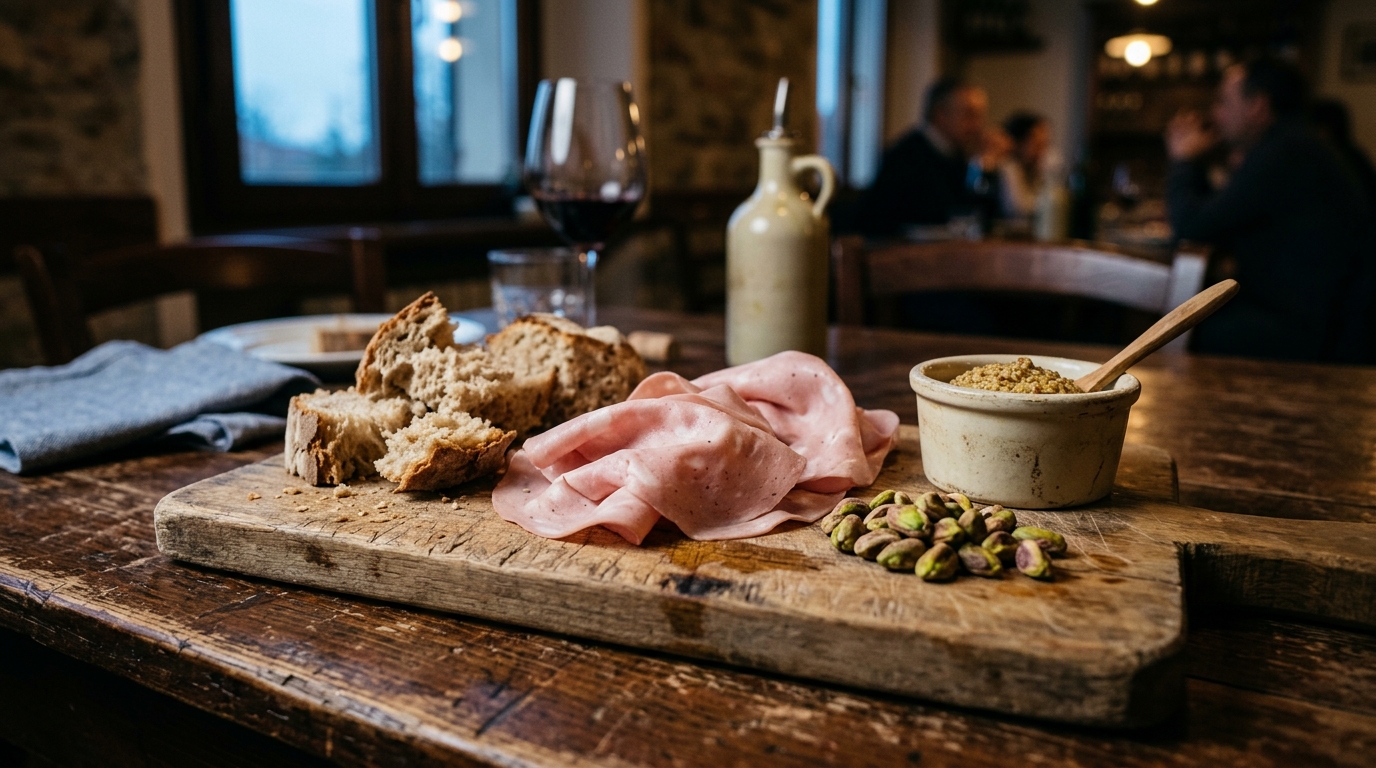
Ask for it sliced thick - about ⅛ inch. Paper-thin slices lose the texture that makes mortadella special. If your deli has the pistachio variety (Mortadella con Pistacchi), try it at least once. The pistachios add a subtle earthiness and a pop of color that makes it even more at home on a charcuterie board.
And if you're building a sandwich at home, don't toast the bread. Let the mortadella be the star. Good meat, good cheese, a little something acidic (pickled peppers, sliced pepperoncini), and you're done.
Deli Meat Types FAQ
What is mortadella made of?
Mortadella is made from finely ground pork (including shoulder and neck cuts), large cubes of pork fat, whole black peppercorns, and spices like myrtle berries, coriander, and nutmeg. Some varieties include pistachios or olives. The mixture is stuffed into a casing and slow-cooked at low heat until the interior reaches a precise temperature, which gives it that distinctive smooth, silky texture.
Is mortadella the same as bologna?
No. American bologna is directly inspired by mortadella, but the two are not the same product. Authentic Italian mortadella - especially Mortadella Bologna IGP - uses higher-quality pork, specific spice blends, visible fat cubes, and a protected production process. American bologna is typically made with mechanically separated meat, multiple fillers, and a much simpler flavor profile. Mortadella is to bologna what Parmigiano-Reggiano is to canned parmesan.
Is mortadella a good low sodium deli meat option?
Relative to other Italian cured meats, yes. Mortadella typically contains 480–550 mg of sodium per 2-ounce serving, compared to 900–1,200 mg for prosciutto or serrano ham. It's not a low-sodium food in absolute terms, but for someone who wants the flavor experience of a quality Italian deli meat with a lighter sodium load, mortadella is the most reasonable choice in that category.
What's the difference between prosciutto and serrano ham?
Prosciutto (specifically Prosciutto di Parma or Prosciutto di San Daniele) is an Italian dry-cured ham with a buttery, lightly sweet flavor, aged at least 12 months. Serrano ham is a Spanish dry-cured ham with a firmer texture and more intense, saltier taste, typically aged 12–18 months. Both are whole-muscle cuts, but prosciutto is generally milder and more versatile for pairing, while serrano is better suited to bold, rustic accompaniments. Neither is cooked - both rely entirely on salt and air-drying for preservation.
What cheeses pair best with mortadella for a sandwich or charcuterie board?
The best cheeses to pair with mortadella are fresh mozzarella or burrata (for a light, creamy contrast), sharp provolone (for the classic Italian-American combination), shaved Pecorino Romano (for a salty, aged contrast), Fontina (for hot pressed sandwiches), and fresh ricotta (for the authentic Roman-style open-faced preparation). Avoid very pungent washed-rind cheeses, which will overwhelm mortadella's subtle flavor.