
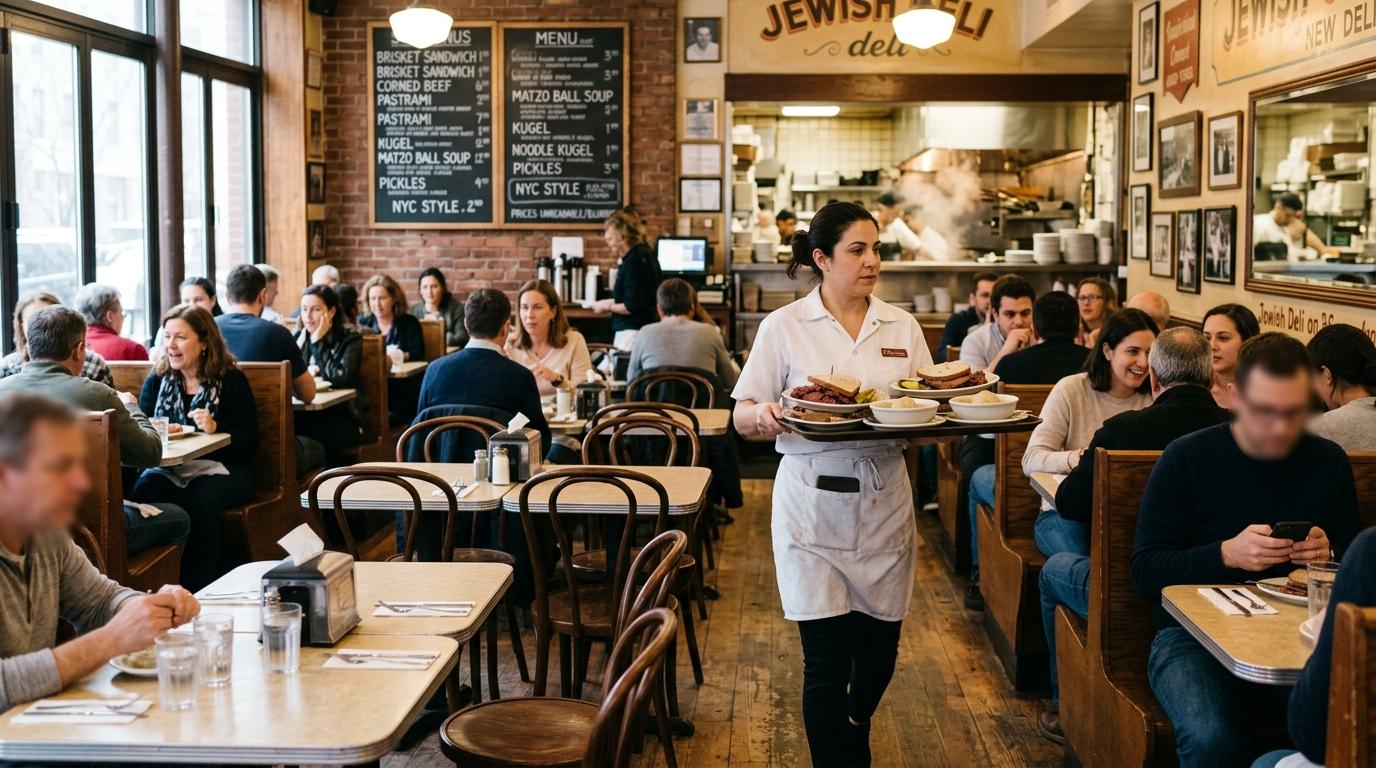
A real deli is defined by six non-negotiable qualities: house-cured or hand-sliced meat, bread baked fresh daily, a traceable cultural tradition, housemade condiments, generous portions, and a counter culture that treats regulars like family. Strip any one of those away, and you've got a sandwich shop - not a deli.
That distinction matters more than ever in Philadelphia, where the deli tradition runs deep and where the line between a corner café slapping together a turkey wrap and a true deli catering service is very real. Whether you're ordering lunch for your Center City office or just want to understand why your grandmother swore by one specific spot, here's the full backstory on what separates a legendary deli from everything else.
A Quick History of the Deli in America
The American deli has two main ancestral lines: the Jewish delicatessen and the Italian-American salumeria. Both arrived with immigrant waves in the late 19th and early 20th centuries. The first Jewish delicatessens opened in New York City in the 1880s, brought over by Ashkenazi Jewish immigrants from Eastern Europe who were recreating the cured and smoked meats they'd eaten in Germany, Poland, and Romania.
The word "delicatessen" itself comes from the German delikatessen, meaning "delicacies" - and that word traces back even further to French. By the 1930s, New York City alone had more than 1,500 Jewish delis operating. That number had dropped to fewer than 20 by 2010, according to food historians documenting the industry's decline.
Philadelphia developed its own deli identity, shaped heavily by South Philly's Italian immigrant community alongside Jewish neighborhoods in Northeast Philly and areas like Strawberry Mansion. Today, that layered history is exactly what makes Philadelphia catering companies with real deli roots different from generic food service operations.
What Is a Jewish Deli - and Why Does It Matter?
A Jewish deli is specifically a delicatessen rooted in Ashkenazi Jewish food traditions and, traditionally, kosher or kosher-style preparation. The defining meats are pastrami, corned beef, tongue, and brisket. The defining bread is rye - specifically seeded rye or marble rye. The defining condiment is spicy brown mustard, never mayonnaise on the meat.
Traditional Jewish delis also follow the rule of milchig versus fleishig- dairy and meat are not mixed. That's why you won't find cheese on a classic pastrami sandwich at a kosher deli. "Kosher-style" delis relax that rule but maintain the flavor tradition and the cultural atmosphere.
The Jewish deli gave America some of its most iconic food: the Reuben sandwich, the matzo ball soup, the knish, and the pickle barrel at the end of the counter. These aren't just menu items - they're cultural artifacts with documented histories.
Pastrami History: The Meat That Built an Empire
Pastrami's origin story starts in Romania, where a cured beef or goose meat called pastramă was a preservation staple. Romanian Jewish immigrants brought the technique to New York City in the 1880s. By the early 1900s, pastrami on rye was the defining sandwich of the Lower East Side.
The process is specific: beef navel (a cut from the plate section of the cow) is brined for days, coated in a spice rub heavy on black pepper and coriander, smoked low and slow, then steamed until it pulls apart in thick, fatty slices. Shortcuts at any stage of that process produce an inferior product - and anyone who's eaten real pastrami can taste the difference immediately.
Katz's Delicatessen in New York, opened in 1888, is the most cited example of pastrami done right. Philadelphia has its own storied pastrami spots, and the best deli catering services in Philadelphia source or prepare their pastrami with the same patience that process demands.
Corned Beef Origins: Irish-American or Jewish?
Corned beef is genuinely cross-cultural. The "corned" in the name refers to large-grained rock salt - called "corns" of salt - used to cure the beef. Irish immigrants in America adopted corned beef heavily in the late 19th century because it was affordable and available from Jewish butchers in New York's Lower East Side, where Irish and Jewish communities lived side by side.
The Irish-American St. Patrick's Day tradition of corned beef and cabbage is, historically, an American invention - not something brought directly from Ireland. Meanwhile, Jewish delis refined corned beef into an art form: brisket-cut, slow-brined, hand-sliced thin, and served hot on rye. The two traditions cross-pollinated, and the result is an American deli staple with a legitimately fascinating origin story.
The 6 Things That Separate a Great Deli from the Rest
Here's a direct comparison of what defines a real deli versus a generic sandwich operation:
Quality Marker Real Deli Generic Sandwich Shop 1. The Meat House-cured, smoked, or hand-sliced from whole cuts Pre-sliced, pre-packaged deli meat from a warehouse 2. The Bread Fresh-baked rye, rolls, or challah - daily Commercial bread delivered on a truck 3. The Cultural Tradition Recipes with documented ethnic and regional roots Menu built from trend research, not tradition 4. The Condiments Housemade mustard, housemade pickles, coleslaw from scratch Squeeze bottles of national condiment brands 5. The Portions Stacked to the point of structural ambition Measured to a spec sheet 6. The Counter Culture Staff who know their regulars, argue about mustard, and care Transactional, scripted, turnover-heavyEvery legendary deli - from Katz's in New York to the best spots in South Philly - scores high on all six. The ones that cut corners on even one or two of these markers feel like imitations the moment you sit down.
Why Deli Culture Matters for Business Catering in Philadelphia
Philadelphia is a working city with a real appetite - literally and culturally. When a company orders breakfast catering or lunch catering for a Center City Philadelphia office, they're making a statement about how they treat their team. A tray of mass-produced sandwiches from a generic provider says one thing. A spread from a Philadelphia catering company with actual deli roots - hand-sliced meats, fresh-baked bread, housemade sides- says something entirely different.
The deli tradition is built on the idea that food should be generous, specific, and made with knowledge. That philosophy translates directly into great café catering in Philadelphia and business catering: people eat better, stay longer, and feel valued when the food has a story behind it.
Philly's food culture has always honored that connection between tradition and hospitality. The best deli catering services in Philadelphia are the ones that understand they're not just delivering sandwiches - they're carrying forward a food tradition that's more than 130 years old in this country.
History Of The Deli FAQ
What is the difference between a Jewish deli and a regular deli?
A Jewish deli follows Ashkenazi Jewish food traditions, centering on cured and smoked meats like pastrami, corned beef, and tongue, served on rye bread with spicy brown mustard. Traditional Jewish delis are kosher or kosher-style, meaning meat and dairy are not combined. A "regular" or American deli typically draws from multiple ethnic traditions - Italian, Jewish, and regional American - and does not follow dietary laws. The Jewish deli is the foundation from which most American deli culture developed.
Where does pastrami come from originally?
Pastrami originated in Romania as a preserved meat called pastramă, made from beef or goose. Romanian Jewish immigrants brought the technique to New York City in the 1880s, where it was adapted to use beef navel, brined, spice-rubbed with black pepper and coriander, smoked, and steamed. It became the signature meat of New York Jewish delis and spread from there throughout American deli culture.
What is the history of corned beef in America?
Corned beef was popularized in America by Irish and Jewish immigrant communities living side by side in New York City in the late 19th century. Irish immigrants adopted it from Jewish butchers because it was affordable and widely available. "Corned" refers to the large-grained rock salt used to cure the brisket. The Irish-American tradition of corned beef and cabbage on St. Patrick's Day is an American invention, not a direct import from Ireland. Jewish delis refined corned beef preparation into a distinct culinary tradition.
How many Jewish delis are left in the United States?
Food historians documented a dramatic decline from over 1,500 Jewish delis in New York City alone during the 1930s to fewer than 20 in that city by the early 2010s. Nationally, the number of traditional Jewish delis has continued to shrink, though a renewed interest in deli culture has produced a small but significant revival movement, with new deli-focused restaurants opening in cities including Philadelphia, New York, and Los Angeles through the mid-2020s.
What should I look for when choosing a deli catering service in Philadelphia?
Look for a Philadelphia catering company that uses hand-sliced whole-cut meats rather than pre-packaged deli meat, sources or bakes fresh bread daily, makes its own condiments and sides, and has a clear connection to deli tradition rather than generic food service. Ask specifically whether meats are sliced to order and whether bread is baked fresh. Those two questions alone will tell you whether you're dealing with a real deli operation or a sandwich assembly line.