
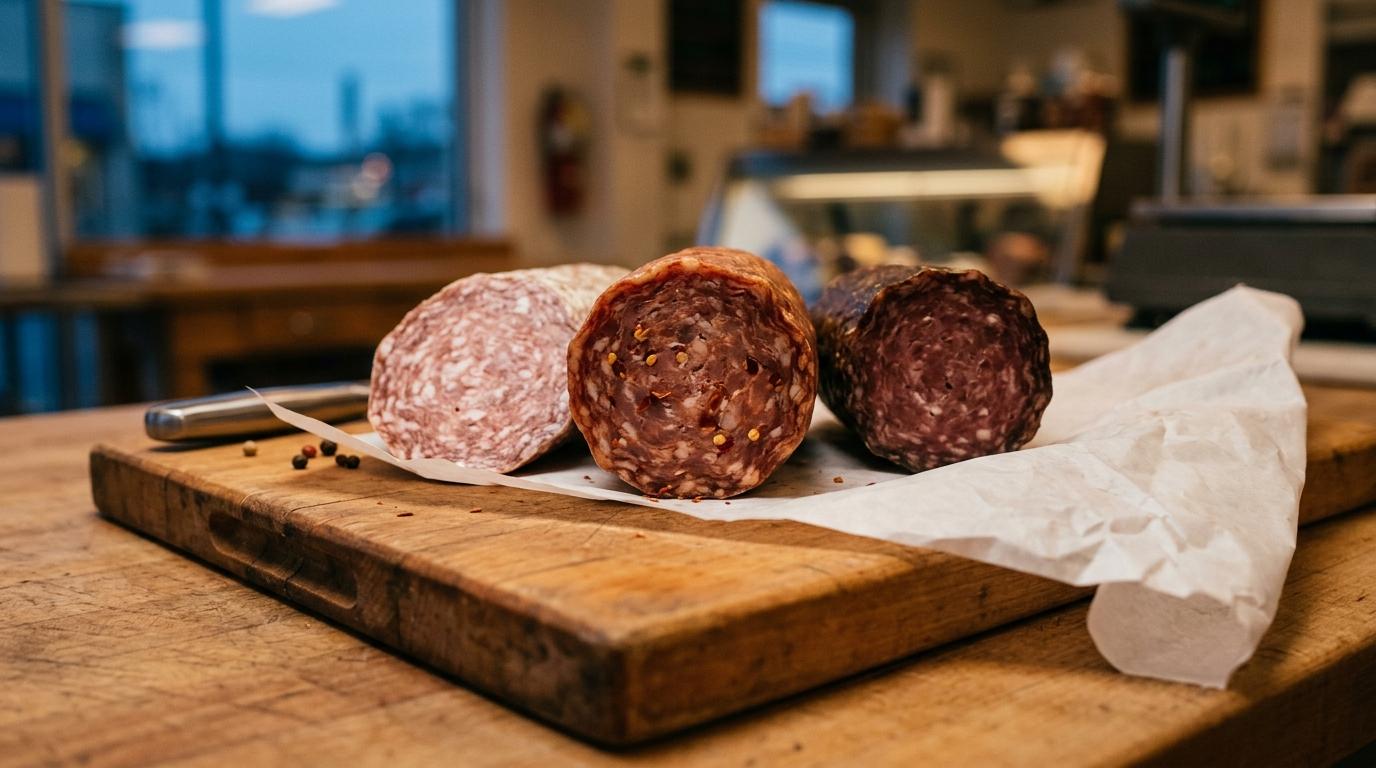
Genoa salami is mild, fatty, and finely ground - ideal for layered sandwiches. Sopressata is coarser, spicier, and pressed during curing. Hard salami is firmer, smokier, and sliced thin for charcuterie boards. All three are cured pork products, but they taste and perform very differently at the deli counter.
If you've ever stood in front of a deli case feeling genuinely overwhelmed, you're not alone. The cured meat section is one of the most misunderstood corners of any food counter- and one of the most rewarding once you understand what you're looking at. Whether you're building a catering spread for a Philadelphia office, assembling the perfect sandwich at home, or just trying to figure out what mortadella actually is, this guide breaks it all down in plain language.
What Is Salami, Exactly?
Salami is a family of cured sausages made from fermented and air-dried meat - almost always pork, though beef and venison versions exist. The curing process uses salt, sometimes nitrates, and a mix of spices that vary by region and tradition. The result is a shelf-stable, intensely flavored product that can be sliced thin or thick depending on how it's served.
The three most common varieties you'll encounter at a Philadelphia deli are Genoa salami, sopressata, and hard salami. Here's how they actually differ:
Genoa vs. Sopressata vs. Hard Salami: 5 Key Differences
Feature Genoa Salami Sopressata Hard Salami Texture Soft, finely ground Coarse, chunky fat pockets Firm, dense, dry Flavor Profile Mild, garlicky, slightly tangy Bold, peppery, sometimes hot Smoky, savory, concentrated Origin Genoa, Italy Southern Italy Central/Eastern Europe Best Use Sandwiches, sub rolls Charcuterie boards, pizza Crackers, boards, antipasto Sodium Level Moderate (~480mg per oz) Higher (~520mg per oz) Higher (~560mg per oz)Genoa Salami
Genoa is the most popular deli salami in the United States, and for good reason. It's made from finely ground pork, seasoned with garlic, salt, and white or red wine, then air-dried. The fat is evenly distributed through the meat, giving each slice a smooth, almost silky texture. The flavor is rich but approachable - not aggressively spicy, not overwhelmingly smoky. It folds beautifully into sandwiches and pairs especially well with provolone on a crusty Italian roll.
Sopressata
Sopressata is where things get more interesting. The name comes from the Italian word for "pressed," and traditionally this salami was weighted down during curing to give it a flattened shape. The meat is ground more coarsely than Genoa, so you can see distinct chunks of fat and lean pork in each slice. Flavor-wise, sopressata is more assertive - expect black pepper, red pepper flakes, and a deeper, more complex cure. There's a hot variety (piccante) and a mild variety (dolce), so ask your deli counter which type they carry.
Hard Salami
Hard salami is exactly what it sounds like: firmer, drier, and more concentrated in flavor than Genoa or sopressata. It's often lightly smoked, which gives it a distinct savory depth. Because it's so firm, it slices paper-thin without falling apart - making it ideal for charcuterie boards alongside sharp cheeses and pickles. The tradeoff is sodium: hard salami tends to be the saltiest of the three, so if you're watching your intake, order it in smaller quantities and layer it with lower-sodium accompaniments.
What About Prosciutto vs. Serrano?
Prosciutto and Serrano ham are both dry-cured whole hams, but they come from different countries and have distinctly different flavor profiles.
- Prosciutto di Parma (Italy): Cured with sea salt only, aged a minimum of 12 months, flavor is sweet, buttery, and delicate. Protected designation of origin - real Parma prosciutto is stamped with a crown logo.
- Jamón Serrano (Spain): Cured from white-coated pig breeds, slightly firmer and less fatty than prosciutto, with a more pronounced savory and nutty finish. Aged anywhere from 7 to 24 months.
- Key difference: Prosciutto is sweeter and more melt-in-your-mouth; Serrano is firmer and more intensely savory. Both are low in carbohydrates and high in protein, but neither qualifies as a low sodium deli meat- a 1-oz serving of prosciutto contains approximately 510–540mg of sodium.
For a catering platter, layering both gives guests a genuine taste comparison - and it's the kind of detail that makes a Philadelphia catering spread feel genuinely professional rather than just adequate.
What Is Mortadella?
Mortadella is a large-format Italian cooked sausage from Bologna, made from finely ground pork studded with cubes of pork fat and whole pistachios or peppercorns. It's not a salami - it's cooked, not cured and dried - but it lives in the same deli case and confuses a lot of people. Think of it as Bologna's sophisticated older sibling. The texture is smooth and almost creamy, and the flavor is mild with a subtle pork sweetness. In Philadelphia delis, you'll often find it on Italian combo sandwiches or served thin on an antipasto board.
If you've ever had a real mortadella sandwich with good olive oil and crusty bread, you already understand why this meat has devoted fans.
Low Sodium Deli Meat: What Are Your Best Options?
Most cured meats are naturally high in sodium - that's part of the preservation process. But some cuts are lower than others, and some brands offer reduced-sodium versions that hold up well in flavor. Here's a practical ranking from lowest to highest sodium among common deli meat types:
- Roast beef (unseasoned)- approximately 180–220mg sodium per oz
- Fresh-roasted turkey breast- approximately 200–280mg per oz (significantly lower than processed turkey)
- Roast chicken breast- approximately 250–300mg per oz
- Genoa salami- approximately 480mg per oz
- Prosciutto- approximately 510–540mg per oz
- Hard salami- approximately 540–580mg per oz
The takeaway: if you're managing sodium intake, fresh-roasted meats sliced at the counter are always your best bet. Ask your deli whether they roast in-house or use pre-formed processed loaves - the difference in sodium content is significant.
What's the Best Cheese for Sandwiches?
Cheese pairing isn't subjective - it's actually pretty systematic once you understand flavor weight:
- With Genoa salami: Provolone (mild or sharp), fresh mozzarella, or fontina. The mild fat of Genoa needs a cheese with some tang but not too much aggression.
- With sopressata: Aged provolone, sharp cheddar, or pecorino. The bolder spice of sopressata stands up to stronger cheeses.
- With hard salami: Swiss, Gruyère, or aged Gouda. The smokiness of hard salami complements nutty, slightly sweet cheeses.
- With mortadella: Fresh mozzarella or burrata. Let the meat be the star - creamy, neutral cheeses don't compete.
- With prosciutto: Parmigiano-Reggiano (thin shaved pieces), fresh ricotta, or melon - technically not a cheese pairing, but the classic for a reason.
For business catering in Center City Philadelphia, building a mixed deli and cheese board with three to four of these pairings pre-arranged gives clients a memorable spread without overwhelming complexity. A good rule of thumb: one hard cheese, one semi-soft, and one fresh per board.
Deli Meat Types FAQ
What is the difference between Genoa salami and hard salami?
Genoa salami is softer, finely ground, and mildly seasoned with garlic and wine - ideal for sandwiches. Hard salami is firmer, drier, and lightly smoked, making it better for charcuterie boards and cracker pairings. Hard salami also has a higher sodium content per ounce than Genoa.
Is mortadella the same as bologna?
No. American bologna is a processed, emulsified sausage derived from mortadella, but the two are not the same. True Italian mortadella is made from high-quality finely ground pork with visible fat cubes and often pistachios, then slow-steamed. It has a richer, more complex flavor than American bologna and is typically sold in larger, thicker slices.
What is the lowest sodium deli meat available?
Fresh-roasted, unseasoned roast beef or in-house roasted turkey breast are the lowest-sodium options at most deli counters, typically ranging from 180–280mg of sodium per ounce. Cured meats like salami, prosciutto, and hard salami all run significantly higher - generally 480–580mg per ounce - because salt is central to the curing process.
What is the difference between prosciutto and Serrano ham?
Prosciutto (Italian) is sweeter, fattier, and more delicate in texture, cured only with sea salt for a minimum of 12 months. Serrano ham (Spanish) is firmer and more intensely savory, made from white-coated pig breeds and aged 7–24 months. Both are thinly sliced dry-cured hams, but prosciutto melts on the palate while Serrano offers a chewier bite with a nuttier finish.
What cheeses work best on a deli sandwich?
The best cheese depends on the meat. Provolone (mild or sharp) pairs with Genoa salami. Aged provolone or sharp cheddar pairs with sopressata. Swiss or Gruyère complements hard salami. Fresh mozzarella is ideal alongside mortadella. For prosciutto, thin-shaved Parmigiano-Reggiano is the traditional match. Matching flavor intensity - mild meat with mild cheese, bold meat with bold cheese - is the core principle.