A typical Philadelphia catering invoice in 2026 runs $14–$22 per person for breakfast, $16–$28 for deli-style lunch, and $35–$75 or more for a plated or full-service dinner, before fees. The final bill usually lands 25–40% higher than the menu price once delivery, service charges, tax, and gratuity are added. Here is how to read every line so nothing surprises you.
What a Philadelphia Catering Invoice Usually Includes
Most invoices from Philadelphia catering companies break into five buckets: food, labor, logistics, rentals, and taxes and gratuity. Food is the number you see on the menu. The other four are where the total grows.
- Food: Priced per person or per tray. A tray of deli sandwiches or a breakfast platter often feeds 10–12 people, but check the stated serving count.
- Labor: Setup staff, servers, attendants, and cleanup crews.
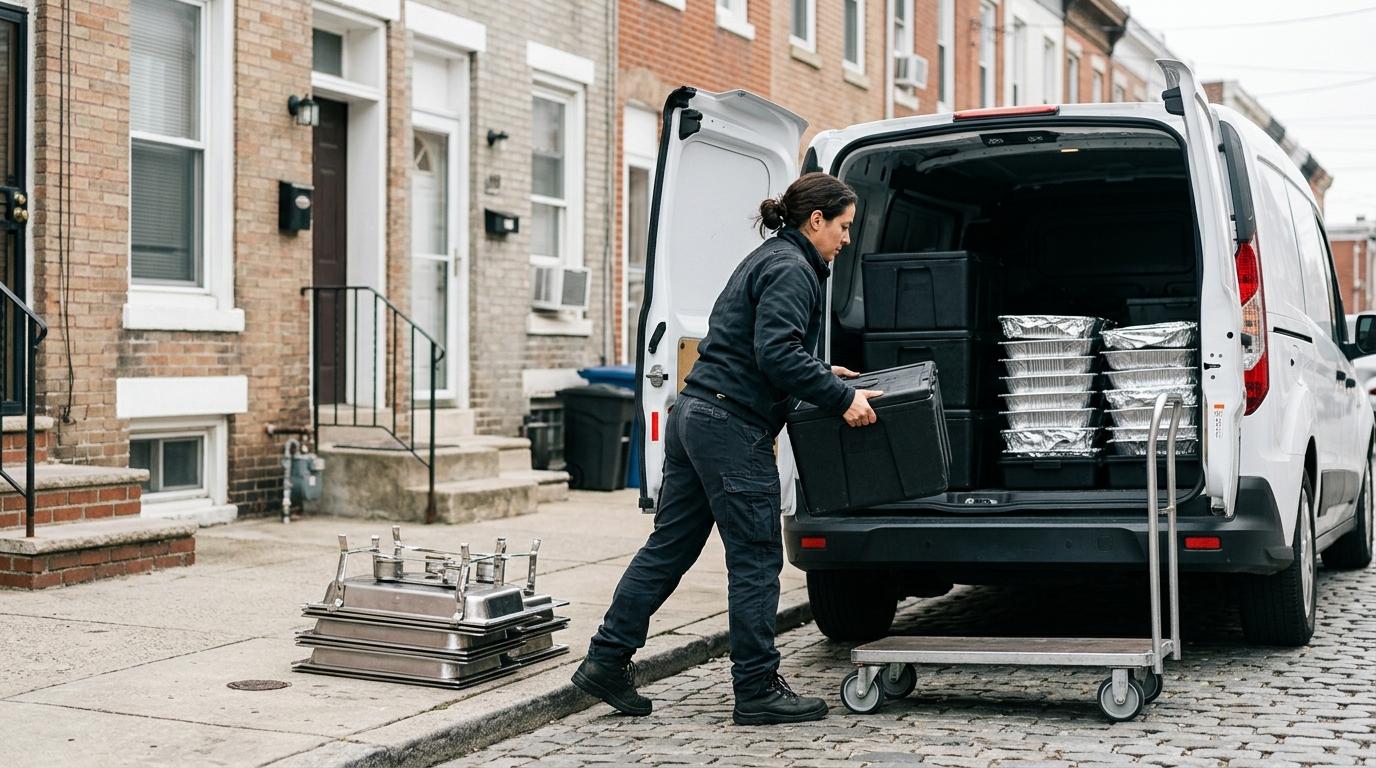
- Logistics: Delivery, vehicle, parking, and building access charges.
- Rentals and supplies: Chafing dishes, linens, plates, flatware, and serving utensils.
- Taxes and gratuity: Pennsylvania sales tax plus any tip or service charge.
Common Hidden Fees and Typical 2026 Ranges
Few fees are truly hidden. They are just listed below the menu, where people stop reading. This table shows the charges that most often change a total, with typical ranges for the Philadelphia market.
| Fee | Typical Range | How to Reduce It |
|---|---|---|
| Delivery | $25–$75 within the city; more for suburbs | Order earlier in the day and combine orders into one drop |
| Setup (drop-off with chafers) | $30–$100 | Choose cold items that need no heating |
| Service charge | 15–22% of food total | Ask what it covers; it is often not a tip |
| Staffed service (per server) | $30–$50 per hour, with 3–4 hour minimums | Use a self-serve setup for casual events |
| Equipment rental | $5–$15 per chafer; $1–$4 per place setting | Use disposable or compostable ware |
| Rush or short-notice fee | 10–25% | Order 48–72 hours ahead |
| Minimum order shortfall | Difference charged or a flat fee | Confirm the minimum before building the menu |
| Sales tax | 8% in Philadelphia on prepared food | Not avoidable, but budget for it |
Service Charge vs. Gratuity: The Line That Confuses Most People
A service charge and a tip are not the same thing. A service charge is a fee the caterer sets to cover operating costs, administration, or event coordination. It frequently does not go to the delivery driver or servers. Gratuity is a voluntary payment that goes to staff.
Read the line closely and ask one question: "Does any portion of the service charge go to the staff on site?" If the answer is no, a tip of 10–15% for a staffed event, or $5–$10 per driver for a routine drop-off, is a normal courtesy. If the answer is yes, you can usually tip less. Also note that in Pennsylvania, a mandatory service charge on prepared food can itself be taxable, so it may raise your tax line.
How to Calculate Cost Per Person Catering Accurately
The menu price per head is not your cost per person. Calculate the all-in figure with this formula: (food + fees + rentals + tax + gratuity) divided by confirmed headcount.
Here is a realistic example for a 30-person Center City office breakfast:
- Food at $15 per person: $450
- Delivery and setup: $75
- Service charge at 18% of food: $81
- Subtotal: $606
- Sales tax at 8%: about $48 (higher if the service charge is taxed)
- Driver tip: $10
- Total: about $664, or roughly $22 per person
That is nearly 50% above the advertised $15. This gap is why a corporate catering budget built on menu prices alone falls short. A safe planning rule is to multiply the menu price by 1.35 to 1.5 for drop-off service and by 1.6 to 2.0 for full-service events.
Headcount Rules That Affect Your Bill
Most caterers require a final headcount 48–72 hours ahead, and they charge for that number even if fewer people show up. Three mechanics matter here:
- Guarantee clauses: You pay for the confirmed count. Dropping below it rarely earns a refund.
- Overage pricing: Adding people after the cutoff may cost a premium or be impossible.
- Portion assumptions: Breakfast typically plans for 1.5 items per person, and lunch for one sandwich or entree plus sides. Over-ordering on a "just in case" basis can add 10–20% to the food cost.
For meetings, track RSVPs and plan on a 10–15% no-show rate for in-office events with optional attendance. For mandatory all-hands meetings, order for 95% of the list.
Where to Find Affordable Catering in Philly Without Cutting Quality
Affordable catering in Philly comes from changing the structure of the order, not from picking the cheapest vendor. The best savings come from these moves:
- Choose drop-off over staffed service. This often saves $150–$400 on a lunch for 25–40 people.
- Use a deli or cafe caterer for everyday meetings. Sandwich platters, salads, and breakfast trays carry lower labor costs than hot entrees.
- Order midweek and mid-morning delivery windows. Peak slots of 11:30 a.m.–12:30 p.m. on Tuesday through Thursday fill first and can carry surcharges.
- Consolidate recurring orders. Ask for a standing-order discount if you book weekly or monthly. Many local caterers offer 5–10%.
- Skip the premium add-ons. Individually boxed lunches cost $2–$4 more per person than platters. Use them only when dietary labeling or hygiene needs call for them.
Questions to Ask Before You Approve a Quote
Ask for an itemized quote in writing. A single "per person" number hides the mechanics. Before approving, confirm:
- Is delivery priced flat or by distance and time window?
- What does the service charge cover, and is it taxed?
- Are plates, utensils, napkins, and serving tools included?
- What is the cancellation window, and what share of the bill is owed if you cancel inside it?
- Is there a building access, parking, or elevator wait fee for Center City offices?
- What are the dietary accommodation costs for gluten-free, vegan, or halal items?
Compare at least three itemized quotes using the same headcount and menu. The lowest menu price often has the highest fees, so compare totals, not per-person rates.
Budgeting Benchmarks for Corporate Catering
For a corporate catering budget, set a per-person ceiling by meal type and add a 10% contingency. Typical all-in targets in Philadelphia for 2026:
- Breakfast: $18–$28 per person
- Lunch (deli or cafe): $20–$34 per person
- Hot buffet lunch: $28–$45 per person
- Reception or dinner: $50–$110 per person with service
Annual budgets work best when you track the actual per-person cost after each event. After three or four orders, you will see which vendor and which order type gives the best value.
Catering Invoice FAQ
How much does catering cost per person in Philadelphia?
Expect $18–$28 all-in for breakfast, $20–$34 for deli or cafe lunch, and $50–$110 for full-service dinner in 2026. Menu prices run lower, but fees, tax, and tips typically add 25–50%.
Is a service charge the same as a tip?
No. A service charge is a fee set by the caterer and often covers overhead, not staff pay. Ask whether any part goes to on-site staff before deciding on an additional tip.
Do I pay tax on catering in Philadelphia?
Yes. Prepared food is taxed at 8% in Philadelphia. Mandatory service charges may also be taxable, so check how the invoice calculates the tax line.
Can I reduce my headcount after confirming?
Usually not. Most caterers set a final count 48–72 hours before the event and bill for that number. Confirm the cutoff when you book.
What is the cheapest way to cater a business meeting?
Order drop-off sandwich platters or breakfast trays from a deli or cafe caterer, use disposable serviceware, schedule delivery outside peak hours, and ask about recurring-order discounts.