
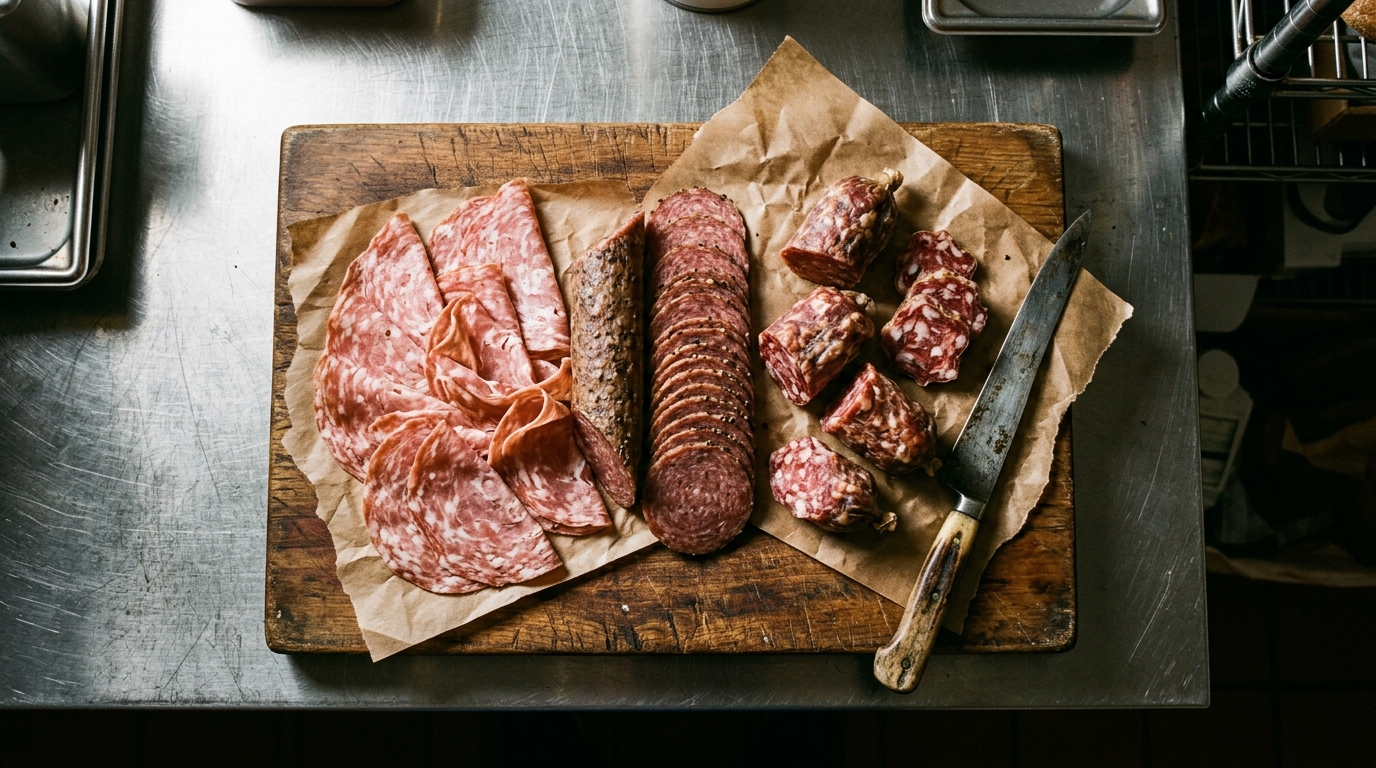
Genoa salami is a soft, mild, wine-cured pork sausage from northwest Italy; sopressata is a coarser, spicier dry-cured salami with visible fat; and hard salami is a firmer, smokier, longer-aged option built for slicing thin. All three belong to the salami family, but they eat completely differently - and knowing the distinction makes every sandwich, charcuterie board, and catered platter better.
If you've ever stood in front of a deli case and felt quietly overwhelmed, you're not alone. The world of cured meats is genuinely vast, and the labels don't always help. This guide breaks down the most common deli meat types you'll encounter - salami and beyond - so you can order with confidence whether you're building a lunch at home or planning breakfast catering for a Center City Philadelphia office.
The Salami Family: Three Heavy Hitters Compared
Salami is a broad category. At its core, salami is ground or chopped meat - almost always pork, sometimes beef - mixed with fat, salt, spices, and a fermentation culture, then stuffed into a casing and dried. What separates one salami from another comes down to grind size, spice blend, fat ratio, smoke, and aging time.
Genoa Salami
Genoa is the salami most Americans grow up eating. It originated in the Genoa region of Liguria, Italy, and the authentic version is made primarily from pork with a smaller percentage of beef. The meat is ground fine, seasoned with garlic, black and white peppercorns, and often a dry white wine or red wine. The result is a soft, slightly moist salami with a mild, tangy flavor. Because of its tender texture and gentle heat level, Genoa is the go-to for deli sandwiches, Italian subs, and antipasto platters. It slices cleanly and pairs beautifully with provolone or fresh mozzarella.
Sopressata
Sopressata - sometimes spelled soppressata - is an Italian dry-cured salami with a noticeably coarser grind and a bolder personality. The chunks of meat and fat are larger, giving each slice a more rustic, varied texture. Depending on regional tradition, sopressata can range from mildly spiced to aggressively hot (the Calabrian version is famous for its red pepper heat). It's drier and more intensely flavored than Genoa. Sopressata shines on charcuterie boards, flatbreads, and anywhere you want the meat to be the star. It pairs well with sharp aged provolone, pecorino, or a mild fresh cheese like burrata.
Hard Salami
Hard salami is exactly what it sounds like: a firmer, denser salami that has been aged longer and often lightly smoked. It's commonly produced in a style associated with Central and Eastern European traditions rather than Italian ones, and it typically uses a blend of pork and beef. The flavor is smokier, slightly more acidic, and more shelf-stable than Genoa. Because it's firm, it holds up well in wraps, sandwiches with heavy condiments, and party platters that sit out for a while. Pair it with Swiss cheese or a mild cheddar to balance the smokiness.
Quick Comparison: Genoa vs. Sopressata vs. Hard Salami
- Genoa: Fine grind | Pork + small % beef | Mild, tangy, garlicky | Soft and moist | Best with provolone or fresh mozzarella
- Sopressata: Coarse grind | Pork | Bold, spicy (varies by region) | Dry, rustic texture | Best with aged provolone or pecorino
- Hard Salami: Medium-fine grind | Pork + beef blend | Smoky, acidic | Firm, dense | Best with Swiss or mild cheddar
Beyond Salami: Mortadella, Prosciutto, and the Rest of the Deli Case
Salami is just one corner of the charcuterie world. Here are a few other deli meat types worth understanding.
What Is Mortadella?
Mortadella is a large-format cooked pork sausage from Bologna, Italy - it's actually the origin of "bologna" as Americans know it, though authentic mortadella is a significant upgrade. It's made from finely ground pork blended with chunks of pork fat (the signature white squares you see in every slice), seasoned with black pepper, myrtle berries, and sometimes pistachios. Mortadella is served cold, sliced thin, and has a smooth, creamy, slightly fatty flavor. It's extraordinary on a warm hoagie roll with good mustard, and it's become a staple on upscale Philadelphia deli catering spreads.
Prosciutto vs. Serrano: What's the Difference?
Both prosciutto and serrano are dry-cured whole hams - no smoking, no cooking, just salt and air. The differences come down to geography, breed, and aging.
- Prosciutto di Parma (Italy): Made from heritage-breed pigs raised on a controlled diet including whey from Parmigiano-Reggiano production. Aged a minimum of 12 months, often 18–24 months. Flavor is delicate, buttery, and slightly sweet. Sliced paper-thin.
- Jamón Serrano (Spain): Made from white pigs, aged a minimum of 7 months, typically 12–18 months. Flavor is nuttier, slightly saltier, and more assertive than prosciutto. Still sliced thin but can hold up to more robust pairings.
- Jamón Ibérico (Spain): The premium tier - made from acorn-fed black-footed Iberian pigs, aged 24–48 months. Intensely nutty, complex, and significantly more expensive.
For sandwich building and catering platters, prosciutto is the crowd-pleaser. For anyone who wants a bolder, more savory bite, serrano delivers at a friendlier price point.
What Is the Best Cheese for Sandwiches? Pairing 101
The best cheese for sandwiches depends entirely on the meat alongside it. Here's a simple pairing framework:
- Genoa salami: Provolone (mild or sharp), fresh mozzarella, fontina
- Sopressata: Aged provolone, pecorino Romano, Manchego
- Hard salami: Swiss, Gruyère, mild cheddar
- Mortadella: Fresh mozzarella, mild provolone, burrata
- Prosciutto: Fresh mozzarella, melon (not a cheese, but classic), ricotta, Parmigiano-Reggiano
- Serrano: Manchego, Mahón, aged Gouda
The general rule: fatty, mild meats want creamy, fresh cheeses; bold, spiced meats want aged, assertive cheeses that can match the intensity.
A Word on Low Sodium Deli Meat
Cured meats are inherently high in sodium - that's partly what makes them safe and delicious. But if you're watching sodium intake, low sodium deli meat options do exist and have improved significantly. Turkey breast, roast beef, and some chicken varieties are available in reduced-sodium cuts at most deli counters. Among cured meats, prosciutto sliced extremely thin actually delivers less sodium per serving than you might expect, simply because so little is used per slice. When ordering for business catering in Center City Philadelphia, it's worth asking your caterer to label or separate lower-sodium options - many guests appreciate the consideration.
Building a Catering Platter: How It All Comes Together
Whether you're ordering a deli catering spread for a Philadelphia office breakfast or setting up a charcuterie station for a company lunch, a well-built meat and cheese platter follows a simple logic: contrast. You want variety in texture (soft Genoa alongside firm hard salami), variety in flavor (mild mortadella next to bold sopressata), and variety in origin (Italian prosciutto alongside Spanish serrano). Three to four meats and three to four cheeses is the sweet spot for most groups. Add pickled vegetables, good mustard, sliced baguette or crackers, and fresh fruit, and you have something that looks impressive and eats even better.
The best Philadelphia catering companies will guide you through these selections based on your group size, dietary needs, and budget - you don't have to be an expert to get an expert result.
Deli Meat Types FAQ
What is the difference between Genoa salami and hard salami?
Genoa salami is made primarily from pork, ground fine, cured with wine and garlic, and has a soft, moist texture with a mild tangy flavor. Hard salami uses a pork-beef blend, is aged longer, and is often lightly smoked, resulting in a firmer texture and a smokier, more acidic taste. Genoa is better for sandwiches requiring a tender bite; hard salami holds up well in wraps and room-temperature platters.
What is mortadella made of?
Mortadella is a cooked pork sausage from Bologna, Italy, made from finely ground pork blended with cubed pork fat, black pepper, and spices like myrtle berries. Some varieties include pistachios. It is always served cold and sliced thin. It is the authentic ancestor of American bologna, though significantly more flavorful and refined.
Is prosciutto the same as serrano ham?
Both are dry-cured whole hams, but they are not the same. Prosciutto di Parma comes from Italy, uses heritage-breed pigs, and is aged at least 12 months for a buttery, delicate flavor. Jamón Serrano comes from Spain, uses white pigs, and is aged 7–18 months for a nuttier, slightly saltier flavor. Jamón Ibérico is a separate Spanish category made from acorn-fed Iberian pigs, aged 24–48 months, and is widely considered the premium tier of dry-cured ham.
What is the best low sodium deli meat option?
Turkey breast and roast beef are the most widely available low-sodium deli meat options. Among cured meats, paper-thin prosciutto delivers relatively moderate sodium per serving because so little is consumed per slice. Always ask your deli counter for sodium content by weight - reduced-sodium labeling standards vary by brand and cut.
What cheese goes best on an Italian deli sandwich?
For a classic Italian deli sandwich with Genoa salami, capicola, or mortadella, mild or sharp provolone is the traditional choice. Fresh mozzarella is an excellent upgrade, adding a creamy contrast to the savory meats. If your sandwich leans spicy - sopressata or hot capicola - aged provolone or pecorino Romano stands up to the heat without being overwhelmed.