The right condiment, applied in the right amount to the right surface, is the single biggest variable separating a forgettable sandwich from one people talk about for days. Bread, protein, and vegetables all matter - but the spread is the structural and flavor backbone that holds every layer together. Here's a science-backed, chef-informed breakdown of how to build a sandwich that actually works.
Start With Bread: The Foundation of Every Great Sandwich
Choosing the best bread for sandwiches isn't just about taste - it's about structural compatibility with your fillings. A soft brioche bun buckles under a heavily dressed Italian hoagie. A crusty baguette tears the roof of your mouth when the filling is too dry. The match matters.
Here's a quick guide to matching bread to filling weight:
- Ciabatta: Open crumb absorbs sauces well; ideal for grilled proteins with vinaigrette or aioli.
- Sourdough: Dense, tangy crumb holds up to heavy, wet fillings like roast beef with horseradish cream.
- Potato roll: Soft and slightly sweet; pairs best with brined proteins like fried chicken or pulled pork.
- Rye: Robust flavor that complements cured meats, mustards, and sharp cheeses.
- Focaccia: Oil-rich base that works with herb-forward spreads and fresh vegetables.
- Hoagie roll: The Philadelphia classic - long, slightly chewy, engineered for Italian meats and oil-based dressings.
A critical rule: always toast or at least temper your bread before building. Even 90 seconds in a dry pan creates a moisture barrier on the interior crumb, which prevents the dreaded soggy sandwich by the time it hits the lunch table or catering tray.
The Condiment Layer: Flavor, Fat, and Function
Condiments do three jobs simultaneously: they add flavor, provide fat for mouthfeel, and act as a moisture seal between wet ingredients and bread. When any one of those three functions is missing, the sandwich suffers structurally and in taste.
The most effective spreads in professional sandwich-making fall into three categories:
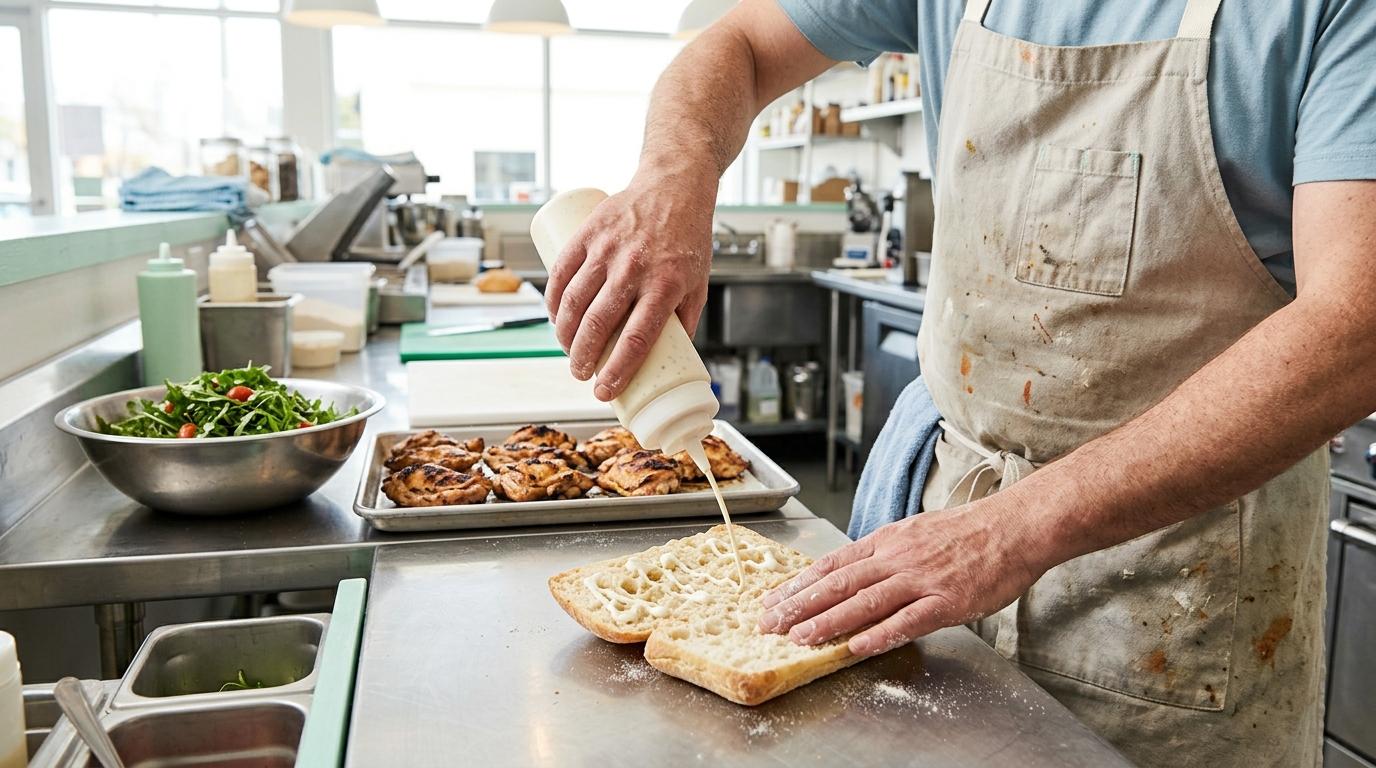
- Fat-forward emulsions: Mayonnaise, aioli, whipped butter. These are your primary moisture barriers. Apply these directly to the bread surface before any other layer.
- Acid-forward condiments: Mustard, giardiniera relish, pickled pepper spread, vinegar-based hot sauce. These cut through rich proteins and balance fat. They should sit between the fat layer and the protein.
- Compound spreads: Pesto, tapenade, chimichurri, romesco. These are flavor amplifiers that contain both fat and acid in varying ratios. Use these as a finishing spread on the top slice of bread.
Sauce to Meat Ratio: The Number That Most Home Cooks Get Wrong
Professional deli and catering kitchens in Philadelphia operate on a specific sauce to meat ratio for sandwiches: roughly 1 tablespoon of spread per 3 ounces of protein, distributed across both bread surfaces. That's about 1.5 teaspoons per side on a standard 6-inch sandwich.
Under-spreading produces a dry, choking texture. Over-spreading - the more common home mistake - overwhelms the protein flavor and creates structural collapse as excess moisture migrates into the bread crumb within minutes of assembly.
The ratio shifts based on condiment type:
- Mayonnaise: 1.5 tsp per side for a 6-inch sandwich
- Whole-grain mustard: 1 tsp per side (sharper flavor, needs less surface coverage)
- Pesto or romesco: 2 tsp per side (these act as both spread and filling component)
- Hot sauce: 5–8 drops total, not spread - used as a finishing accent under the top layer
Sandwich Layering Technique: Order Is Not Optional
Ask any experienced catering chef in Center City Philadelphia how they build volume orders efficiently while maintaining quality, and they'll tell you the same thing: layering order is non-negotiable. The sequence affects moisture distribution, structural integrity, and how flavors hit your palate on the first bite.
The professional sandwich layering technique follows this sequence from bottom bread to top:
- Bottom bread (toasted side up): Apply fat-forward spread edge-to-edge.
- Cheese: Laid directly on the spread so fat binds it in place.
- Primary protein: Folded, not flat-stacked, to create height and air pockets that improve texture.
- Acid-forward condiment: Applied over the protein, not under it - this prevents the bread from absorbing acidic liquid prematurely.
- Vegetables: Crisp items (lettuce, cucumber) directly above the acid layer; wet items (tomato, roasted peppers) toward the top so gravity doesn't push moisture down.
- Top bread (toasted side down): Apply compound spread or herb oil edge-to-edge before placing.
This structure means the fat layers are at both bread surfaces, acting as twin moisture barriers. The protein sits in the middle, insulated. The acid condiment flavors the protein directly without destabilizing the bread.
Gourmet Sandwich Ideas Built Around the Chemistry
These gourmet sandwich ideas aren't just flavor combinations - each one is designed with the structural principles above in mind.
- Roast beef on sourdough: Horseradish cream (fat layer) → sharp cheddar → 4 oz thinly sliced roast beef (folded) → whole-grain mustard → watercress → caramelized onion jam on top slice.
- Italian hoagie (Philadelphia style): Olive oil and oregano (fat/acid hybrid layer) → provolone → capicola, salami, ham (layered, not piled) → sport peppers → shredded iceberg → tomato → red wine vinegar finish on top roll.
- Turkey and brie on focaccia: Whipped butter (fat layer) → brie slices → 3.5 oz sliced turkey → fig jam (acid-sugar balance) → arugula → walnut pesto on top slice.
- Grilled vegetable on ciabatta: Basil aioli (fat layer) → fresh mozzarella → grilled zucchini, eggplant, roasted red pepper → balsamic reduction (acid-forward) → baby spinach → romesco on top.
Each of these builds on the same structural logic: fat seals the bread, protein anchors the center, acid condiments face the protein, and wet vegetables stay toward the top.
Why Philadelphia Catering Kitchens Take This Seriously
When a Philadelphia catering company is building 200 sandwiches for a corporate breakfast or deli catering order, these ratios and sequences aren't suggestions - they're production standards. A sandwich built incorrectly at 7 AM that sits on a tray until a 10 AM meeting has to survive 3 hours without structural failure. The moisture barrier from proper fat-layer application is the only thing standing between a pristine sandwich and a soggy mess.
The same principle applies at home. Whether you're making one sandwich or a dozen for a family gathering, treating the condiment layer as a functional component - not just a flavor afterthought - produces consistently better results every time.
How To Build A Sandwich FAQ
What is the best bread for sandwiches with wet fillings like roast beef or pulled pork?
Sourdough and potato rolls are the two best choices for wet fillings. Sourdough's dense crumb resists moisture absorption longer than most breads, while the soft potato roll's slight sweetness complements brined or sauced proteins. Always toast the interior face of either bread before assembling to create an additional moisture barrier.
How do I calculate the right sauce to meat ratio for a sandwich?
The professional standard is 1 tablespoon of spread total per 3 ounces of protein, split roughly evenly between both bread surfaces (about 1.5 teaspoons per side on a 6-inch sandwich). Adjust down by about 25% for sharper, more concentrated condiments like whole-grain mustard or miso paste, which deliver more flavor per gram than mayonnaise-based spreads.
Does the order of sandwich layers actually matter?
Yes - sandwich layering technique directly affects how long a sandwich holds its structure and how flavors are perceived on the first bite. Fat-based spreads belong at both bread surfaces as moisture barriers. Acid condiments belong between the protein and vegetables, not between the bread and protein. Wet vegetables (tomato, roasted peppers) belong near the top so gravity doesn't push their moisture toward the bread.
What makes a Philadelphia-style hoagie different from other deli sandwiches?
An authentic Philadelphia hoagie uses a long, slightly chewy Italian roll (not a baguette and not a soft sub roll), olive oil with dried oregano as the primary fat layer instead of mayonnaise, thin-sliced cured Italian meats layered in a specific sequence, and sport peppers or pickled cherry peppers as the acid component. The oil-based dressing is applied directly to the roll interior, which allows for longer hold times without sogginess compared to mayo-based builds - a key reason Philly-style deli catering has used this format for generations.
Can I apply these sandwich-building principles to catered sandwich trays?
Absolutely. The same fat-barrier and layering logic used in a single sandwich scales directly to catering trays. For business catering in Philadelphia or any large-format deli catering order, the key additions are: wrap sandwiches immediately after assembly to prevent air exposure, keep tomatoes and other high-moisture vegetables separate when sandwiches will sit longer than 90 minutes, and use slightly less acid condiment than you would for immediate service to preserve structural integrity over time.