What Makes a Philly Cheesesteak Actually Great
The Philly cheesesteak is one of the most argued-about sandwiches in American food culture. Ask ten people which shop makes the best one and you'll get ten different answers - and probably a minor argument. But underneath the regional loyalty and nostalgia, there are a handful of objective markers that separate a genuinely great cheesesteak from a forgettable one.
It starts with the roll. A proper cheesesteak lives or dies by its bread. The gold standard is an Amoroso roll - a long, soft Italian roll with a thin, slightly crisp crust that holds up to the juice of the meat without turning into a soggy mess. The roll should cradle the filling, not overpower it. Too dense and every bite is a chore. Too soft and it falls apart before you finish.
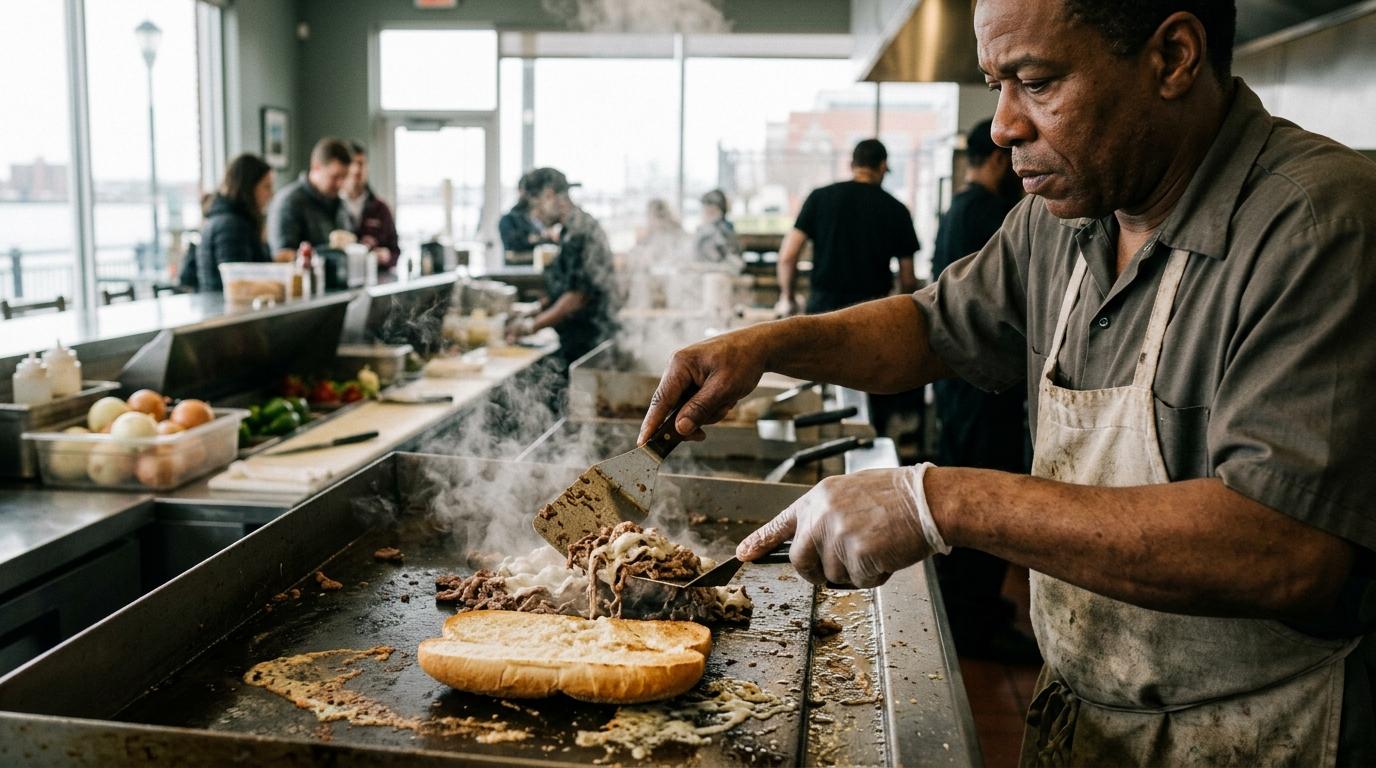
Then there's the beef. Thinly shaved ribeye is the traditional cut, and for good reason - ribeye has the fat marbling that keeps the meat tender and flavorful when cooked on a flat-top griddle at high heat. The beef gets chopped and worked on the grill, picking up caramelized edges while staying juicy in the middle. Leaner cuts can work, but they rarely deliver the same depth of flavor.
The Great Cheese Debate
No part of the cheesesteak generates more controversy than the cheese. The three main camps are Cheez Whiz, provolone, and American, and each has a legitimate claim depending on what you're after.
Cheez Whiz is the old-school choice - the one most associated with the original Pat's King of Steaks and the broader Philadelphia tradition. It melts instantly, coats every piece of meat evenly, and adds a salty, slightly tangy richness that clings to the beef. Critics call it processed; fans call it perfect for the application.
Provolone brings a sharper, more complex flavor. It melts cleanly and adds a slightly aged note that pairs well with sautéed onions and peppers. Many newer cheesesteak spots lean provolone as a nod to quality ingredients without abandoning tradition.
American cheese splits the difference - it melts like Whiz but tastes cleaner and less assertive. It's the choice for people who want creamy, even coverage without the processed-cheese flavor.
None of these is objectively wrong. The right answer is the one that makes the whole sandwich click together.
Toppings: What's Authentic, What's Optional
A classic cheesesteak is ordered "wit" or "wit-out" - meaning with or without onions. Fried onions cooked down on the griddle until they're sweet and slightly caramelized are considered a standard add-on at most traditional spots. Beyond that, peppers (sweet or hot), mushrooms, and jalapeños are common regional additions.
What you won't find at a serious cheesesteak shop is lettuce, tomato, or mayo - those belong on a hoagie. The cheesesteak is a hot sandwich built around the interplay of beef, cheese, and a little griddled sweetness from onions and peppers. Adding cold, wet toppings disrupts that balance.
The Legends: Where Philadelphia Sets the Bar
Any honest conversation about cheesesteaks has to start at the corner of 9th and Passyunk in South Philadelphia, where Pat's King of Steaks and Geno's Steaks face each other across the intersection. Pat's claims to have invented the cheesesteak in the 1930s. Geno's opened in 1966 as a direct rival. Decades later, both are still packing lines of tourists and locals who want to settle the debate for themselves.
Jim's Steaks on South Street held its own iconic status for years - long lines, a no-frills interior, and a consistently well-executed sandwich that many locals prefer over the more famous rivals. Dalessandro's in Roxborough draws a devoted crowd willing to make the trip out of Center City for what many consider the best ribeye on the menu. Steve's Prince of Steaks in Northeast Philadelphia is another name that comes up repeatedly in serious cheesesteak discussions.
What unites all of these spots is consistency, quality of beef, and a no-compromise approach to the fundamentals. They don't overthink the sandwich. They execute the basics at a high level, every single time.
What Reviewers Actually Look For
When food reviewers and everyday customers rate a cheesesteak, a few factors come up over and over again. Meat quality and quantity - is there enough ribeye, and is it properly shaved and cooked? Cheese integration - does the cheese melt into the meat or sit on top like an afterthought? Roll quality - does it hold the sandwich together through the last bite? And value - does the price match what lands on the table?
Atmosphere and speed matter too, especially for spots that attract lunch crowds or tourists. But a great cheesesteak can overcome a lot of inconveniences. People will wait in line in the rain for a sandwich they know is worth it.
Why Waterfront Gourmet's Cheesesteak Has Built a Following
Waterfront Gourmet isn't competing with Pat's or Geno's for South Philly nostalgia points - and it doesn't need to. What Waterfront Gourmet's cheesesteak has earned is something arguably harder to build: a genuine word-of-mouth reputation based on the quality of the sandwich itself.
Customers who've tried it consistently come back to a few specific things in their reviews. The beef is generously portioned, properly shaved, and cooked to order on a hot flat-top - not sitting in a steam tray. The cheese melts into the meat the way it's supposed to. The roll holds up. These aren't small things. These are exactly the markers that separate a cheesesteak worth talking about from one that just technically qualifies as the dish.
What also sets the Waterfront Gourmet version apart is the care that goes into sourcing. The ingredients reflect a gourmet sensibility - hence the name - without overcomplicating a sandwich that works precisely because it isn't overcomplicated. The result is a cheesesteak that respects the tradition while delivering on the quality expectations that modern diners bring to the table.
How Waterfront Gourmet Stacks Up Against the Classic Criteria
Measured against the benchmarks that define a great cheesesteak, Waterfront Gourmet holds up well:
The roll: Soft, fresh, and structured enough to handle the filling without splitting or going soggy.
The beef: Thinly shaved, well-marbled, cooked on a proper griddle with enough heat to develop caramelized edges.
The cheese: Applied generously, melted thoroughly, integrated into the meat rather than draped over it.
The toppings: Classic options available - onions, peppers - executed correctly without unnecessary additions that would throw off the balance.
Consistency: Reviewers who visit more than once tend to report the same quality each time, which is ultimately the hardest part of making a great sandwich.
That last point matters more than any single visit can reveal. A cheesesteak can be great once. A cheesesteak that's great every time is a destination.
The Takeaway
The Philly cheesesteak has a short ingredient list and a long legacy. Getting it right means respecting the fundamentals - quality ribeye, the right roll, proper cheese application, and enough heat to bring it all together. The legendary Philadelphia spots have built their reputations by doing exactly that, consistently, for decades.
Waterfront Gourmet's cheesesteak earns its place in the conversation because it clears the same bar. It's not trading on history or location - it's trading on the sandwich itself. If you haven't tried it yet, the reviews make a strong case that you should.