You nailed the tasting. The client loved the cheesesteaks, raved about the charcuterie board, and signed the contract on the spot. Then the event day comes - and the catering trays show up 20 minutes late, two items are missing, and nobody thought to confirm the serving setup with the venue. The food was great. Everything else? A mess. And you never hear from that client again.
If you're running a deli, cafe, or catering operation in Philadelphia - whether you're doing corporate lunches in Center City or graduation party food in the suburbs - the gap between a one-time booking and a loyal repeat client almost always comes down to operations and communication. The food gets you in the door. How you run the business keeps you there.
Start With a Repeatable Intake Process
Most small catering businesses lose time and money in the same place: the initial inquiry. A potential client reaches out, you trade a dozen back-and-forth emails trying to nail down headcount, dietary restrictions, and delivery logistics, and by the time you have everything you need, a week has gone by and they've booked someone else.
The fix is a standardized intake form - nothing fancy, just a shared document or a simple online form that captures the essentials upfront. You want to know the event date and time, guest count, venue address, whether they need setup and breakdown, any dietary restrictions, and a rough budget range. Getting this information in one shot eliminates the email tennis and makes you look professional from the first interaction.
Once you have that intake process locked in, create a quote template that pulls from it. Itemize everything: food, delivery, setup, staffing, and any rental equipment like serving trays or chafing dishes. Clients in Philadelphia who are comparing philadelphia catering companies want to see clarity, not a single lump-sum number. Transparent, itemized quotes build trust - and they protect you if a client tries to dispute what was included.
Build Your Menu Around What Actually Travels Well
This one sounds obvious, but it trips up a lot of deli and cafe owners making the jump into catering. Your best sandwich in the shop might not be your best sandwich on a catering tray after a 45-minute drive.
Philadelphia catering has some natural advantages here. An Amoroso roll holds up better than a brioche bun. A classic Philly cheesesteak with Whiz or American - the way Pat's King of Steaks and Geno's Steaks built their reputations - stays cohesive on a tray in a way that a loaded gourmet sandwich might not. Ribeye cheesesteak, sliced thin and kept in a warmer tray with the right moisture balance, can still be excellent two hours after it was made. Know which of your items travel well and build your catering menu around those.
The same logic applies to your non-sandwich items. Charcuterie boards are enormously popular right now for corporate events, graduation parties, and even game day setups - but they require careful attention to temperature and presentation. If you're offering them, build in a prep timeline that accounts for assembly at or near the venue rather than hours before. Party platters with cured meats, cheeses, and accompaniments can be prepped in components and assembled on-site in under 15 minutes if you've practiced the workflow.
The menu you offer for catering should not be your full deli menu with a delivery fee tacked on. It should be a curated list of items you've specifically tested for transport, temperature retention, and high-volume production.
Get Serious About Timelines and Day-Of Logistics
The single biggest complaint clients have about catering - across every category of food and every price point - is timing. Late delivery kills the mood of an event faster than almost anything else. For a philadelphia catering company, where traffic on I-76 or the Schuylkill can add 20 minutes to any route without warning, you have to build buffer time into every single order.
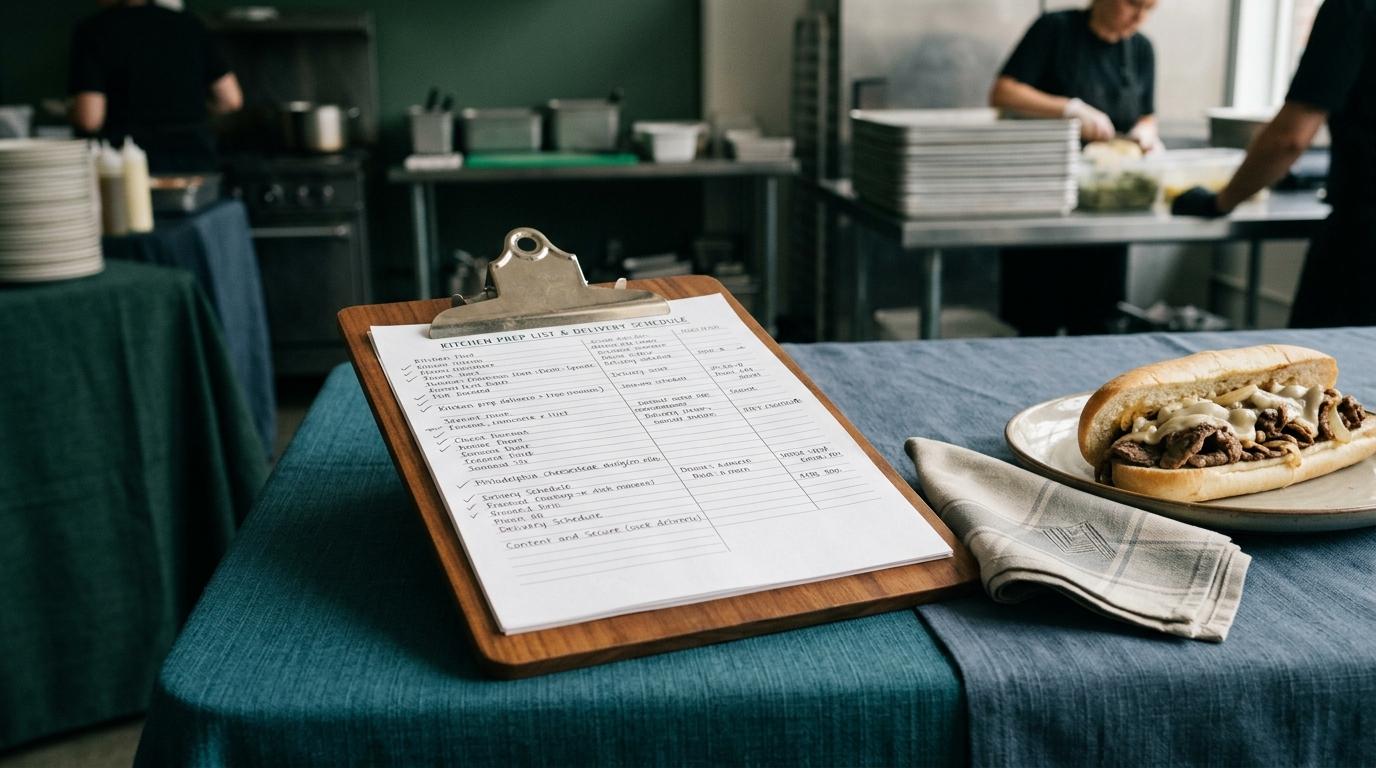
Create a day-of checklist for your team that covers:
- Order confirmation sent to client 48 hours before the event
- Full packing checklist completed before the vehicle is loaded
- Departure time that assumes worst-case traffic, not best-case
- Contact name and phone number for the on-site venue coordinator
- Setup instructions reviewed with the delivery driver before they leave
- A backup contact in case the primary client is unreachable on event day
That last one matters more than people think. On the day of a graduation party or a corporate lunch, the person who booked the catering is often the last person available to answer their phone. Make sure you have a secondary contact who can let your driver in, confirm the setup location, and handle any last-minute questions.
If you're operating a cafe or deli that's adding catering as a revenue stream, staffing is where things tend to break down. Catering requires different skills than counter service - you need people who are comfortable working in unfamiliar environments, communicating professionally with clients, and solving small problems on the fly without calling back to the shop for every decision. Identify those people on your team early and invest in training them specifically for off-site work.
Follow Up Like a Business That Wants More Business
Most catering clients - especially corporate accounts and event planners booking philadelphia catering services regularly - will book with whoever is easiest to work with and most responsive. Not necessarily the cheapest or even the best food. The experience of working with you is part of the product.
After every event, send a follow-up within 24 hours. Keep it short: thank them for the booking, ask one specific question about how things went, and let them know you're available for future events. If you use a CRM or even a simple spreadsheet, log the event details - what they ordered, the headcount, any special requests - so that when they call again six months later, you can pull up their history and make them feel remembered.
For clients who book repeatedly - office managers ordering weekly sandwich trays, event coordinators who run quarterly corporate events - consider building a preferred client arrangement. This doesn't have to be a formal loyalty program. It can be as simple as guaranteed priority booking during busy seasons, a small discount on large orders, or a dedicated point of contact at your shop. The goal is to make them feel like they have a relationship with you, not just a vendor on a list.
Price Your Catering Services to Reflect the Real Cost
Underpricing is one of the most common mistakes small deli and cafe owners make when they launch catering. It's easy to look at a party platter and price it based on food cost alone, forgetting to account for the labor to prep and pack it, the vehicle and fuel to deliver it, the staffing to set it up, and the time you or your manager spent coordinating the order.
A useful starting framework: calculate your true cost per order (food, labor, delivery, packaging, and a percentage of overhead), then apply a margin that reflects the market. Philadelphia catering services range widely in price depending on format and cuisine - a basic sandwich and wrap tray is a different product than a full-service charcuterie and appetizer spread for a corporate client. Know which tier you're competing in and price accordingly.
Don't be afraid to charge for setup and breakdown. Many clients - especially those who haven't booked catering before - assume delivery includes full setup. Be explicit in your quotes about what's included, and charge separately for services that require additional time or staff. Clients who are serious about a smooth event will pay for it. Those who push back on every line item are often the ones who become your most difficult clients anyway.
Use Every Event to Build Your Reputation in Philadelphia
Word of mouth is still the most powerful marketing channel for local catering businesses, especially in a food-obsessed city like Philadelphia. Every event you cater is a room full of potential future clients - people who are going to eat your food, see your presentation, and form an opinion about your operation.
Bring business cards or a simple one-page menu to leave at the event. Make sure every tray and platter is clearly labeled with your shop's name. If a guest asks where the food came from - and they will, especially if the sandwiches are good - make sure your delivery driver knows how to answer that question professionally and hand them something tangible.
Online reviews matter too. After a successful event, it's completely appropriate to follow up with your client and ask if they'd be willing to leave a review on Google. Most happy clients won't think to do it on their own, but if you ask directly and make it easy, a good percentage will. A strong review profile is one of the most cost-effective things a philadelphia catering company can build over time.
Running a catering operation well isn't glamorous work. It's checklists, follow-up emails, delivery buffers, and honest conversations about pricing. But when you get those systems right, the food - the cheesesteaks, the sandwich trays, the charcuterie boards - gets to speak for itself. And in Philadelphia, that's more than enough.