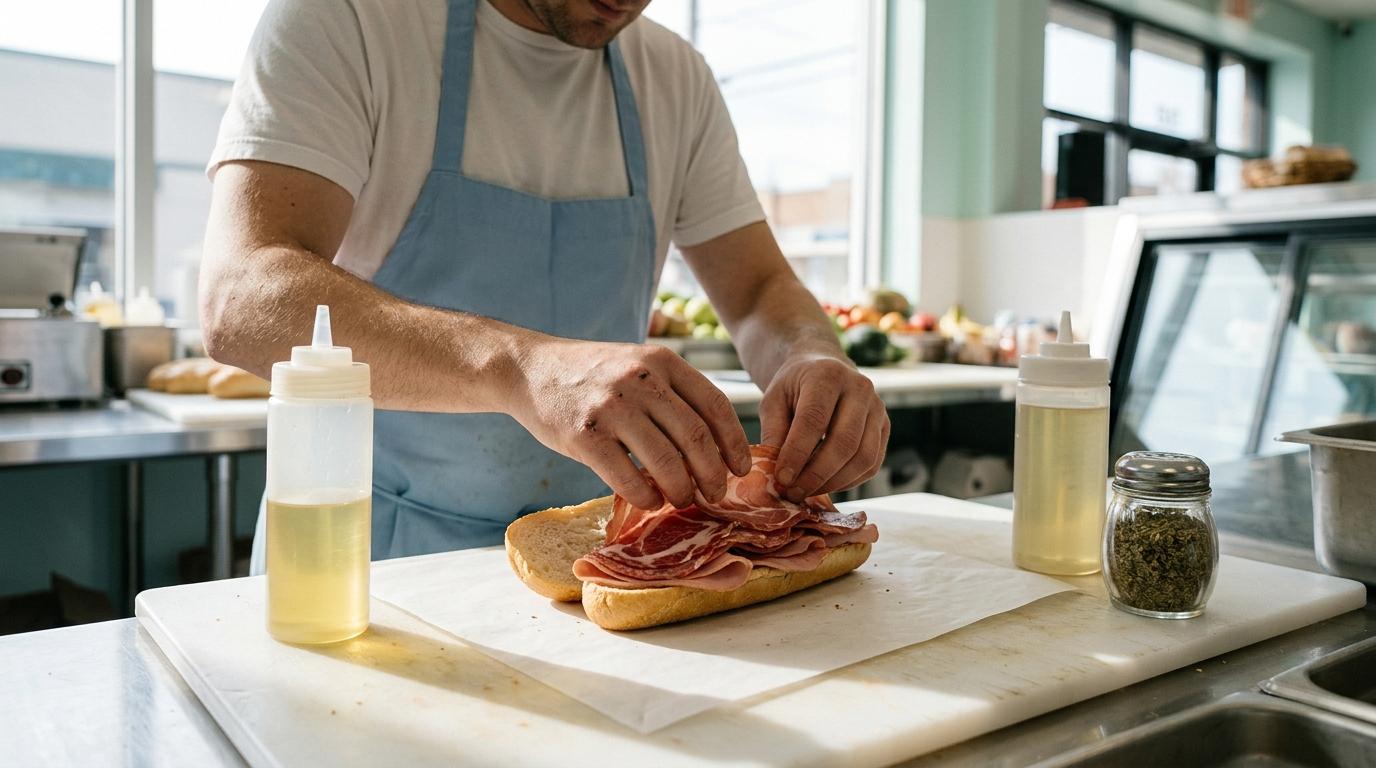
A true Philly hoagie is a long roll sandwich built with Italian cold cuts, provolone, shredded lettuce, tomato, onion, hot peppers, oil, and oregano - and it is not a sub, hero, or grinder. The distinction is real, regional, and delicious.
If you've ever ordered a sandwich in Philadelphia and called it a "sub," you probably got a look. Maybe a correction. Possibly both. That's because hoagies have their own identity here - a specific construction, a specific attitude, and a flavor profile that's been refined over generations. At our deli, we take that legacy seriously. Here's a breakdown of what makes a hoagie a hoagie, plus a look at the iconic sandwiches that keep our regulars coming back.
Hoagie vs. Sub: The Real Differences
People use these words interchangeably all the time. In Philadelphia, that's a mistake. Here's how the two actually compare:
Feature Philly Hoagie Generic Sub Roll Amoroso's or local Italian roll - crusty outside, soft inside Any long roll, often softer and less structured Oil Olive oil or hoagie oil blend, applied directly to bread Often mayo-based or no oil at all Seasoning Dried oregano, salt - applied as part of the build Seasoning optional or skipped Meat layers Thin-sliced, stacked in specific order Varies widely by shop Hot peppers Standard offering, expected An add-on, often forgotten Regional identity Tied to South Philly Italian-American tradition No single origin pointThe roll is where it all starts. An authentic Philly hoagie demands a roll with a crackle when you squeeze it and enough structure to hold up against the oil without going soggy. Everything else flows from there.
The Italian Hoagie: The Standard-Bearer
When someone says "hoagie" in Philadelphia without any qualifier, they mean an Italian hoagie. This is the blueprint. The classic build goes like this:
- Meats: Genoa salami, capicola (hot or sweet), and ham - all sliced thin and layered generously
- Cheese: Sharp provolone, not American, not Swiss
- Produce: Shredded iceberg lettuce, ripe tomato slices, raw white onion
- Heat: Long hot peppers or pepper relish
- Finish: Olive oil, red wine vinegar, dried oregano, salt and pepper
The flavor profile is layered - salty and savory from the cured meats, sharp from the provolone, acidic from the vinegar and peppers, and herbaceous from the oregano. Every bite hits multiple notes at once. That's not an accident. That's craft.
Our Italian hoagie uses capicola that's been sourced from an Italian import supplier we've worked with for years. The difference between good capicola and great capicola is noticeable - the fat marbling, the spice level, the way it folds on the roll. We don't cut corners here.
Pastrami on Rye: A Deli Icon That Earns Its Place
The pastrami on rye isn't a Philly original - it belongs to the New York Jewish deli tradition - but great delis don't pretend geography limits what they can do well. Ours doesn't.
Pastrami starts as a beef navel or brisket cut, cured with a spice rub heavy on black pepper, coriander, garlic, and mustard seed, then smoked low and slow before being steamed to finish. The result is deeply seasoned, peppery, and tender enough to pull apart but firm enough to slice.
Our pastrami on rye is built simply because the meat deserves the spotlight:
- Thick-cut pastrami, steamed to order
- Seeded rye bread - actual rye, not a rye-flavored roll
- Deli mustard - spicy brown or whole grain
- Optional: Swiss cheese, half-sour pickles on the side
The flavor is bold, smoky, and savory with a peppery bite. The rye adds an earthy, slightly tangy contrast. It's a sandwich that doesn't ask for much because it doesn't need much.
The Reuben Sandwich: Built for Balance
The Reuben sandwich takes everything that makes a pastrami on rye great and adds complexity. The traditional build includes corned beef (not pastrami, though some shops swap them), Swiss cheese, sauerkraut, and Russian or Thousand Island dressing, all pressed on marble rye until the cheese melts and the bread crisps.
Balance is the whole game with a Reuben. The sauerkraut is tangy and fermented. The dressing is creamy and slightly sweet. The corned beef is salty and rich. The Swiss is mild and nutty. The marble rye holds it together and adds a slight sweetness from the pumpernickel swirl. When it's made right, no single element overwhelms the others.
Our Reuben uses house-brined corned beef when it's on rotation, or a premium deli-sliced corned beef on regular service days. We press it long enough that the cheese fully melts into the sauerkraut - a detail that separates a good Reuben from a great one.
The Corned Beef Special: Our Own Creation
The corned beef special is where we went off-script in the best way. Corned beef is brined brisket - pink, tender, briny, and mild enough to pair with bigger flavors. Our version builds on that base with a combination that regular customers describe as the sandwich they didn't know they needed:
- Shaved corned beef, piled high
- Sharp provolone, melted
- Roasted red peppers (house-made)
- Arugula dressed lightly with lemon and olive oil
- Horseradish aioli on a toasted Italian roll
It bridges the Philly deli tradition and the classic Jewish deli style - the roll and provolone from one world, the corned beef and horseradish from another. The roasted red peppers add sweetness and depth. The arugula cuts the richness. It's one of the most-ordered items we have, and it came from someone behind the counter just experimenting on a slow Tuesday.
Why the Roll Still Matters Most
Every sandwich in our case lives or dies by the bread. For hoagies, that means a roll with the right crust-to-crumb ratio. Too soft and it collapses under the oil. Too hard and it cuts your mouth. The sweet spot - crispy crust, airy but structured interior - is what an Amoroso's roll delivers, and it's what we use for our hoagie builds.
For the pastrami and Reuben, it's real rye bread with caraway seeds, sliced thick enough to press without tearing. For the corned beef special, it's a toasted Italian roll. The bread isn't an afterthought. It's part of the recipe.
Finding the Best Sandwiches Near Me - What to Actually Look For
When you're searching for the best sandwiches near me, skip the star ratings for a second and ask these questions instead:
- Do they slice meat to order, or is it pre-sliced and sitting out?
- Is the bread sourced locally or from a real bakery?
- Does the menu have sandwiches with actual names and histories, or is it just a list of proteins?
- Can they tell you what's in the dressing or the aioli?
- Is the shop busy at lunch? That's a live vote from the neighborhood.
A deli that can answer those questions confidently is the one worth your lunch break.
We Also Cater
If you've found a sandwich you love here, you can bring it to your office. Our Philadelphia business catering service builds out hoagie trays, deli platters, and individual boxed lunches for teams across Center City and beyond. Breakfast catering Philadelphia is available for morning meetings, with build-your-own options and pre-made packages depending on your group size. We work with offices, events, and recurring accounts - reach out directly to set up a catering order.
Reuben Sandwich FAQ
What makes a Philly hoagie different from a sub?
A Philly hoagie uses a specific crusty Italian roll (typically Amoroso's), is dressed with olive oil and oregano rather than mayo, and follows a layered build with Italian cold cuts, provolone, and hot peppers. Subs are a broader, less regionally defined category with no standard construction or bread requirement.
What's the difference between a Reuben sandwich and a pastrami on rye?
A pastrami on rye is smoked, spiced beef on seeded rye with mustard - simple and bold. A Reuben uses corned beef (not pastrami) with Swiss cheese, sauerkraut, and Russian or Thousand Island dressing, pressed on marble rye until hot and melted. The Reuben is a cooked, layered sandwich; the pastrami on rye is typically served cold or warm without pressing.
What is corned beef, and how is it different from pastrami?
Both start as beef brisket, but the preparation diverges from there. Corned beef is brine-cured in a salt solution with spices and then boiled or steamed - it's moist, pink, and mild. Pastrami is rubbed with a dry spice blend heavy on black pepper and coriander, then smoked before steaming. Pastrami has a deeper, smokier, more intensely seasoned flavor profile.
Do you offer catering for offices in Philadelphia?
Yes. We provide deli catering services in Philadelphia for business lunches, team meetings, and recurring office accounts. Options include hoagie trays, deli platters, boxed lunches, and breakfast catering packages. Orders can be customized by group size and dietary needs - contact us directly to discuss logistics and scheduling.
What should I order if it's my first time at a Philly deli?
Start with the Italian hoagie - it's the foundation of everything a Philly deli does. If you want something warm and built on deli tradition, go with the Reuben or pastrami on rye. If you want something unique to our menu, the corned beef special is the order that surprises most first-timers in the best way.