A great deli meat and cheese board needs 3–4 ounces of meat and 2–3 ounces of cheese per guest, three to four types of each, plus crunch, something sweet, and something briny. Buy from a Philadelphia deli counter, slice to order, and assemble within an hour of serving. Here is exactly how to do it, step by step.
What You Need for 8 to 10 Guests
A board for a party of 8–10 serving as an appetizer (not a meal) uses this shopping list:
- Meats (1.5 lbs total): 0.5 lb sliced Genoa salami, 0.5 lb prosciutto or capicola, 0.5 lb of a milder option like sliced turkey or ham
- Cheeses (1.25 lbs total): 0.5 lb sharp provolone, 0.5 lb aged cheddar or Gouda, 0.25 lb something soft like brie or goat cheese
- Crunch (about 12 oz): two kinds of crackers, plus a sliced baguette or soft pretzel bites
- Sweet: 1 cup grapes, a small jar of fig jam or honey, a handful of dried apricots
- Briny and sharp: cornichons, olives, pepperoncini, or roasted red peppers
- Extras: whole grain mustard, marcona almonds or walnuts
If the board is the main event, double the meat and cheese and add a bread basket. A common rule of thumb is 6–8 ounces of combined protein per person for a meal-style spread.
Step 1: Buy From the Counter, Not the Package
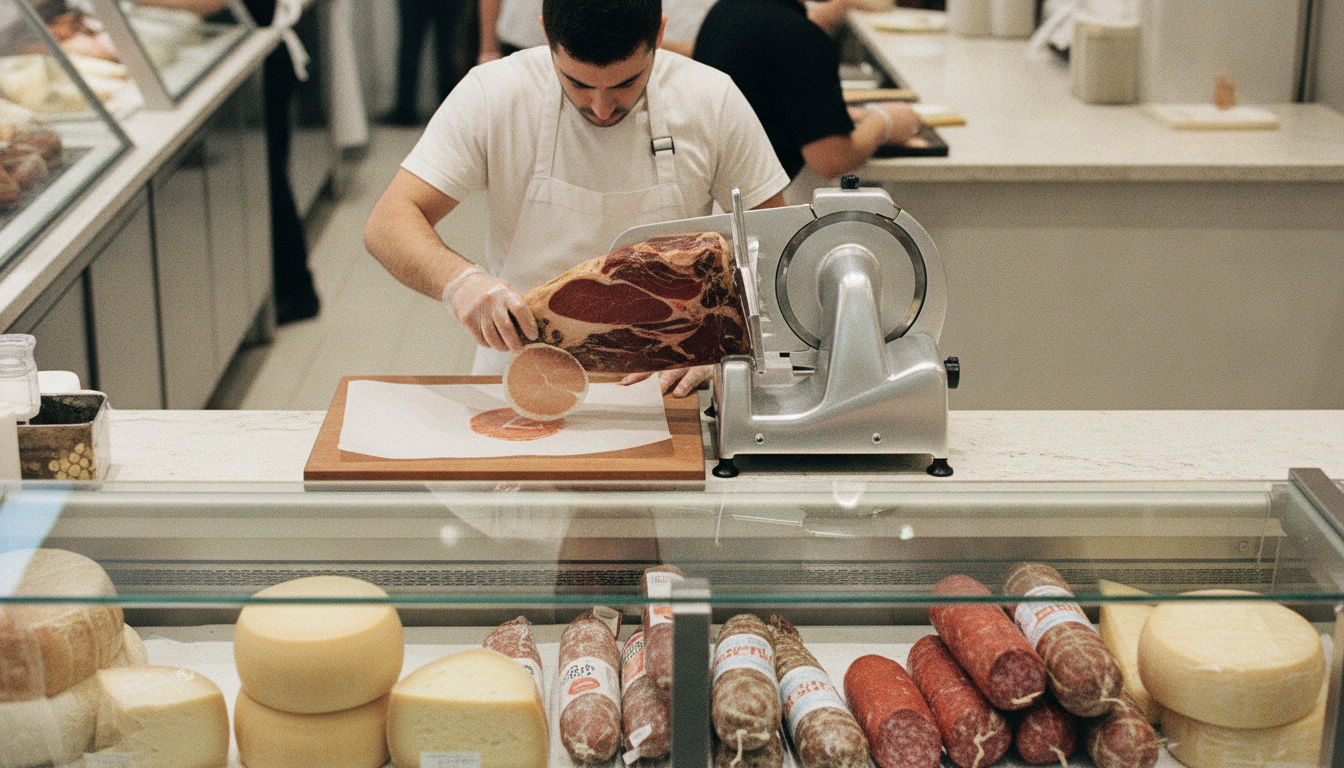
Pre-packaged meat is sliced days earlier and often too thick. A deli counter slices to order, which matters for texture. Ask for these specific cuts:
- Prosciutto: sliced paper thin, with parchment between layers so it separates cleanly
- Salami: thin enough to fold, about 1/16 inch
- Turkey and ham: medium slice, which holds up when rolled
- Cheese: ask for a block or thick slabs for hard cheeses, so you can cut them yourself, and a wedge of soft cheese
Tell the counter staff what you are building and how many people are coming. Philadelphia delis handle this request constantly, and good ones will suggest a pairing or sample a cheese before you buy.
Step 2: Choose Contrasting Flavors and Textures
The most common mistake is buying five versions of the same thing. Pick one item from each category so every bite can be different:
| Category | Example | Role on the board |
|---|---|---|
| Spicy cured meat | Hot capicola or soppressata | Heat and fat |
| Delicate meat | Prosciutto | Salt and silkiness |
| Mild meat | Smoked turkey or ham | Crowd-pleaser, good for kids |
| Sharp hard cheese | Aged provolone or cheddar | Bite and structure |
| Nutty semi-hard cheese | Gouda or Swiss | Sweetness and mellow flavor |
| Creamy cheese | Brie or goat cheese | Spreadable richness |
If a guest has a dietary restriction, keep one meat and one cheese clearly separate on the board, or use a small second plate.
Step 3: Pick the Right Board and Set Anchors
A 16 x 12 inch board handles 6–8 people. For 10 or more, use a 20-inch board or two smaller ones. A baking sheet lined with parchment works fine and is easier to refill.
Start with anchors, which are the items that take up space and give the board its structure:
- Place small bowls for jam, mustard, olives, and cornichons first. Spread them out rather than clustering them.
- Set the soft cheese in one spot, with a knife already in it.
- Cut the hard cheese into three shapes: cubes, thin triangles, and a few slices fanned out. Varied shapes make the board look intentional.
Step 4: Fold the Meat
Loose slices look messy and dry out faster. Use these folds:
- Salami: fold in half, then in half again to make a quarter-circle. Overlap them in a line or an S-curve.
- Prosciutto: gather loosely into ribbons or "roses" and tuck them near the cheese.
- Turkey or ham: roll into tubes or fold into a loose triangle. Stack them in a short row.
Place each meat next to a cheese that pairs with it, so guests naturally build a bite. Salami and sharp provolone are one example, prosciutto and brie another.
Step 5: Fill the Gaps
Empty space is what makes a board look sparse. Fill it in this order: crackers and bread in stacks along the edges, then grapes and dried fruit in clusters, then nuts in the smallest remaining gaps. Keep crackers off the meat, since moisture softens them quickly. If you are serving over several hours, hold half the crackers in a basket and refill as needed.
Wine and Cheese Pairing Guide
You do not need an expensive bottle. Match the weight of the wine to the weight of the board:
| Wine | Best with | Why it works |
|---|---|---|
| Prosecco or dry sparkling | Prosciutto, brie, salty nuts | Bubbles cut through fat and salt |
| Sauvignon Blanc | Goat cheese, turkey, olives | High acidity matches tangy flavors |
| Pinot Noir | Ham, Gouda, salami | Light tannins keep meat from tasting heavy |
| Chianti or Sangiovese | Provolone, capicola, soppressata | Acidity stands up to spice and aged cheese |
| Local hard cider or amber beer | Cheddar, mustard, pretzel bites | Malt and apple balance sharp cheese |
Plan on one bottle of wine for every 2–3 guests if the board is the only food.
Party Sandwich Ideas From the Same Ingredients
If you have leftovers, or want to stretch the spread, the same shopping list becomes easy sandwiches:
- Mini Italian sliders: Hawaiian rolls, salami, capicola, provolone, pepperoncini, and a brush of olive oil with oregano. Bake covered for 10 minutes at 350°F.
- Turkey and brie with fig jam: on sliced baguette, served cold or pressed.
- Ham and Swiss pinwheels: tortilla, cream cheese, mustard, ham, Swiss, rolled and sliced into rounds.
These work well beside the board for a larger group because they turn the spread into a real meal without much extra effort.
Timing, Storage, and Food Safety
Cheese tastes best at room temperature, so take it out of the fridge 30–45 minutes before serving. Meat should stay cold until you assemble. Build the board no more than one hour ahead and cover it with plastic wrap in the fridge. The USDA's general guideline is that perishable food should not sit out longer than two hours, or one hour above 90°F. For longer parties, set out a half-size board and swap in a fresh one rather than leaving everything out.
When to Order Instead of Build
A homemade board is great for 6–12 guests. Past that, or when you are also managing a house full of people, a pre-built deli platter from a local Philadelphia shop saves time and usually costs about the same as buying quality ingredients yourself. Ask for a custom mix and request that dressings, jams, and crackers be packed separately.
Deli Meat and Cheese Board FAQ
How much meat and cheese do I need per person?
Plan on 3–4 ounces of meat and 2–3 ounces of cheese per person for an appetizer board. For a meal, increase the total to 6–8 ounces of combined meat and cheese per guest.
How far ahead can I make a charcuterie board?
Assemble it up to one hour ahead and refrigerate it covered. You can slice cheese and wash fruit the day before, but add crackers, nuts, and soft items just before serving.
What are the best deli meats for a board?
A strong mix is one spicy cured meat like soppressata or capicola, one delicate meat like prosciutto, and one mild option like smoked turkey or ham. That range covers most tastes.
How many types of cheese should I include?
Three is the right number for most gatherings: one sharp and hard, one nutty and semi-hard, and one soft or creamy. Add a fourth only for groups of 15 or more.
How long can a deli board sit out?
Two hours at room temperature, or one hour if the room is above 90°F. After that, replace it with a fresh board from the fridge.