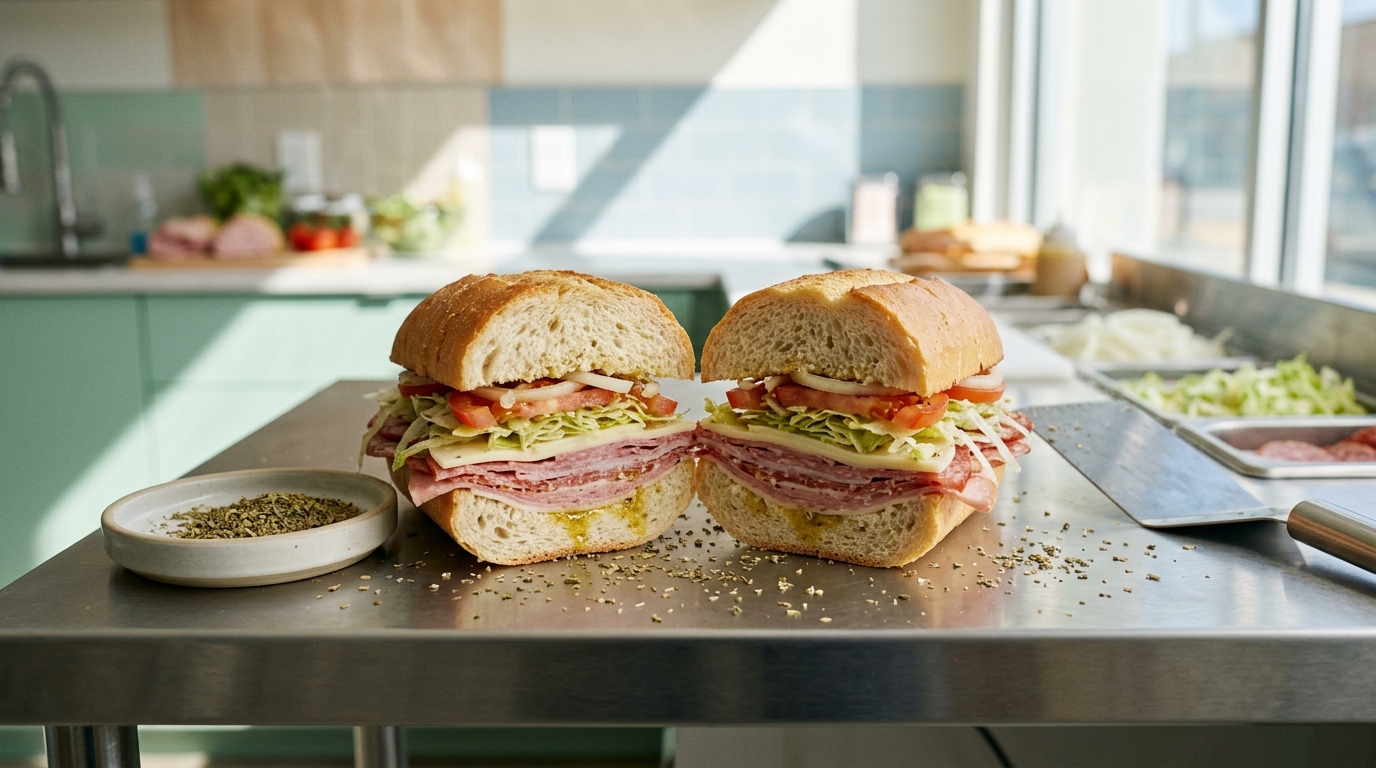
A true Philly hoagie is built on a specific Italian roll, layered with cured meats, sharp provolone, fresh vegetables, and dressed with oil and oregano - and it is categorically not a sub, a hero, or a grinder. The roll alone disqualifies most impostors.
The Hoagie vs. the Sub: Let's Settle This Once and For All
If you've ever ordered a sandwich in Philadelphia and called it a "sub," you probably got a look. That look wasn't rudeness - it was geographic and cultural correction delivered silently. In South Philly, in Center City delis, in every neighborhood corner shop that's been slicing meat since before you were born, it's a hoagie. Full stop.
But the difference isn't just vocabulary. The architecture of a Philly hoagie is genuinely distinct from what most of the country calls a submarine sandwich. Let's break it down ingredient by ingredient, so you understand what you're actually eating when you bite into the real thing.
The Roll: The Foundation of Everything
Start with the bread, because nothing else matters if you get this wrong. A proper Philly hoagie roll is soft on the inside, slightly crusty on the outside, and has enough structural integrity to hold oil-dressed vegetables without disintegrating. It's typically 10 to 12 inches, seeded or plain, baked fresh that morning by local Italian bakeries. The chew is specific. The density is specific. A generic supermarket hoagie roll from outside the region simply doesn't replicate it.
A sub roll, by contrast, is often denser, chewier throughout, and lacks that slight flakiness on the crust. A hero roll in New York is broader and flatter. A grinder roll in New England is harder, built to stand up to hot fillings. The Philly roll is its own category, and it's the reason transplants who move away from the city spend years trying to recreate something that's only ever truly right when made here.
The Italian Hoagie: The Blueprint
The Italian hoagie is the original, the standard against which all other hoagies are measured. Here's what goes inside a properly built one:
- Meats: Genoa salami, capicola (hot or sweet), and ham - layered in that order, folded and shingled so every bite has all three
- Cheese: Sharp provolone, thinly sliced, never American, never Swiss
- Vegetables: Shredded iceberg lettuce, tomato, raw onion, and hot or sweet peppers
- Dressing: Red wine vinegar and olive oil, dried oregano, salt and black pepper - no mayo, no mustard on the classic build
The ratio matters enormously. Philadelphia deli culture emphasizes a generous hand with the meat - you should not be biting through mostly bread. The vegetables are there to brighten and cut through fat, not to bulk up the sandwich. The oil soaks slightly into the cut surface of the roll, softening it just enough to meld with the meat. It's a system, not just a list of ingredients.
The Reuben Sandwich: An Honorable Neighbor
The Reuben sandwich doesn't share DNA with the hoagie - it lives in a completely different sandwich tradition - but any serious Philadelphia deli worth its salt has one on the menu, and it deserves its own breakdown.
A proper Reuben is built on rye bread (dark or marble, toasted or griddled), stacked with the following:
- Corned beef- thinly sliced, warm, brined for days before it ever hits a slicer
- Sauerkraut- drained, not dripping, so it doesn't waterlog the bread
- Swiss cheese- melted over the meat on the griddle
- Thousand Island or Russian dressing- spread generously on both slices of rye
The Reuben is a hot sandwich. It's pressed or griddled until the bread is golden and the cheese is completely melted. The combination of brined beef, fermented sauerkraut, tangy dressing, and nutty Swiss creates a flavor profile that is simultaneously rich, acidic, salty, and savory. It's one of the most balanced sandwiches in the American deli canon.
Pastrami on Rye: The Reuben's Bolder Cousin
Pastrami on rye is simpler and in many ways more assertive. Pastrami is made from the navel or brisket cut of beef, dry-rubbed with a spice blend that typically includes black pepper, coriander, garlic, and mustard seed, then smoked and steamed until it pulls apart at the edges. The flavor is deeply smoky, peppery, and fatty in the best possible way.
On rye with yellow mustard and nothing else - that's the purist's build. The sharpness of the mustard cuts through the fat of the pastrami, and the earthiness of the rye bread ties everything together. Some builds add Swiss cheese or coleslaw, but the two-ingredient version (pastrami plus mustard) is where the sandwich proves it doesn't need any help.
The Corned Beef Special: Philadelphia's Deli Staple
The corned beef special is a deli staple that appears in different forms depending on where you order it, but in Philadelphia's sandwich culture, "special" typically means it's dressed up beyond the basics. A corned beef special at a Center City deli might include:
- Thinly sliced corned beef, piled high
- Coleslaw on the sandwich itself (not on the side)
- Russian dressing or spicy brown mustard
- Rye bread or a Kaiser roll, depending on the shop
Corned beef and pastrami are often confused but they're distinct. Corned beef is wet-brined in a salt and spice solution, then boiled or steamed. Pastrami starts the same way but then gets dry-rubbed and smoked. The result is that corned beef is milder, more tender, and more uniform in flavor, while pastrami is smokier, spicier, and more textured at the edges.
Hoagie vs. Sub vs. Reuben: A Direct Comparison
Feature Italian Hoagie Sub Reuben Bread Italian hoagie roll (seeded) Dense sub roll Rye bread (toasted) Temperature Cold Cold or hot Hot (griddled) Primary meats Salami, capicola, ham Varies widely Corned beef Cheese Sharp provolone American, provolone, varies Swiss (melted) Dressing Oil, vinegar, oregano Mayo, mustard, or oil Thousand Island or Russian Regional origin Philadelphia, PA Nationwide American Jewish deli traditionWhy Philadelphia Sandwiches Hit Different
When you're searching for the best sandwiches near me in Philadelphia, you're not just looking for a lunch option - you're tapping into a food culture that treats the sandwich as a serious craft. The city's Italian immigrant communities established the hoagie tradition generations ago, and the Jewish deli culture brought the Reuben, the pastrami on rye, and the corned beef special into the mix. These aren't fusion experiments or trend-chasing menu items. They're fully formed culinary traditions with rules, ratios, and loyalists.
Philadelphia also has a culture of deli catering that carries these sandwich traditions directly into offices, events, and corporate lunch spreads. Philadelphia business catering built around hoagies and deli trays is a staple for Center City firms - partly because the sandwiches travel well, partly because they please a crowd without alienating anyone, and partly because they're just genuinely great food.
Whether you're feeding a team of five or a conference room of fifty, a well-built hoagie tray or deli spread from a Philadelphia catering company that understands these traditions is a completely different experience from a generic sandwich platter assembled without care or regional knowledge.
Know your sandwich. Know your city. Order accordingly.
What makes a Philly hoagie different from a regular sub?
A Philly hoagie uses a specific Italian roll baked locally, sharp provolone cheese, Italian cured meats layered in a precise ratio, and a dressing of oil, red wine vinegar, and oregano. A generic sub typically uses a denser roll, varies the cheese and meat without a fixed tradition, and often relies on mayo-based dressings. The roll and the dressing method are the two biggest structural differences.
What's the difference between pastrami and corned beef?
Both start from beef brisket or navel cut that's been brined in a spiced salt solution. Corned beef is then boiled or steamed, producing a milder, tender, uniform flavor. Pastrami is additionally dry-rubbed with black pepper, coriander, and other spices, then smoked before steaming - resulting in a smokier, spicier, more textured product with a distinctive bark on the edges.
Is a Reuben sandwich a Philadelphia creation?
No. The Reuben sandwich comes out of the American Jewish deli tradition, with competing origin stories tracing it to Omaha, Nebraska and New York City in the early 20th century. However, Philadelphia's deli culture has fully adopted it, and a well-made Reuben is a fixture on any serious Philly deli menu.
What's the correct cheese for an Italian hoagie?
Sharp provolone, thinly sliced. Never American cheese, never Swiss, and never a cheese blend. The sharpness of aged provolone is specifically calibrated to cut through the fat of the cured meats without overwhelming the oregano-and-oil dressing. Substituting a milder cheese fundamentally changes the flavor balance of the sandwich.
Can Philadelphia-style hoagies and deli sandwiches be catered for office events?
Yes - deli catering services in Philadelphia regularly deliver hoagie trays, individual wrapped sandwiches, and full deli spreads to offices throughout Center City and the surrounding metro area. Hoagies are particularly well-suited to catering because they hold their structure and flavor for several hours after preparation, making them a reliable choice for corporate lunches, breakfast meetings with deli items, and large team events.