Breakfast catering wins for budget-conscious morning meetings under two hours, while lunch catering is the stronger choice for longer sessions, senior stakeholder presentations, and multi-department events where a full meal signals respect for attendees' time.
The Real Question Isn't Just Timing
Most office managers and executive assistants in Philadelphia default to whatever they ordered last time. But the choice between breakfast catering and lunch catering for your next business meeting actually shapes how people show up, how long they stay focused, and what the event costs your company. Getting it right matters more than most people realize.
If you're sourcing catering for businesses in Center City Philadelphia, you're also dealing with real logistical constraints: delivery windows, building access, setup time in conference rooms that get booked back-to-back. Let's break down both options honestly so you can make the call with confidence.
Breakfast Catering: What It Does Well
Breakfast catering is the right move in specific situations, and it genuinely shines when you play to its strengths.
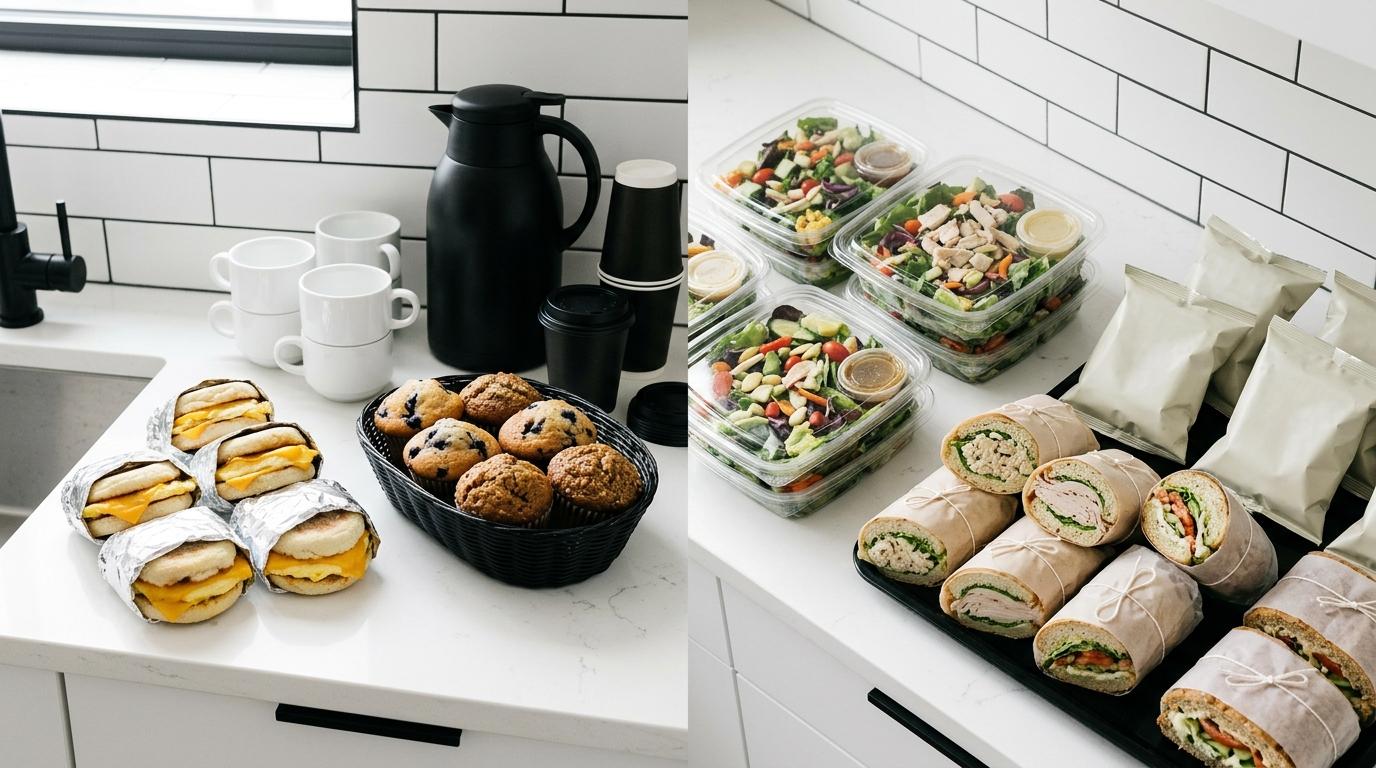
It costs less. A well-executed breakfast spread from a Philadelphia catering company runs meaningfully lower per head than a comparable lunch order. You're working with bagels, pastries, egg sandwiches, fruit, yogurt, and coffee rather than hot entrees, salads, and sides. For a 20-person team meeting, that difference adds up fast.
It sets an energetic tone. Morning meetings scheduled between 8:00 and 10:30 a.m. benefit from food that signals a fresh start. Coffee service alongside a well-curated breakfast spread from a quality deli catering service keeps people alert rather than drowsy.
Setup is faster and cleanup is cleaner. Breakfast items are typically self-serve and don't require heating equipment or elaborate presentation. Your caterer can set up in 15–20 minutes and be out before the meeting starts. That matters a lot in busy Center City office buildings where loading dock access is limited to specific windows.
It works for shorter meetings. Workshops, team stand-ups, quarterly kickoffs, and board briefings that run 60–90 minutes are natural fits for breakfast catering. People eat quickly, the food doesn't distract, and everyone moves on with their day.
Lunch Catering: When It's the Smarter Investment
Lunch catering carries a higher price tag, but it earns that cost in the right circumstances.
It signals seriousness. If you're hosting a client presentation, an all-hands session, or a recruiting event, a proper lunch communicates that you value the people in the room. A full meal says the company invested in the experience, not just the agenda.
It sustains longer focus. Half-day workshops and afternoon strategy sessions are brutal without real food. Pastries from a morning spread don't carry people through a two-hour working lunch. A structured meal with protein, vegetables, and substantial sides keeps energy levels stable across a longer block of time.
It accommodates dietary complexity more naturally. Lunch menus from Philadelphia catering companies tend to offer broader customization: hot and cold options, clearly labeled allergen information, dedicated vegetarian and vegan portions, and halal or gluten-free selections. When you're feeding a diverse team of 50+ people, that flexibility matters.
It creates natural networking time. There's a reason conference organizers build lunch breaks into every multi-track event. Food is a social lubricant. If relationship-building is part of your meeting's purpose, lunch catering creates space for that in a way that a quick morning spread doesn't.
Breakfast vs. Lunch Catering: 6 Key Differences for Business Meetings
| Factor | Breakfast Catering | Lunch Catering |
|---|---|---|
| Typical cost per person | Lower (roughly 30–50% less than lunch) | Higher, but reflects full meal value |
| Best meeting duration | 60–90 minutes | 2+ hours or half-day sessions |
| Setup complexity | Simple, self-serve, minimal equipment | More involved, often requires warmers or trays |
| Dietary flexibility | Moderate (limited hot options) | High (broader menu range) |
| Tone it sets | Energetic, casual, efficient | Professional, generous, invested |
| Ideal use case | Team kickoffs, board briefs, training sessions | Client events, recruiting, all-hands meetings |
Factors That Should Drive Your Decision
Beyond the basics, a few specific factors should tip the decision one way or the other when you're planning corporate catering in Philadelphia.
Who's in the room. Internal team members doing a tactical review are fine with a breakfast spread. External clients, C-suite stakeholders, or job candidates deserve a lunch experience. The food you serve sends a signal about how much you value the relationship.
Meeting start time. This one sounds obvious, but it gets ignored more often than it should. If your meeting runs 11:00 a.m. to 1:00 p.m., serving breakfast food creates an awkward disconnect. Match the food to the natural meal expectation of the time slot.
Your building's delivery logistics. Many Center City Philadelphia office buildings have strict loading dock hours and elevator reservations for vendors. Breakfast caterers typically arrive early when building traffic is lighter. Lunch deliveries hit peak freight elevator demand. Factor this into your planning, especially if you've had delivery timing issues before.
Group size and budget ceiling. A breakfast spread from a reputable Philadelphia deli catering service can feed 25 people gracefully without straining a modest event budget. A formal lunch for the same group costs considerably more. Know your ceiling before you start comparing menus.
Season and weather. Philadelphia summers make hearty hot breakfast items less appealing. Center City winters make a warm, substantial lunch feel like a genuine gift to attendees who just fought through wind on Market Street. Seasonal context is a real consideration that experienced caterers factor into their recommendations.
Hybrid Options Worth Considering
Philadelphia catering companies increasingly offer brunch-style packages that bridge the gap. If your meeting runs 10:00 a.m. to noon, a curated brunch spread gives you the cost efficiency of breakfast with the variety and substance that edges toward lunch. You get egg-based hot items, fresh salads, a bagel and pastry station, and coffee service in one order. It's an underused option that solves the awkward late-morning slot problem better than forcing either a strict breakfast or a full lunch.
Cafe catering in Philly has also expanded to offer customizable "working lunch" boxes, which are individually portioned meals that eliminate the logistics of shared trays and serving utensils. For hybrid meetings where some attendees are remote and in-person headcount is precise, individual box lunches are a clean solution.
Making the Final Call
Use breakfast catering when your meeting is short, your budget is lean, your timing is early, and the audience is internal. Use lunch catering when the stakes are higher, the session runs long, external guests are present, or the culture of your organization calls for something more substantial. When the timing falls in between, a brunch package from an experienced Philadelphia catering company gives you the best of both.
The most important thing is to commit to your choice and execute it well. A thoughtfully ordered breakfast with excellent coffee beats a mediocre lunch every time. Quality, timing, and a reliable caterer who understands Center City logistics matter more than the meal category itself.
Philadelphia Business Breakfast and Lunch Catering FAQ
How far in advance should I book breakfast or lunch catering for a Philadelphia office meeting?
For most Center City Philadelphia catering orders, booking 48–72 hours in advance is sufficient for groups under 30 people. For meetings of 50 or more, or for events with complex dietary requirements, book at least 5–7 business days ahead. Last-minute orders are possible with many deli catering services in Philadelphia, but menu options and delivery windows become limited.
What's a reasonable per-person budget for breakfast catering versus lunch catering in Philadelphia?
Breakfast catering in Philadelphia typically runs lower per person than lunch, depending on whether you include hot items and full coffee service. Lunch catering with a full entree, sides, and beverages runs meaningfully higher. Specific current pricing varies by caterer and menu, so request a quote from your preferred Philadelphia catering company for accurate figures. Always ask what's included in the per-person rate: setup, serving supplies, and gratuity can significantly affect the total.
Do Philadelphia catering companies accommodate dietary restrictions for office events?
Yes. Most reputable Philadelphia business catering providers offer vegetarian, vegan, gluten-free, and halal options across both breakfast and lunch menus. The key is communicating dietary requirements at the time of order, not the day before. For groups over 20 people, providing a breakdown of specific needs (not just "some people have allergies") helps caterers label and portion food accurately.
Is individual box catering better than shared trays for business meetings?
Individual box meals work better when headcount is exact and hygiene concerns are a priority, which remains true for many Philadelphia office environments. Shared trays work well for casual team settings where self-service is part of the social experience. Many cafe catering providers in Philly now offer both formats, so you can match the serving style to the meeting's tone.
Can I order breakfast catering for an afternoon meeting if the team prefers it?
Technically yes, but it rarely lands well. Serving bagels and pastries at 2:00 p.m. tends to feel like an oversight rather than a deliberate choice, and it provides less sustained energy for an afternoon session than a proper lunch would. If your team genuinely prefers lighter fare, many Philadelphia catering companies offer afternoon snack spreads with fruit, wraps, and light bites that fit the time slot without the breakfast disconnect.