A well-built breakfast catering menu for a Philadelphia office covers three non-negotiables: enough variety to satisfy dietary restrictions, enough volume to feed a full floor, and enough familiarity to keep everyone actually eating. Get those three things right, and your morning spread becomes the highlight of the workday - not an afterthought.
Whether you're coordinating a weekly breakfast for a 15-person team in Rittenhouse or a 200-person all-hands in Center City, the structure of your menu matters more than any single dish. Here's how Philadelphia businesses are building breakfast catering orders that actually work.
Start With a Headcount and a Format
Before you pick a single item, lock in two things: how many people you're feeding and whether you want a buffet-style setup or individually packaged meals. These decisions shape everything else.
Buffet-style setups work well for offices of 20 or more. They're cost-efficient, encourage mingling, and give guests the freedom to build their own plates. The downside? They require serving equipment, setup space, and someone managing replenishment.
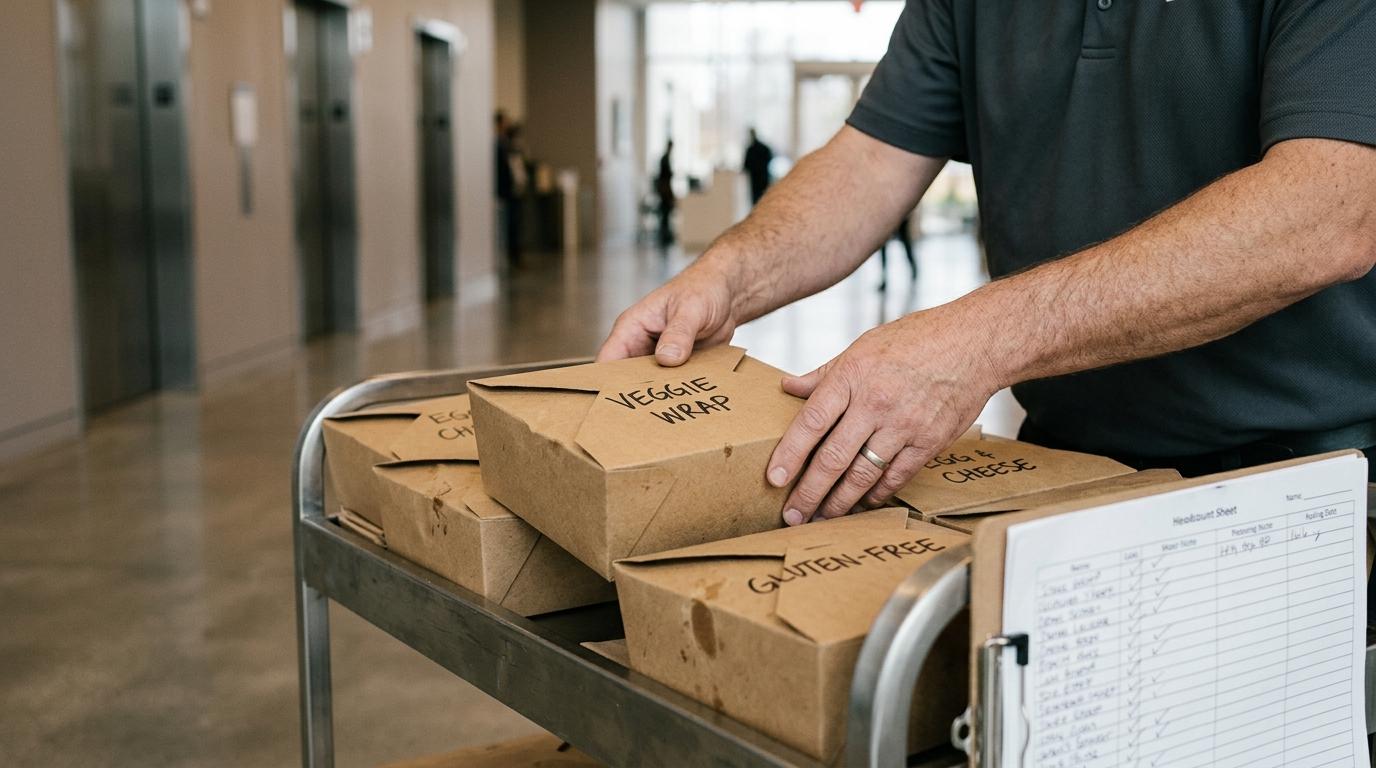
Individually boxed or bagged breakfasts are popular with hybrid offices where employees arrive at different times or grab-and-go is the norm. Many Philadelphia catering companies offer boxed options specifically designed for corporate drop-offs.
Once you know your format, you can start building the actual menu around it.
The Core Categories Every Office Breakfast Menu Needs
A strong breakfast catering menu isn't just a pile of bagels. It's a balanced spread across at least four core categories:
- Breads and pastries: Bagels, croissants, muffins, danishes - these are the anchor of any office breakfast. Plan on 1.5 to 2 pieces per person.
- Proteins: Hard-boiled eggs, breakfast sandwiches, smoked salmon, or mini frittatas. Protein keeps people full past 10 AM and reduces the mid-morning snack run.
- Fruit and produce: Sliced seasonal fruit, berries, or a simple green salad for those who skip the carbs. This category serves your health-conscious crowd and rounds out the visual spread.
- Spreads and accompaniments: Cream cheese, butter, jam, nut butters, and condiments. Don't underestimate how much these matter - a dry bagel is a forgotten bagel.
For larger orders, Philadelphia deli catering services often add hot items like scrambled eggs, bacon, or sausage to the lineup. If you're feeding a team for a full morning event, hot proteins make a significant difference in satisfaction.
Accounting for Dietary Needs Without Overcomplicating the Order
In a typical Philadelphia office today, you're likely feeding a mix of omnivores, vegetarians, vegans, and people managing gluten or dairy restrictions. The good news: a well-structured menu naturally covers most of these without requiring separate specialty orders.
Here's a practical breakdown of how to approach it:
Dietary Need Easy Accommodation Common Pitfall to Avoid Vegetarian Ensure proteins include eggs or cheese-based options Ordering only meat-based sandwiches Vegan Fruit trays, plain bagels, nut butters, avocado Assuming "no meat" covers vegan needs Gluten-free Gluten-free bagels or wraps, fruit, eggs No labeled GF option on the buffet Dairy-free Dairy-free spreads, fruit, protein boxes without cheese Forgetting that many pastries contain butter Nut allergy Keep nut butters clearly labeled and separate Mixing nut-containing items near allergy-sensitive foodsWhen you're placing your order with a deli catering service in Philadelphia, communicate dietary needs upfront. Most reputable caterers will label items and package allergen-sensitive options separately if you ask.
Quantity Planning: How Much to Order
Under-ordering is the most common mistake offices make with breakfast catering. People eat more in a group setting than they do alone, and breakfast is the one meal where seconds are socially acceptable at 8 AM.
Use these benchmarks as your starting point:
- Bagels and bread items: 1.5–2 per person
- Pastries: 1 per person (treat these as supplemental)
- Protein items (sandwiches, egg bites): 1 per person, with 10–15% overage for a buffet
- Fruit trays: Plan for roughly 3–4 oz of fruit per person
- Coffee: 1.5 cups per person for an office morning event; more for early-start meetings
For a 50-person office breakfast, that typically means ordering for 55–60 to account for appetite variance. Most Philadelphia business catering providers will help you dial in quantities when you share your headcount and event type.
Timing and Delivery Logistics for Center City Offices
Running breakfast catering for a Center City Philadelphia office comes with specific logistical wrinkles that don't apply in the suburbs. Loading dock availability, elevator access, and building security protocols all affect how and when your order arrives.
A few things to confirm before your catering order is finalized:
- Delivery window: Most office breakfasts need to be set up 20–30 minutes before the event. Confirm your caterer's arrival time, not just their delivery window.
- Building access: Many Center City buildings require vendor check-in and have restricted freight elevator times. Share your building's logistics with your catering contact when you place the order.
- Setup service vs. drop-off: Some Philadelphia catering companies offer setup and breakdown; others do drop-off only. Know which you're getting before the morning of.
- Disposables included: Confirm whether plates, napkins, serving utensils, and tongs are included or need to be supplied by your office.
Offices that establish a recurring breakfast catering relationship with a local provider tend to iron out these logistics after the first or second order. Recurring catering for businesses in Center City Philadelphia often comes with streamlined communication and consistent setup because the caterer already knows your building's quirks.
Building a Rotation So the Menu Stays Fresh
If you're running weekly or biweekly office breakfasts, menu fatigue is real. By week four, nobody's excited about the same everything bagel and lox spread they've seen three times already.
Build a 4-week rotation that cycles through different anchor proteins and pastry themes:
- Week 1: Classic deli - bagels, lox, cream cheese, nova, capers, tomato, red onion
- Week 2: Warm breakfast - egg sandwiches, breakfast wraps, fresh fruit, yogurt parfaits
- Week 3: Pastry forward - croissants, danishes, muffins, fresh berries, coffee cake
- Week 4: Protein-focused - frittata bites, mini quiches, turkey roll-ups, cheese board with fruit
Most Philadelphia café catering providers and deli caterers are happy to build a rotating menu for recurring clients. It's worth asking upfront because it simplifies the reordering process significantly.
What Makes a Philly Breakfast Catering Order Actually Memorable
Philadelphia has a distinct food identity, and leaning into it makes your office breakfast stand out. The city's deli and café culture runs deep - think quality rye breads, properly cured lox, fresh-baked rolls, and house-made spreads rather than pre-packaged equivalents.
When you're evaluating breakfast catering options in Philadelphia, ask whether items are sourced locally or made in-house. A spread built around locally sourced ingredients from Philly's Reading Terminal Market vendors or local bakeries lands differently than a generic corporate breakfast box. Your team notices, even if they can't articulate exactly why.
The best office breakfast catering orders balance familiarity with quality. People want to see things they recognize, but they also want those things to taste better than what they'd grab at a chain. That's the sweet spot Philly's local catering scene is genuinely good at hitting.
Breakfast Catering Menu FAQ
How far in advance should I place a breakfast catering order for a Philadelphia office?
For most orders, 48–72 hours of advance notice is sufficient. For large events (100+ people) or orders requiring significant customization, one week is the safer window. Center City offices with complex building access requirements should always give at least 72 hours so the caterer can coordinate logistics.
What's a realistic per-person budget for office breakfast catering in Philadelphia?
Per-person costs vary based on menu complexity, headcount, and whether setup service is included. A basic bagel-and-pastry drop-off typically runs less per person than a full hot-breakfast buffet with setup and breakdown. Contact a local Philadelphia catering company directly for current pricing based on your specific headcount and menu needs.
Can Philadelphia catering companies accommodate last-minute dietary restriction requests?
Most established catering companies can accommodate common dietary needs - vegetarian, vegan, gluten-free - when notified at the time of ordering. Same-day requests for severe allergen accommodations are harder to fulfill safely. Always communicate dietary needs when placing the order, not the morning of the event.
Is it better to order individually boxed breakfasts or a buffet spread for a hybrid office?
For hybrid offices where employees arrive at staggered times, individually boxed or bagged breakfasts are the more practical choice. Buffet-style setups work best when most of the team arrives within a 30-minute window. If your office has both in-office and remote participants joining virtually, individually packaged meals also photograph better for screen sharing during hybrid meetings.
What's the difference between a deli catering service and a café catering service in Philadelphia?
Deli catering services in Philadelphia typically specialize in cold and hot deli items - bagels, lox, sandwiches, sliced meats, and cheese boards - with a focus on volume and efficiency. Café catering services often emphasize specialty coffee, pastry, and lighter fare. Many Philadelphia catering companies offer both styles, so the distinction is more about menu emphasis than a hard category line. For a full office breakfast, a provider with deli depth and café-quality pastry gives you the most complete spread.