What Is Pharmaceutical Rep Lunch Catering, and How Does It Work in Philadelphia?
Pharmaceutical rep lunch catering is a drop-off or full-service meal delivered to a medical practice, hospital department, or clinic during a scheduled sales visit, typically for 10–40 clinicians and staff. In Philadelphia, a successful order needs an exact delivery window (usually 11:30 a.m.–12:15 p.m.), individually labeled dietary options, and a setup that takes under 10 minutes. Waterfront Gourmet handles these orders alongside large-group catering, last-minute requests, and multi-day conferences.
This guide covers the mechanics that separate a smooth rep lunch from a stressful one, and how the same planning principles apply to bigger and faster jobs.
Why Rep Lunches Are Different From a Standard Office Lunch
A rep lunch has a fixed audience and a fixed clock. Clinicians often have a 30–45 minute window between patients, so food that needs plating, slicing, or explaining wastes the one thing the rep is buying: attention. Four factors shape the order:
- Timing precision: Food that arrives at 11:15 sits through morning appointments. Food that arrives at 12:20 misses the presentation. Aim for 10–15 minutes before the scheduled start.
- Mixed dietary needs: Medical offices commonly include vegetarian, halal, kosher-style, gluten-free, and nut-allergy staff in one group. Labeling matters more than variety.
- Limited space: Break rooms and reception counters are small. Stackable, self-contained formats beat chafing dishes.
- Compliance awareness: Many practices and health systems follow PhRMA Code guidelines, which allow modest meals tied to educational presentations. Keep per-person spending reasonable and the food simple.
Best Menu Formats for Rep Lunches
Pick a format based on headcount, available space, and how much time staff have to eat. This comparison shows how common options perform:
| Format | Best for | Setup time | Main trade-off |
|---|---|---|---|
| Individually boxed lunches | Groups of 10–40 with mixed diets | 2–3 minutes | Less variety per person |
| Deli sandwich platters | Groups of 8–25, casual practices | 5 minutes | Dietary labeling requires care |
| Build-your-own salad or grain bowl bar | Wellness-focused or specialty practices | 10–15 minutes | Needs counter space and serving utensils |
| Hot trays (pasta, chicken, sides) | Longer lunch-and-learns with seated staff | 10 minutes plus fuel | Cleanup and food-temperature management |
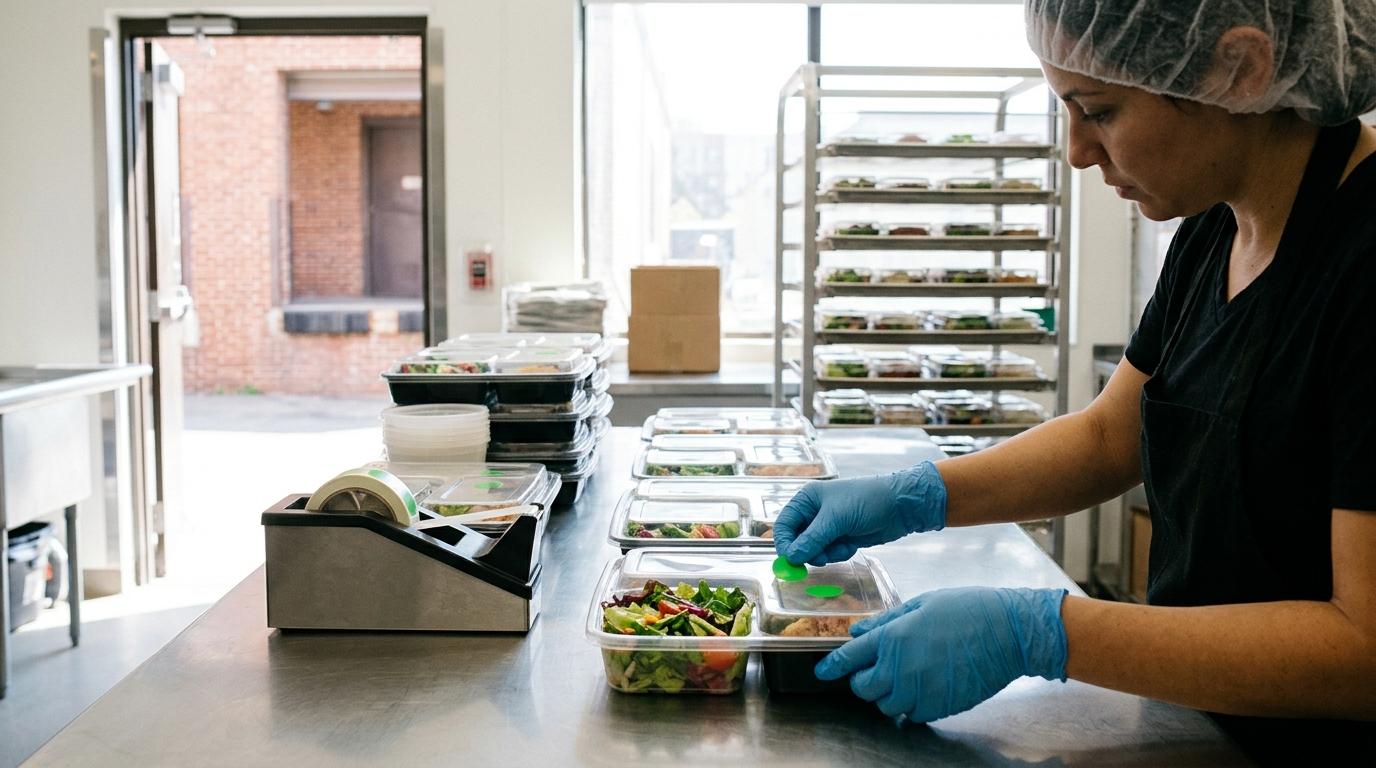
For most practices, boxed lunches are the safest bet. Each box carries a sticker listing the sandwich or salad, and the vegetarian and gluten-free boxes are clearly marked. Nobody hovers over a tray reading ingredient lists while the rep waits.
How to Plan the Order: A 6-Step Checklist
- Confirm the headcount 48 hours ahead. Ask the office manager for the number of clinicians plus administrative staff. Add 10% for walk-ins.
- Collect dietary restrictions in one message. Ask for counts, not names: 3 vegetarian, 2 gluten-free, 1 nut allergy.
- Choose the format using the table above.
- Set the delivery window 10–15 minutes before the presentation, and share the building access details (suite number, loading dock, elevator rules).
- Request disposables and napkins sized for the group, since most offices lack enough plates.
- Name an on-site contact with a cell number so the driver reaches a person, not a front-desk voicemail.
Last-Minute Catering in Philadelphia: What Is Realistic
Last-minute catering in Philadelphia is realistic for groups under 50 with 24 hours of notice, and often for groups under 20 with 4–6 hours. A rep who gets a sudden lunch slot, or a manager who learns about a working session that morning, needs a menu built from items a kitchen already prepares in volume.
What works on short notice:
- Sandwich, wrap, and salad platters: Built from standing deli inventory, so no special prep is needed.
- Boxed lunches: Fast to assemble in bulk with a limited menu.
- Breakfast spreads: Bagels, pastries, fruit, and coffee carry over well to same-morning orders.
What does not work: custom dietary builds, multi-station setups, and specialty proteins. If your group has severe allergies, give the kitchen as much notice as possible, or request a clearly separated allergy-safe box. Traffic on I-95, Market Street, and the Schuylkill Expressway also affects Center City delivery, so build in a 20-minute buffer for rush-hour drop-offs.
Catering for Large Groups in Philly: Scaling Beyond the Rep Lunch
Large-group catering starts around 50 people, and the logistics change. Instead of one drop-off, you plan for flow: how people line up, how fast they eat, and where waste goes. Use these rules of thumb:
- Portion planning: Plan 1–1.25 sandwich portions per person for lunch, or 1.5 pastries or bagel halves per person for breakfast.
- Serving lines: Open two lines for any group over 60, otherwise the queue eats 15–20 minutes.
- Beverages: Budget about one drink per person for lunch and 1.5 cups of coffee per person at morning events.
- Stagger delivery: For events over 100 people, ask for two delivery waves so the second half of the food stays fresh.
Venues in Center City, University City, and along the Delaware waterfront often limit loading times and elevator use. Confirm the freight elevator schedule and certificate-of-insurance requirements before the day, since some buildings require a COI from the caterer.
Multi-Day Conference Catering: Keeping Day Three as Good as Day One
Multi-day conference catering fails when menus repeat or when logistics drift. Attendees notice the same wrap on Tuesday and Thursday. Plan the full schedule up front and vary the format by day.
A workable 3-day structure for 75–150 attendees:
- Day 1: Breakfast pastries and coffee, boxed deli lunch, afternoon snack with fruit and cookies.
- Day 2: Hot breakfast sandwiches, a build-your-own salad and grain bowl lunch, and a coffee refresh at 2:30 p.m.
- Day 3: Light breakfast (yogurt, fruit, bagels), a hot-tray lunch for sit-down sessions, and grab-and-go boxes for early departures.
Two details save headaches. First, lock a single point of contact for the whole run so schedule changes go to one person. Second, ask for a final headcount deadline each evening for the next day, since attendance usually drops 10–15% by the last day of a conference.
Why Choose Waterfront Gourmet for Specialized Events
Waterfront Gourmet works as a Philadelphia cafe and deli caterer, which means the same kitchen that handles a 12-person rep lunch also handles breakfast catering for offices and multi-day events. Standing deli inventory supports faster turnaround, and labeled boxed lunches reduce on-site friction for busy clinical staff. For business customers in Center City and nearby neighborhoods, one caterer across rep lunches, team meetings, and conferences simplifies ordering and keeps quality consistent.
Pharmaceutical Rep Lunch Catering FAQ
How far ahead should I order a pharmaceutical rep lunch in Philadelphia?
Order 48 hours ahead for the best selection and a guaranteed delivery window. Orders for fewer than 20 people can often be placed 4–6 hours ahead, but the menu narrows to standard deli platters and boxed lunches.
How much should I budget per person for a rep lunch?
Most rep lunches fall in the $12–$20 per person range for boxed or platter service, before delivery and tip. Many health systems follow PhRMA Code guidance that favors modest meals, so keep the menu simple rather than lavish.
What is the best food for a mixed-diet medical office?
Individually boxed lunches with labeled vegetarian, gluten-free, and nut-free options work best. Labels let each person choose quickly without opening multiple trays, which keeps the presentation on schedule.
Can you cater last-minute events for large groups?
Groups of 50 or fewer are usually manageable with 24 hours of notice. Larger groups need 3–5 days so the kitchen can plan staffing, portions, and delivery waves.
How do you keep multi-day conference menus from feeling repetitive?
Rotate the format each day: boxed lunches on day one, a bowl bar on day two, hot trays on day three. Change breakfast and snack items too, and confirm the schedule with one point of contact before the event begins.