To cater for 100+ people in a Philadelphia office, plan for 1.1 to 1.25 meals per head, lock in your headcount 48 hours out, and choose a caterer with its own delivery team and a loading-dock plan for your building. Waterfront Gourmet handles large corporate orders across Center City, University City, and the surrounding business districts, from a single 120-person lunch to a three-day conference.
Feeding a crowd is a different job from ordering sandwiches for a team meeting. The quantities, timing, building logistics, and dietary spread all change at scale. Here is how to get it right.
How Much Food Do You Need for 100+ People?
Order for your confirmed headcount plus a 10–15% buffer for drop-ins and second helpings. For 100 confirmed guests, that means food for 110 to 115. Going lower is the most common mistake at this size, because a shortage at a 100-person event is visible to everyone and nearly impossible to fix mid-service.
Use these working portions per person:
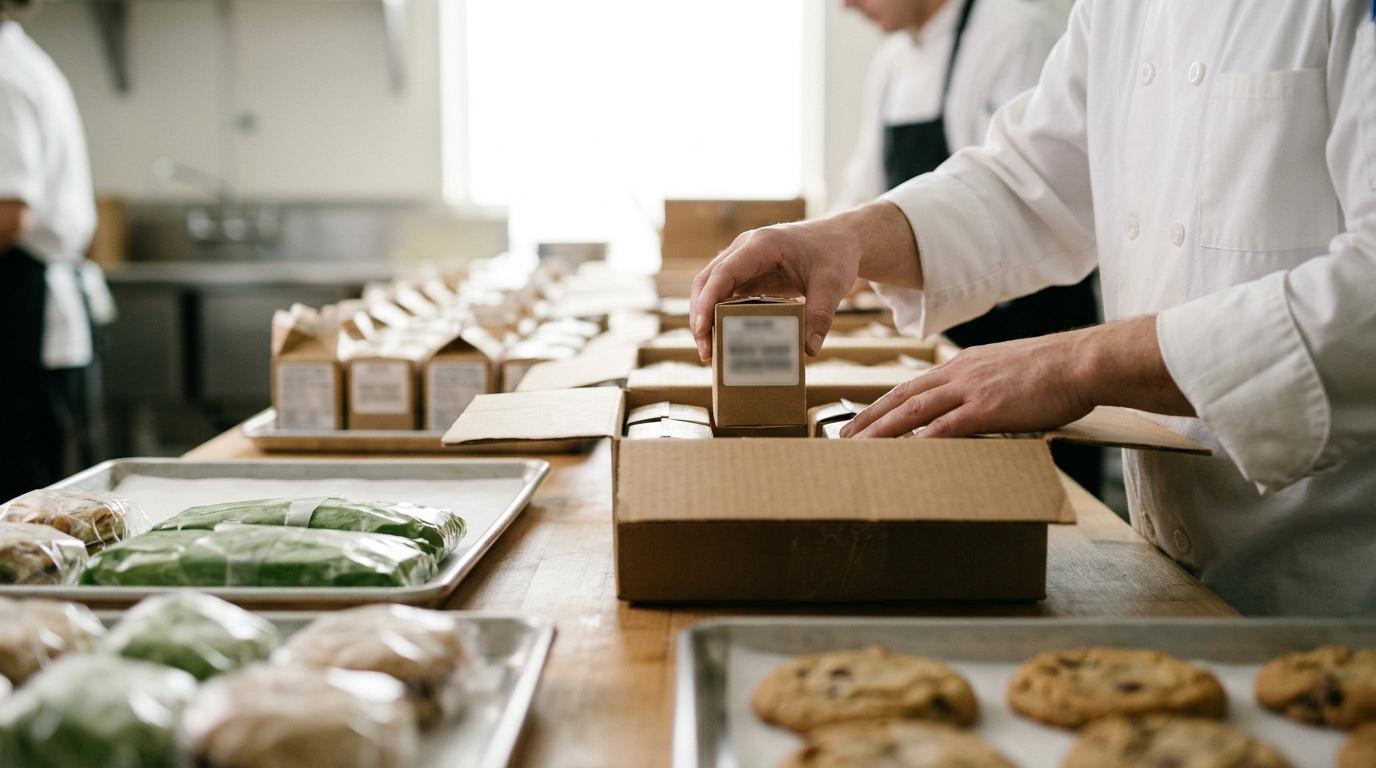
- Sandwich or wrap lunch: 1 full sandwich (cut in halves or thirds), 1 side, 1 cookie or dessert bite
- Salad lunch: 1.5 cups of greens plus 4–5 oz of protein
- Breakfast: 2 pastry or bagel pieces plus 1 protein item, such as egg bites or yogurt parfaits
- Coffee: 1 cup per person for morning events, so about 10 gallons for 100 people
Cut sandwiches in half or thirds for events where people are mingling. Smaller pieces reduce waste and let guests try two varieties.
Last Minute Catering in Philadelphia: What Is Realistic?
Last minute catering in Philadelphia works for up to about 50 people on same-day or next-day notice. Above 100 people, 48–72 hours is the practical minimum for a quality result. The limit is not the food itself. It is staffing, vehicles, and the prep capacity of the kitchen.
When you are in a bind, these moves protect quality:
- Choose from the existing menu. Custom requests need sourcing and testing time. Standard platters can be produced quickly.
- Pick cold or room-temperature items. Deli platters, wraps, grain bowls, and salads scale faster than hot entrees and hold safely longer.
- Call, do not just submit a form. A phone conversation about headcount, delivery window, and building access settles in five minutes what email takes a day to sort out.
- Split the order if needed. Two delivery waves 30 minutes apart can work better than one huge drop when the kitchen is tight.
- Give a firm number. A confident "110 people" beats "somewhere between 90 and 130."
If you know an event is coming, even a tentative heads-up a week ahead lets a caterer hold capacity. You can then finalize the count later.
Catering for Large Groups in Philly: The Logistics Nobody Mentions
Building logistics cause more large-group catering failures than the food does. Center City towers often have strict freight elevator reservations, certificate-of-insurance requirements, and limited loading windows. Ask your building manager three questions before ordering:
- Is there a loading dock or a designated vendor entrance, and what are its hours?
- Does the caterer need to provide a certificate of insurance, and who receives it?
- Is the freight elevator reservable, and for how long?
Then work out your setup space. One hundred people need roughly 16–20 linear feet of buffet table if you run a single-sided line, which creates a long queue. A double-sided line or two separate stations cuts the wait from about 15 minutes to under 8. Breaking food into stations (sandwiches in one spot, salads and sides in another, drinks and dessert apart from both) is the simplest way to keep the room moving.
Also decide on service style. Here is how the main options compare:
| Service Style | Best For | Staff Needed | Trade-Off |
|---|---|---|---|
| Individually boxed meals | Meetings, training days, tight schedules | None | Higher packaging waste, less variety |
| Drop-off buffet | Casual lunches, all-hands | None to 1 helper | Longer lines, self-managed cleanup |
| Staffed buffet | Client-facing events, 100+ guests | 2–3 servers | Added labor cost, better flow and food safety |
| Grazing or stations | Networking, receptions | 1–2 attendants | Needs more floor space |
For 100+ guests who need to eat in a 45-minute window, boxed meals or a double-sided staffed buffet are the two options that reliably work.
Pharmaceutical Rep Lunch Catering: Rules and Realities
Pharmaceutical rep lunch catering is a recurring request in Philadelphia, home to a dense cluster of health systems, hospitals, and research institutions. These lunches carry constraints that ordinary office catering does not. Many healthcare organizations follow internal vendor-meal policies, and the industry's own code (the PhRMA Code on Interactions with Health Care Professionals) limits what can be provided, restricting meals to modest, occasional, in-office settings tied to educational content.
What this means in practice for your order:
- Keep it modest. Sandwich platters, salads, and simple sides fit. Elaborate spreads do not.
- Count carefully. Orders are often sized to the number of clinicians and staff attending the educational session, so exact counts matter.
- Build in tight timing. Clinical staff often have a 30–45 minute window between patients. Food should be set up 15 minutes before the session starts.
- Use individual packaging. Boxed lunches or clearly labeled portions keep service fast and sanitary in a clinical environment.
- Label allergens clearly. Medical audiences notice, and they appreciate it.
Confirm your own organization's compliance rules first. The caterer's job is to execute accurately and on time, not to interpret your policy.
Multi-Day Conference Catering: Planning Across 2–5 Days
Multi-day conference catering rewards variety and rhythm. Attendees who see the same turkey club on day one and day three stop eating, and that waste adds up. Plan the schedule as a whole rather than ordering each meal independently.
A strong multi-day structure looks like this:
- Day 1 arrival: Breakfast catering with coffee, fruit, and pastries, plus a light, easy lunch.
- Mid-day breaks: A 3 p.m. snack and caffeine refresh, such as cookies, fruit, and iced tea or cold brew, prevents the afternoon slump.
- Day 2 main event: The heartiest lunch, such as hot entrees, grain bowls, or a deli spread with composed salads.
- Final day: Grab-and-go options, because attendees are traveling and want to leave on time.
Rotate cuisines and formats across days. Deli on day one, Mediterranean bowls on day two, and a build-your-own wrap bar on day three keeps the menu fresh. Track dietary needs from the registration form so vegetarian, vegan, gluten-free, and halal or kosher-style requests are counted, not guessed. A good rule is 15–20% of meals as vegetarian or vegan at a mixed professional audience.
Ask for a single point of contact and one consolidated invoice. Coordinating five separate deliveries with five separate confirmations is where multi-day events fall apart.
Dietary Needs at Scale
At 100 people, you will almost certainly have guests with celiac disease, nut allergies, or strict religious dietary rules. Handle it with a plan, not hope:
- Collect restrictions with the RSVP, and give caterers the totals 72 hours ahead.
- Request individually wrapped and labeled meals for serious allergies, so they never touch shared serving utensils.
- Place vegan and gluten-free items at the start of the line, so they are not depleted by the time those guests arrive.
- Use tent cards listing ingredients on every dish.
A Simple Timeline for Your 100+ Person Order
- 7–14 days out: Share the date, estimated headcount, and budget. Confirm building rules.
- 72 hours out: Confirm menu, dietary totals, and delivery window.
- 48 hours out: Lock the final count.
- Day of: Have a named person meet the driver at the dock and a plan for leftover food and trash.
Large Group Catering FAQ
How far in advance should I order catering for 100 people in Philadelphia?
Order 7–14 days ahead for the best selection and delivery windows. Orders of 100+ can often be done in 48–72 hours, but menu choices narrow and popular delivery slots, especially 11:30 a.m. to noon, fill first.
How much does catering for 100 people cost?
Per-person pricing for office lunch typically falls between $14 and $25 for boxed or buffet sandwich and salad meals. Hot entrees, staffing, and rentals raise it. Ask for an itemized quote that separates food, delivery, and service fees.
Can a caterer handle a same-day order for a large group?
Same-day orders are realistic up to about 50 people with a limited menu. For 100+ people, same-day is rarely advisable, and next-day with a phone-confirmed order is the safer minimum.
What is the best food for a pharmaceutical rep lunch?
Choose simple, individually packaged options such as sandwich boxes, wraps, and salads with labeled allergens. They serve quickly, meet typical modest-meal expectations, and fit short clinical schedules. Always check your organization's vendor-meal policy first.
How do I keep multi-day conference food from feeling repetitive?
Rotate formats and cuisines each day, add a midafternoon snack, and mix hot and cold items. Planning all meals together with one caterer lets you avoid repeating proteins or sides across days.