Deli Ingredients, Origins & Quality: What Goes Into a Great Philadelphia Catering Spread
The quality of a deli catering order comes down to three things: where the ingredients come from, how they're handled, and whether the people putting the spread together actually care. In Philadelphia's competitive catering scene, those three factors separate a forgettable tray of cold cuts from a lunch that your team will talk about for the rest of the week.
Whether you're booking breakfast catering for a morning meeting or ordering a full deli spread for a Center City corporate event, understanding what makes deli ingredients great helps you ask the right questions before you sign on the dotted line.
What "Quality" Actually Means at the Deli Counter
Quality in deli catering isn't a vague feeling - it's measurable. Here's what separates premium deli ingredients from the bulk filler that ends up on too many catering trays:
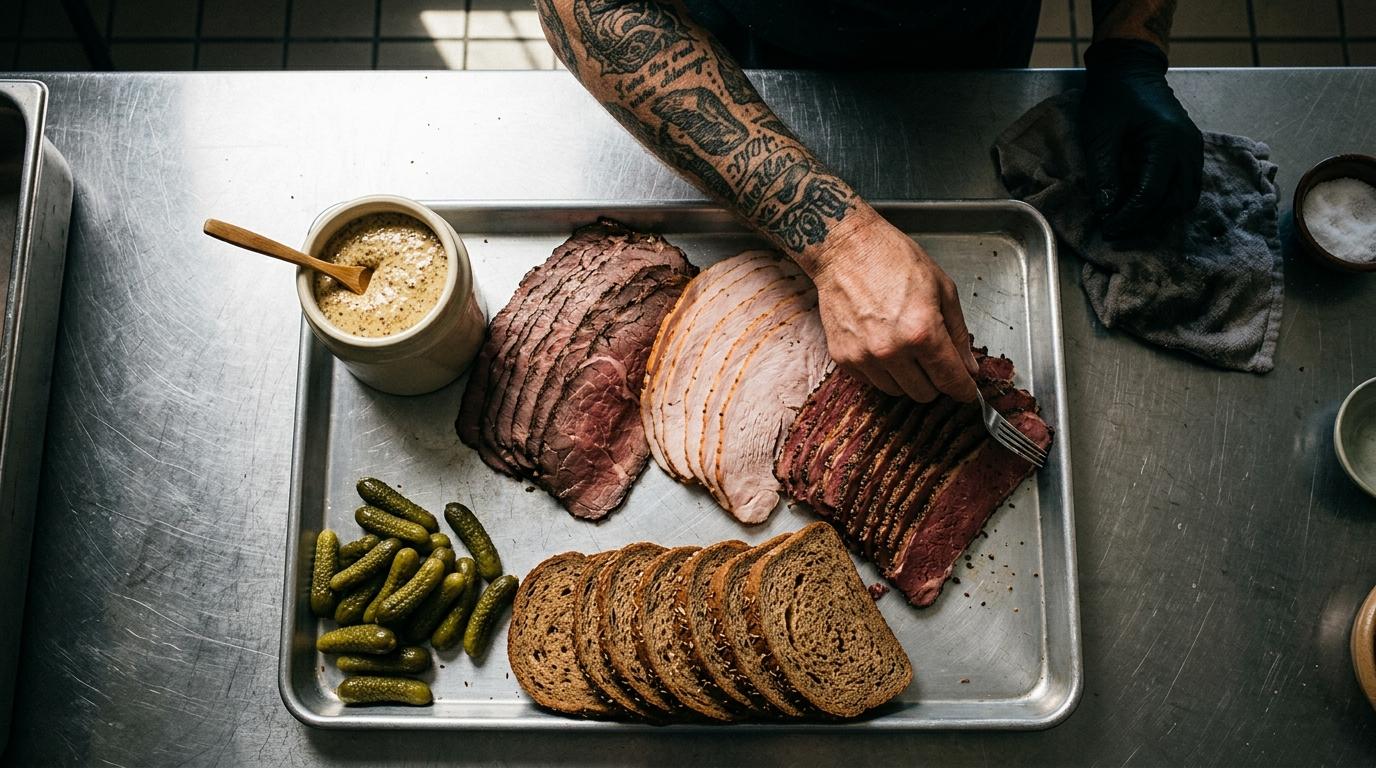
- Protein sourcing: Roast beef, turkey, and pastrami should be whole-muscle cuts, not reformed or pressed loaves. Whole-muscle proteins hold flavor better, slice cleanly, and look significantly better on a platter.
- Cure and smoke methods: Traditional pastrami is dry-rubbed with a blend of black pepper, coriander, garlic, and mustard seed, then slow-smoked over hardwood. Shortcuts - liquid smoke, steam-finishing, or pre-sliced bulk packs - produce a noticeably flatter flavor profile.
- Fat-to-lean ratio: A well-marbled brisket for corned beef or pastrami isn't a flaw; it's a sign that the right cut was used. Navel cut pastrami, the traditional choice, carries more intramuscular fat than leaner flat-cut brisket - and that fat renders into flavor during the long cook.
- Cheese age and origin: Swiss cheese from domestic producers can be excellent, but imported Emmental or Gruyère from Switzerland carries a distinctly nuttier, more complex flavor that holds up against strong meats like pastrami and rye. Aged provolone from Italian producers similarly outperforms generic domestic versions in depth and sharpness.
- Bread freshness: Rye, hoagie rolls, and sandwich bread should be baked the same day or one day prior. Bread that has been frozen and thawed loses structural integrity - it compresses under the weight of fillings and turns gummy.
The Origins Behind Classic Deli Meats
Philadelphia has a strong deli tradition, and a lot of what shows up on great catering trays has roots that stretch back centuries and across continents.
Pastrami
Pastrami originated in Romania as pastramă, a method of curing and smoking meat - originally mutton - to preserve it before refrigeration existed. Jewish immigrants brought the technique to New York in the late 1800s, where it shifted to beef brisket and became the deli staple it is today. The best pastrami is still made using that original process: a long brine (5 to 10 days), a dry-rub crust of coarse pepper and coriander, and a slow hardwood smoke followed by steaming to finish. Philadelphia deli caterers who take this seriously source from producers or make their own in-house.
Corned Beef
Corned beef traces its roots to Irish and Jewish culinary traditions, both of which used salt-curing to preserve beef. The term "corned" refers to the large rock salt crystals (historically called "corns") used in the cure. For catering purposes, the difference between quality corned beef and bulk corned beef is dramatic - quality product is pink, tender, and slices without falling apart, while lower-grade versions are often gray, dry, or overly salty from an accelerated brine.
Genoa Salami
Genoa salami comes from the Liguria region of northern Italy. It's made from pork (sometimes with a small percentage of beef), seasoned with garlic, salt, black and white pepper, and red wine, then air-cured for weeks. The fat content is high and intentional - those white fat specks throughout the salami are what give it richness and that characteristic mild acidity. Imported Genoa salami from Italian producers carries a Protected Designation of Origin (PDO) in the EU, meaning it meets strict regional and production standards.
Capicola
Also spelled capocollo or called "gabagool" in South Philly Italian-American dialect, capicola is made from the neck and shoulder of the pig. It's dry-cured and often rubbed with wine, garlic, and spices - sometimes sweet, sometimes hot. Like Genoa salami, authentic Italian capicola is PDO-protected in several varieties. The dry-aged versions have a firmer texture and more concentrated flavor than the domestic pressed versions that often appear on budget catering platters.
Turkey Breast
Roasted turkey breast is deceptively simple to do wrong. The difference between a catering-quality roasted turkey breast and a pressed turkey loaf is significant. Real roasted turkey breast is a whole muscle, seasoned on the surface, and oven-roasted. Pressed turkey - common in bulk deli operations - is a formed product made from turkey pieces and fillers. When ordering deli catering for businesses in Center City Philadelphia, it's worth asking explicitly whether the turkey is whole-muscle roasted or a formed product.
How Philadelphia Deli Catering Handles Ingredient Quality
The best Philadelphia catering companies that offer deli services maintain relationships with specific suppliers and can tell you exactly where their proteins come from. That transparency is a green flag. Here's a quick comparison of what distinguishes higher-quality deli catering from standard bulk catering in Philadelphia:
Factor Premium Deli Catering Standard Bulk Catering Protein type Whole-muscle cuts, house-roasted or sourced from quality producers Formed or pressed loaves, pre-sliced bulk packs Bread Same-day or next-day baked, local bakery sourced Commercially sliced, often frozen then thawed Cheese Imported or aged domestic, cut to order or freshly sliced Pre-sliced processed cheese, individually wrapped Condiments House-made or small-batch (whole-grain mustard, aioli) Generic yellow mustard, mass-market mayo packets Produce Fresh, seasonal, locally sourced where available Pre-cut, stored in bulk, no seasonal variation Presentation Arranged platters, garnished, labeled Styrofoam trays, plastic wrap, minimal labelingBreakfast Catering: The Same Ingredient Standards Apply
Deli catering for Philadelphia businesses doesn't stop at lunch. Breakfast catering spreads from deli-style caterers bring the same ingredient scrutiny to morning service. Smoked salmon (lox) should be cold-smoked, not hot-smoked - the texture and salinity are completely different, and a good lox service requires the real thing. Cream cheese should be fresh, full-fat, and ideally offered in flavored variations. Bagels sourced from Philadelphia's own strong bagel bakery community arrive with a chew and crust that mass-produced bagels simply don't achieve.
For companies ordering deli catering services in Philadelphia for recurring business meetings, building a relationship with a caterer who sources consistently means your team gets the same quality every time - not a rotating cast of whatever was cheapest that week.
Questions to Ask Your Philadelphia Deli Caterer
Before you book deli catering for your next business event in Center City or anywhere in the Philadelphia area, ask these questions directly:
- Are your deli meats whole-muscle cuts or formed products?
- Where do you source your bread, and is it baked fresh?
- Can you tell me where your smoked salmon comes from?
- Do you offer any locally sourced or Pennsylvania-produced ingredients?
- How are platters packaged and how far in advance are they assembled?
A caterer who can answer all five of those questions confidently and specifically is one worth trusting with your next corporate lunch or office catering order.
Philadelphia Catering FAQ
What is the difference between pastrami and corned beef in deli catering?
Both start with beef brisket and a salt cure, but pastrami gets an additional dry-rub spice crust and is smoked over hardwood before steaming. Corned beef is typically boiled or slow-cooked without smoking. The result is that pastrami has a smokier, spicier flavor with a crust, while corned beef is milder, more tender, and juicier. Both are staples of great Philadelphia deli catering spreads.
What should I look for in deli bread quality when ordering catering?
Look for bread baked within 24 hours of your event. For deli sandwiches, rye bread should have a firm crumb and distinct caraway flavor, not a soft, squishy texture. Hoagie rolls should have a crackly exterior and a chewy interior that holds up to wet ingredients like oil and vinegar. Ask your caterer explicitly whether bread comes from a local bakery or a commercial supplier.
Is imported deli meat worth the extra cost for corporate catering in Philadelphia?
For high-stakes events - client lunches, board meetings, or any gathering where food reflects your brand - yes. PDO-certified Italian products like authentic Genoa salami or prosciutto di Parma carry a measurably different flavor from domestic equivalents. For everyday staff lunches, high-quality domestic whole-muscle meats deliver excellent value without the imported premium.
How far in advance should I order deli catering for a Philadelphia business event?
For most Center City Philadelphia catering companies, 48 to 72 hours notice is the minimum for a standard deli platter order. For larger events - 50 or more people, multiple menu items, or breakfast service with specialty items like lox - plan for at least five business days. Last-minute orders almost always result in lower ingredient quality because caterers fall back on whatever is already in stock.
What makes Philadelphia deli catering different from generic office catering services?
Philadelphia has a distinct deli culture shaped by its Italian-American, Jewish, and Eastern European immigrant communities. Local deli caterers in Philly draw on that tradition with specific products - sharp provolone, house-cut capicola, fresh-baked Italian rolls - that generic national catering chains don't stock. Choosing a local Philadelphia catering company for deli service means access to that ingredient network and the culinary knowledge that comes with it.