The most reliable way to cater for dietary restrictions at a Philadelphia office is to collect restrictions with a short form 5–7 days before the event, order 15–20% of meals as dedicated vegan, gluten-free, or allergen-free options, and have every restricted meal individually labeled and packaged. Do that, and nobody stands around a buffet wondering if lunch will make them sick.
This guide covers the full job: counting heads, sizing orders, handling allergies, matching food to meeting type, and keeping the budget in check. It's written for the person who got handed "lunch for the Thursday all-hands" and wants it to go smoothly.
Start With a Dietary Survey, Not a Guess
Guessing is how you end up with 40 turkey sandwiches and one very unhappy vegetarian. A short survey fixes that. Send it at least 5 business days before the event so your caterer has time to source ingredients and prep separately.
Ask these five questions:
- Do you have a food allergy? (Peanut, tree nut, dairy, egg, wheat, soy, fish, shellfish, sesame)
- Do you follow a dietary pattern? (Vegetarian, vegan, gluten-free, halal, kosher, dairy-free)
- How severe is it? (Preference, intolerance, or allergy requiring strict avoidance)
- Is cross-contact a concern? (Yes or no)
- Anything else we should know?
The severity question matters most. "I don't eat gluten" and "I have celiac disease" call for very different kitchen practices. Your caterer needs to know which one they're handling. Use a free Google Form or Microsoft Forms and pre-fill the event date so people know what they're answering for.
How Much Food to Order for an Office Lunch
The standard rule is one entrée-sized portion per person, plus 10% extra for events with more than 25 people. Here are the working numbers most Philadelphia business caterers use:
- Sandwich or wrap lunch: 1 sandwich per person (cut in halves or thirds), plus 1 side and 1 cookie or fruit cup.
- Hot buffet: 6–8 oz of protein, 1 cup of sides, and a salad portion per person.
- Breakfast: 1.5 items per person (a pastry plus a bagel half, for example), and 1 cup of coffee per 2 attendees.
- Salad-based lunch: a full entrée salad per person, with dressing on the side.
For dietary needs, build in a buffer. If 12 of your 60 attendees need restricted meals, order 14. People change their minds, bring guests, or discover on the day that they actually can't have the dairy. Extra restricted meals rarely go to waste because other attendees will take them, but a shortage of them creates a real problem.
Common Restrictions and What to Order
Here is a quick comparison of the restrictions you will see most often in Center City offices, and how to handle each:
| Restriction | Safe Default Options | Watch Out For |
|---|---|---|
| Vegetarian | Caprese sandwiches, veggie wraps, grain bowls | Soups made with chicken stock, gelatin, Caesar dressing (anchovies) |
| Vegan | Hummus wraps, roasted vegetable bowls, fruit platters | Honey, butter in breads, egg wash on pastries |
| Gluten-free | Rice or quinoa bowls, salads with grilled protein | Soy sauce, croutons, shared prep surfaces |
| Dairy-free | Olive oil-based salads, fruit, grilled chicken | Butter-finished vegetables, cream-based dressings |
| Nut allergy | Nut-free kitchen items, sealed individual meals | Pesto, baked goods, granola, shared utensils |
| Halal or kosher | Certified caterer or sealed certified meals | "Halal-style" without certification, shared grills |
One trade-off to know: a gluten-free bread substitute is not the same as a gluten-free meal. If the sandwich is built on the same counter as regular bread, it fails for anyone with celiac disease. Ask your caterer directly how they separate prep.
Individually Packaged Meals vs. Buffet Style
For groups with serious allergies, boxed individual meals beat a buffet almost every time. Shared serving spoons are the biggest source of cross-contact at office events. Here is how the two formats compare:
- Boxed lunches: Best for allergies, meetings with a tight 30–45 minute window, and groups over 30. Each box carries a label with the person's name and ingredients. Cost runs slightly higher per head.
- Buffet: Best for social events, team celebrations, and groups under 25 with mild preferences only. Cheaper and more flexible, but cross-contact risk is higher.
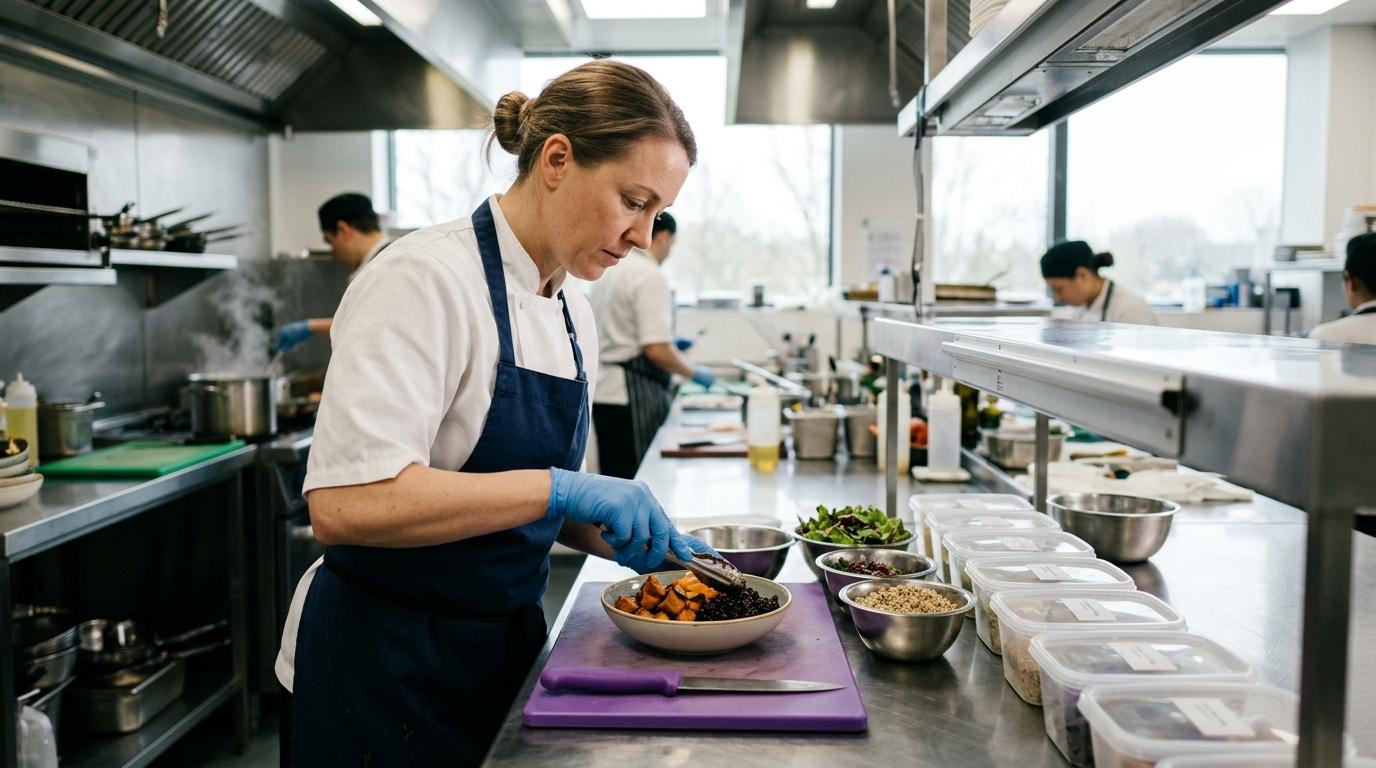
- Hybrid: A buffet for the main group, with sealed labeled meals for the 3–5 people with allergies. This is the best balance for most offices.
If you go hybrid, put the sealed meals on a separate table and tell the affected people where to find them. Don't make them ask in front of a crowd.
Match the Menu to the Meeting Type
Different meetings call for different food. Dietary planning gets easier when you pick the format first.
Morning meetings (8–10 AM): Breakfast catering works best with items that are naturally flexible: yogurt parfaits, fruit, oatmeal bars, and bagels with spreads on the side. Offer a gluten-free muffin and a dairy-free option alongside.
Working lunches (12–1 PM): People are eating while looking at slides. Choose food that doesn't need a knife and fork: wraps, grain bowls, and sandwiches. Skip anything messy or strong-smelling.
Client meetings: Pick a polished presentation and keep the options simple. Ask the client's assistant about restrictions in advance. It's a small step that makes a strong impression.
All-hands or training days: Longer events need variety and an afternoon snack. Plan for a mid-day refresh with fruit, nuts (clearly labeled), and drinks.
Labeling and Communication on the Day
Good labeling prevents most problems. Ask your caterer for these three things:
- Cards for every dish listing name, key ingredients, and the top allergens present.
- Color-coded or named stickers on individually packed restricted meals.
- A printed ingredient sheet you can keep on hand for questions.
Brief your front desk or event host, too. If someone asks "is this safe for me?", the answer should never be a shrug. Point them to the ingredient sheet, and if there is any doubt, tell them to skip it.
Keeping Dietary Catering Inside Your Budget
Dietary-friendly catering costs more, but not by as much as most managers fear. Expect specialty meals to add roughly $2–$5 per restricted meal over a standard lunch. Here are ways to keep costs in check:
- Choose naturally inclusive menus. A grain bowl bar with rice, roasted vegetables, and a choice of proteins covers vegan, gluten-free, and dairy-free with no special orders.
- Order specialty meals only for those who need them. Don't make everything gluten-free for 3 people.
- Standardize. Repeat orders with the same caterer qualify for better pricing, and the kitchen already knows your team's needs.
- Order early. Rush orders under 48 hours often carry fees. Aim for 5–7 days' notice.
If you cater weekly or monthly, keep a running spreadsheet of each employee's restrictions. Update it each quarter, and send it to your caterer so you never rebuild from scratch.
Picking a Philadelphia Caterer Who Can Handle It
Not every caterer is set up for allergen-safe service. Before you book, ask:
- How do you prevent cross-contact in the kitchen?
- Can you label every item with allergens?
- Do you offer individually packaged meals?
- What is your cutoff for final headcount and dietary changes?
- Can you deliver to Center City office buildings with loading dock or security requirements?
A caterer who answers these quickly and specifically is one to keep. Vague answers are a warning sign.
Office Catering Dietary FAQ
How far in advance should I ask about dietary restrictions?
Send the survey 7 days before the event and close it 5 days before. This gives your caterer enough time to source ingredients and plan separate prep for allergy meals.
What percentage of meals should be vegetarian or vegan?
Plan 15–20% of meals as vegetarian or vegan for a typical office group, then adjust based on your survey. Younger and more urban teams often skew toward the higher end.
Is gluten-free the same as celiac-safe?
No. Gluten-free means no gluten-containing ingredients. Celiac-safe means the meal was also prepared without cross-contact. Tell your caterer which standard you need.
How much food should I order for 50 people at an office lunch?
Order 50 entrée portions plus 5 extra, so 55 total. Include 8–10 restricted meals within that count, plus sides, drinks, and dessert for everyone.
What is the safest format for employees with severe allergies?
Individually boxed and labeled meals prepared separately from the main order. They remove shared serving utensils, which cause most cross-contact at buffets.