Dietary-Inclusive Breakfast Catering: How Philadelphia Businesses Can Feed Every Guest at the Table
Dietary-inclusive breakfast catering means building a menu where every guest - regardless of food allergy, intolerance, or lifestyle choice - finds something satisfying without having to ask for a special accommodation. For Center City Philadelphia offices, that standard is no longer a nice-to-have. It's a baseline expectation.
Whether you're planning a morning board meeting, a staff appreciation breakfast, or a recurring weekly catering order for your team, ignoring dietary diversity doesn't just inconvenience people - it signals to employees and clients that their needs weren't considered. The good news? Philadelphia's catering scene has evolved significantly, and working with the right deli catering services in Philadelphia makes dietary-inclusive menus more straightforward than most event planners expect.
Why Dietary Needs Are Non-Negotiable at Breakfast Events
Breakfast is the most commonly underestimated catering challenge. People assume it's simple - bagels, muffins, coffee - but that default spread excludes a substantial portion of any modern workplace. Consider a typical Philadelphia office team of 40 people:
- 4–6 people likely follow a gluten-free diet due to celiac disease or sensitivity
- 3–5 people may be lactose intolerant or dairy-free by choice
- 2–4 people may be vegetarian or vegan
- 1–3 people may keep kosher or halal dietary practices
- 1–2 people may have a tree nut or peanut allergy
That's potentially 30–40% of your guest list with a specific dietary need. A breakfast spread that ignores this isn't just a catering oversight - it's a reason why some team members skip the food entirely, feel overlooked, or remember the event for the wrong reasons.
The Core Categories of a Dietary-Inclusive Breakfast Menu
A well-built inclusive breakfast doesn't require a massive menu overhaul. It requires intentional category coverage. Here's how to think about it:
Protein-Forward Options
Eggs are the backbone of most breakfast spreads and happen to be naturally gluten-free. Hard-boiled eggs, egg salad, and scrambled egg trays cover dairy-free and gluten-free guests simultaneously. Smoked salmon and lox platters - a staple of great Philadelphia deli catering- are naturally gluten-free and high in protein, making them a crowd-pleaser across multiple dietary profiles.
Grain and Bread Alternatives
This is where most catering spreads fall short. Offering one gluten-free bagel tucked in the back of the bread basket isn't inclusion - it's an afterthought. A genuinely inclusive breakfast features dedicated gluten-free bread, wraps, or grain bowls clearly labeled and served separately to prevent cross-contamination. Rice-based options, corn tortillas, and certified gluten-free English muffins are practical solutions that blend into the spread without calling attention to themselves.
Dairy-Free and Vegan Staples
Oat milk, almond milk, and soy milk should be standard alongside regular dairy at any business catering event in Philadelphia. Beyond beverages, fruit platters, avocado toast on GF bread, roasted vegetable trays, and plant-based protein options ensure vegan guests have a complete meal - not just a bowl of melon.
Nut-Safe Labeling
Even when nut-containing items are on the menu, clear labeling is essential. Items with almonds, walnuts, or pecans need to be visually separated and explicitly marked. This is particularly important when granola, pastries, or trail-mix-style items are part of the spread.
Gluten-Free vs. Allergen-Free: Understanding the Difference
One of the most common mistakes Philadelphia catering clients make is treating "gluten-free" and "allergen-free" as interchangeable. They're not. Here's a quick breakdown:
Category What It Covers Key Catering Consideration Gluten-Free No wheat, barley, rye, or triticale Cross-contamination from shared serving utensils is a real risk Dairy-Free No milk, cheese, butter, cream, or whey Check hidden dairy in spreads, dressings, and baked goods Nut-Free No tree nuts or peanuts Requires dedicated preparation area; not just item removal Vegan No animal products of any kind Honey, gelatin, and certain food colorings are often overlooked Kosher / Halal Preparation and sourcing requirements, not just ingredients Requires certified sourcing - not just ingredient swapsWhen you partner with an experienced Philadelphia catering company that handles business catering regularly, these distinctions are already part of the planning conversation - not a surprise on the day of the event.
Labeling: The Detail That Makes or Breaks Inclusive Catering
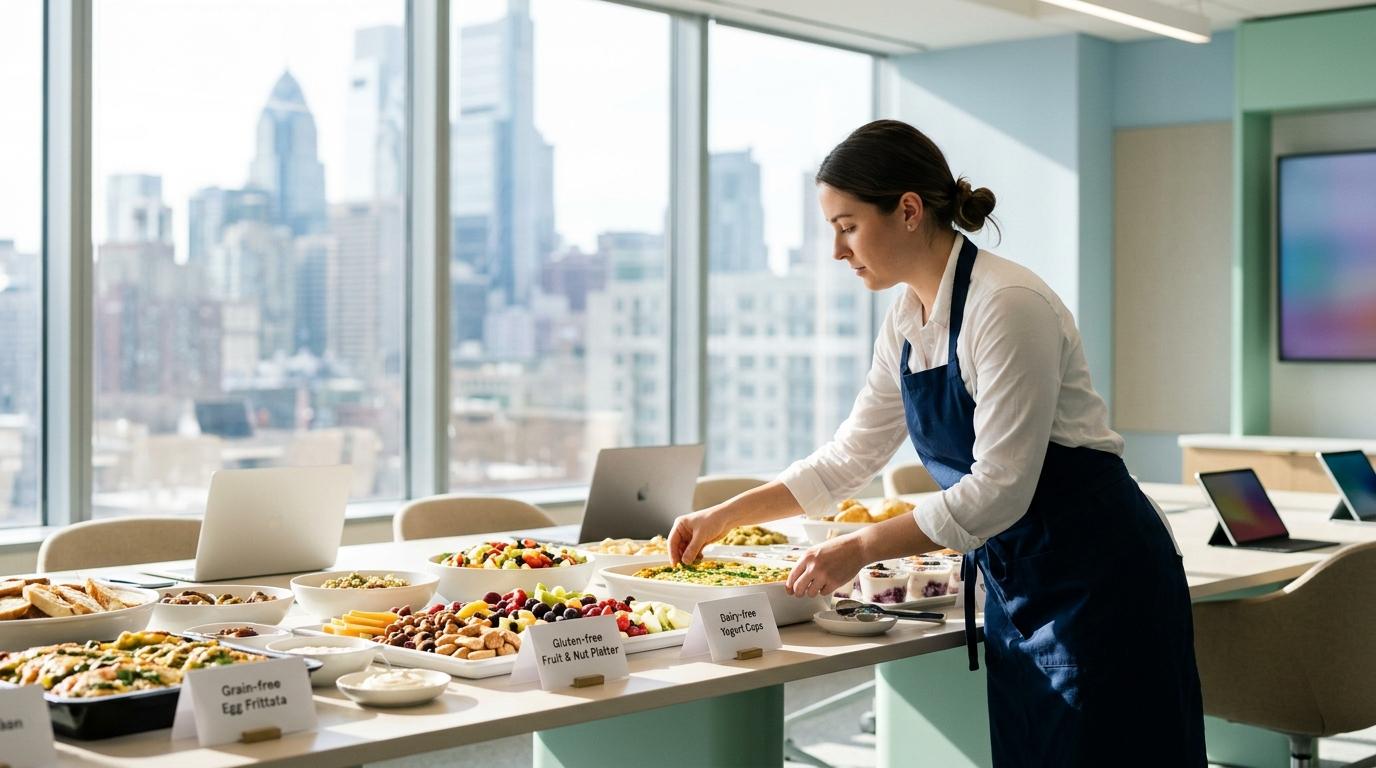
You can build the most thoughtful breakfast spread in Center City Philadelphia, and it will still fail if items aren't labeled clearly. Every dish at a catered breakfast should include a small, legible label that identifies:
- The name of the item
- Key allergens present (gluten, dairy, nuts, eggs, soy)
- Dietary designations (GF, DF, V for vegan, VG for vegetarian)
This takes the burden off guests - especially those with allergies - from having to interrogate staff or guess at ingredients. It also speeds up the serving line, which matters when you're catering a working breakfast before a 9 AM meeting.
How to Brief Your Catering Partner for an Inclusive Breakfast
The more specific you are with your Philadelphia catering company upfront, the better the result. When placing your order, communicate the following:
- Total headcount and estimated breakdown of dietary needs (even a rough estimate helps)
- Any severe allergies- nut allergies in particular require advance notice for safe preparation
- Service style- buffet vs. individually boxed portions (boxed meals are often better for allergy management)
- Event timing- early morning setups require a catering partner with reliable early delivery windows
- Labeling preferences- confirm whether the caterer provides labels or whether you need to supply them
The best breakfast catering services in Philadelphia will ask these questions proactively. If a catering company doesn't bring up dietary considerations during the initial conversation, that's a meaningful signal about how they'll handle the details on event day.
Individually Boxed vs. Buffet Style for Dietary Inclusion
This is a practical decision that affects both safety and guest experience. Here's how the two formats compare for dietary-inclusive events:
- Buffet style: More social and visually impressive, but cross-contamination risk is higher. Requires strict labeling and dedicated utensils per dish.
- Individually boxed meals: Safer for allergy management, easier to pre-label by dietary need, and more efficient for grab-and-go corporate settings. Slightly higher per-person cost but significantly lower risk.
For larger office catering events in Center City Philadelphia - think all-hands meetings, training days, or client breakfasts - a hybrid approach works well: a buffet for standard items with clearly labeled individual boxes set aside for guests with specific dietary needs.
Philadelphia's Deli Catering Tradition Is Built for Customization
One of the reasons Philadelphia is such a strong market for dietary-inclusive catering is the deli tradition. Classic Philadelphia deli menus - lox platters, egg salads, fruit trays, smoked fish - are naturally aligned with multiple dietary restrictions. Lox is gluten-free and dairy-free. Egg salad is gluten-free when served on the right bread. Fresh fruit platters are vegan, nut-free, and gluten-free by default.
When you tap into that deli catering heritage and layer in modern dietary awareness - clear labeling, separation of allergens, plant-based additions - you get a breakfast spread that's both culturally grounded in Philadelphia food tradition and genuinely inclusive for a 2026 workforce.
---Frequently Asked Questions About Dietary-Inclusive Breakfast Catering
What's the most common dietary need to plan for in Philadelphia office catering?
Gluten-free and dairy-free are consistently the two most common dietary needs in Philadelphia workplace catering. A well-prepared breakfast spread dedicates clear, cross-contamination-safe options to both categories rather than treating them as secondary considerations.
Can a standard deli catering menu in Philadelphia be made inclusive without a full custom order?
Yes. Most Philadelphia deli catering menus already include items that are naturally gluten-free, dairy-free, or vegan - like lox platters, fruit trays, and egg dishes. The primary need is proper labeling and separate serving utensils, which experienced caterers handle as part of standard service.
How much lead time does dietary-inclusive business catering in Philadelphia require?
For most standard breakfast catering orders with dietary accommodations, 48–72 hours of lead time is sufficient. Orders involving severe nut allergies or certified kosher/halal preparation benefit from 5–7 business days to ensure proper sourcing and preparation.
Is individually boxed catering better than buffet style for guests with allergies?
For guests with severe allergies, individually labeled boxed meals eliminate the cross-contamination risk that buffet-style service introduces through shared utensils and serving surfaces. Many Philadelphia catering companies offer a hybrid format - buffet for general guests, labeled individual boxes for guests with specific needs.
How do I communicate dietary needs to a Philadelphia catering company?
Provide a headcount estimate, a list of any confirmed severe allergies, and general dietary breakdowns (number of vegan, gluten-free, or dairy-free guests) when placing your order. The best Philadelphia business catering services ask these questions during intake - if they don't, raise them proactively before the order is finalized.