
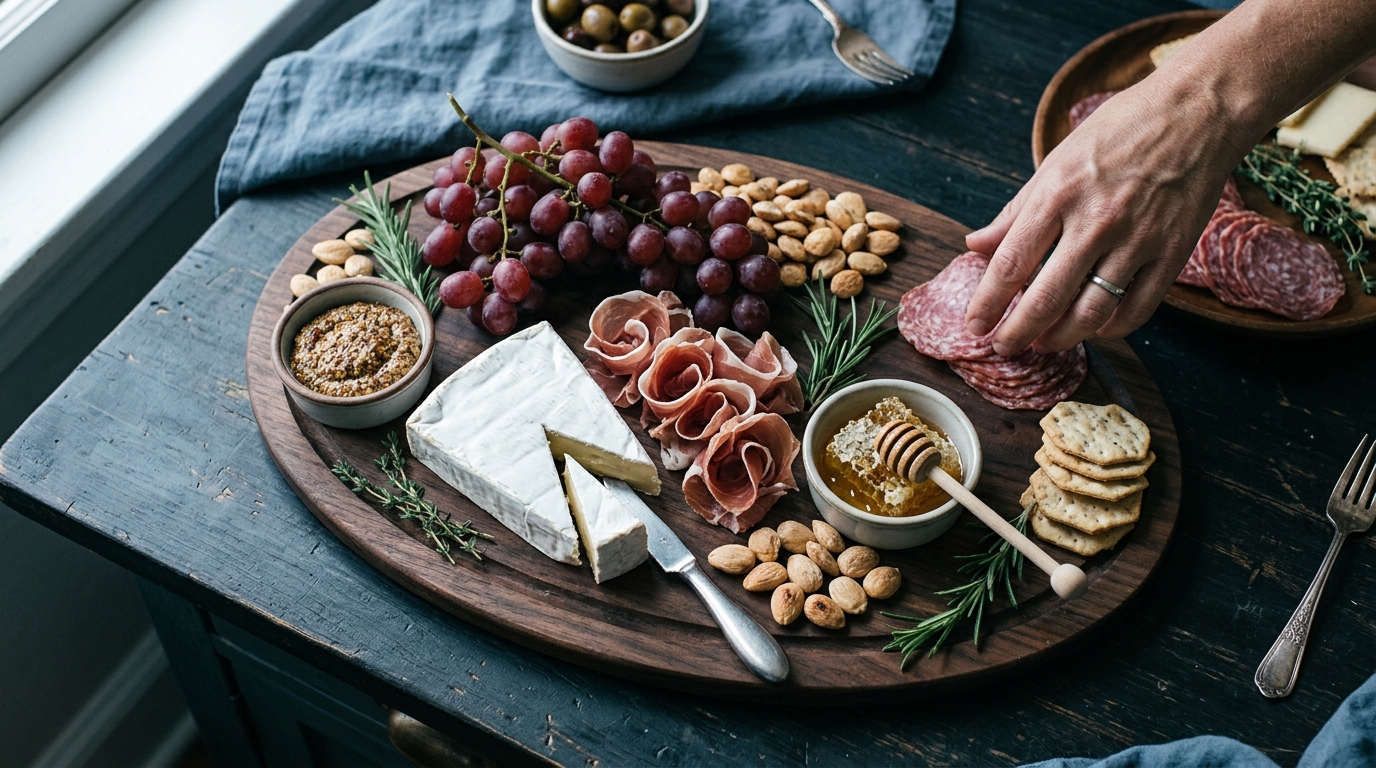
A great charcuterie board starts with a simple rule: anchor with 3 cheeses, 3 meats, and 3 accompaniments, then fill gaps with color and texture. Follow that formula and you'll produce a board that looks like it took hours - even if it only took 30 minutes.
Whether you're hosting a dinner party, planning a casual Friday night, or just looking for easy entertaining appetizers that impress without stress, the charcuterie board is one of the most flexible and crowd-pleasing options you have. Here's how to build one from scratch, step by step.
Step 1: Choose Your Board
Start with your surface. A wooden cutting board, a slate tile, or even a large ceramic platter all work well. For a party of 6–8 people, aim for a board that's at least 18 inches long. Smaller boards work for 2–4 guests as a focused appetizer spread.
Pro tip: If you're serving outdoors or in warm weather, a chilled marble slab keeps soft cheeses from sweating too quickly.
Step 2: Pick Your Cheeses - The Anchor of the Board
Cheese is the backbone of any deli meat and cheese board. Select one from each of these three categories to guarantee variety:
- Firm/Aged: Sharp cheddar, aged gouda, manchego, or Parmigiano-Reggiano
- Soft/Creamy: Brie, camembert, burrata, or a spreadable goat cheese
- Bold/Funky: Gorgonzola, blue cheese, or a smoked provolone
Plan for about 2 ounces of cheese per person as part of a larger spread, or 3–4 ounces per person if the board is the main appetizer.
Step 3: Select Your Deli Meats
This is where your local Philadelphia deli catering services connection pays off. Quality cured and sliced meats make an enormous visual and flavor difference. Aim for a mix of textures and fat levels:
- Thinly sliced and foldable: Prosciutto di Parma, coppa, bresaola
- Sliced for stacking: Genoa salami, soppressata, pepperoni
- Hearty and rustic: Mortadella, chorizo, or a smoked turkey breast
Fold prosciutto into loose "roses" and fan salami in overlapping half-circles. These simple techniques add height and visual interest to the board without any real effort.
Step 4: A Wine and Cheese Pairing Guide Built Into Your Board
One of the smartest things you can do when building a board for a wine night is to design it around the wines you're already serving. Here's a quick wine and cheese pairing guide to reference:
Wine Best Cheese Match Best Meat Match Chardonnay Brie, aged gouda Prosciutto, smoked turkey Pinot Noir Manchego, gruyère Salami, coppa Cabernet Sauvignon Sharp cheddar, blue cheese Soppressata, chorizo Rosé Goat cheese, burrata Bresaola, mortadella Prosecco / Sparkling Parmigiano-Reggiano, cream cheese Prosciutto, mild coppaPrint this out or screenshot it before your next gathering - it's the kind of detail that makes guests think you studied for this.
Step 5: Load Up on Accompaniments
Accompaniments are what turn a deli plate into a full experience. They add color, sweetness, acidity, and crunch - all the things that make each bite feel different from the last.
- Sweet: Honey, fig jam, dried apricots, fresh grapes, sliced strawberries
- Savory/Briny: Castelvetrano olives, cornichons, roasted garlic, sun-dried tomatoes
- Crunchy: Artisan crackers, sliced baguette, breadsticks, toasted crostini
- Fresh: Sliced pears, apple fans, fresh figs, cherry tomatoes
- Nutty: Marcona almonds, candied pecans, pistachios
Place small accompaniments in ramekins or bowls directly on the board to prevent them from rolling around and to create visual anchor points.
Step 6: Arrange Like a Pro
Placement matters. Here's the order professionals use when building a board:
- Place cheese first- spread the three blocks or wedges across the board, not clustered together
- Add bowls and ramekins- position them between the cheeses to fill structure
- Lay down the meats- fold or fan each variety near its ideal cheese pairing
- Fill with crackers and bread- line them in rows or fans along the edges
- Tuck in fruits, nuts, and garnishes- use these to fill every visible gap
The goal is zero visible board surface. When every inch is filled, the board looks abundant and inviting, even if it's a modest selection.
Step 7: Scale It Up for a Party
If you're hosting more than 10 guests, a single board won't cut it - and that's where thinking like a caterer helps. Many Philadelphia catering companies and deli catering services in Philadelphia offer pre-built charcuterie platters designed for exactly this scenario. For corporate lunches or office events in Center City, ordering a professionally assembled platter saves time and guarantees consistency.
For a DIY party spread that feeds 12–15, plan on:
- 1.5 lbs of assorted deli meats
- 1.5 lbs of assorted cheeses
- 2 baguettes or equivalent crackers
- At least 4 different accompaniments
- Two full boards or one large grazing table
Bonus: Turn Your Board Into Party Sandwich Ideas
Don't let leftover deli meat and cheese go to waste. The same ingredients on a charcuterie board translate directly into outstanding party sandwich ideas for the next day:
- Italian pressed sandwich: Soppressata, provolone, roasted peppers, olive tapenade on a ciabatta roll
- Prosciutto and fig: Prosciutto, brie, fig jam, arugula on a sliced baguette
- Salami melt: Genoa salami, sharp cheddar, whole-grain mustard, toasted sourdough
- Turkey and gouda: Smoked turkey, aged gouda, sliced pear, honey mustard on a pretzel roll
These work as next-day lunch platters or as the base of a breakfast catering or deli catering spread for a morning meeting or brunch event.
Quick Charcuterie Board Checklist
- ✅ 3 cheese varieties (firm, soft, bold)
- ✅ 3 deli meat varieties (foldable, stacked, hearty)
- ✅ 2–3 crunchy elements (crackers, baguette, crostini)
- ✅ 1–2 sweet elements (honey, jam, fresh fruit)
- ✅ 1–2 briny/savory elements (olives, cornichons)
- ✅ 1 nut variety for texture and fill
- ✅ Wine pairing reference ready for guests
How To Make A Charcuterie Board FAQ
How far in advance can I build a charcuterie board?
You can assemble a charcuterie board up to 2 hours before serving. Cover it tightly with plastic wrap and refrigerate it. Add crackers and fresh bread right before guests arrive so they stay crisp. Soft cheeses like brie benefit from 20–30 minutes at room temperature before serving to soften their texture.
How much food do I need for a charcuterie board for 10 people?
For 10 guests as a standalone appetizer, plan on 2.5–3 lbs of combined cheese and deli meat, plus accompaniments. If the board is part of a larger meal, 1.5–2 lbs total is enough. When in doubt, more is better - a generous-looking board always signals hospitality.
What's the best deli meat for a charcuterie board?
Prosciutto, Genoa salami, and soppressata are the three most versatile deli meats for a charcuterie board. They offer different fat levels, textures, and flavor profiles, and each pairs well with multiple cheese types. For a more adventurous board, add bresaola (lean, beefy) or mortadella (mild, creamy-fatty) as a fourth option.
What's a good non-alcoholic pairing for a cheese board?
Sparkling water with citrus, unsweetened pomegranate juice, and dry-style sparkling grape juice all complement cured meats and aged cheeses well. For a more structured pairing, a good-quality sparkling cider cuts through the fat of hard cheeses the same way a Prosecco does.
Can I order a charcuterie platter from a Philadelphia catering company instead of building one myself?
Absolutely - and for events with 15 or more guests, it's often the smarter call. Philadelphia catering companies and local deli catering services in Philly offer pre-built charcuterie and deli platters designed for corporate events, office lunches, and private parties. Many Center City catering providers offer same-day or next-morning delivery for business catering orders, making it easy to serve a professional spread without the prep time.