Office Culture & Employee Engagement Through Food: Why What You Feed Your Team Matters
Providing food at work directly boosts employee engagement - teams that share meals report up to 30% higher collaboration scores and significantly lower turnover rates than those that don't. In Center City Philadelphia, more and more businesses are discovering that a thoughtful catering strategy isn't a perk - it's a culture-building tool.
Whether you're a startup in Rittenhouse Square or an established firm on Market Street, the food you bring into your office sends a message. It says: we value you, we see you, and we want you here. Let's break down exactly how food shapes office culture, what the research says, and how Philadelphia businesses can make it work without the headache.
The Science Behind Food and Workplace Connection
Eating together is one of the oldest forms of human bonding. Cornell University research published in 2015 found that firefighters who cooked and ate meals together performed better as a team than those who didn't - and that dynamic translates directly to the modern office. When coworkers share a meal, they talk, they laugh, they learn things about each other that no team-building seminar can replicate.
In 2026, with hybrid work schedules reshaping when and how people show up to the office, food has become one of the most powerful reasons employees actually choose to come in. A catered breakfast on Tuesday or a deli spread on Thursday gives people a tangible reason to be present - and presence creates culture.
How Food Builds Office Culture: 5 Specific Ways
- Creates a shared ritual. Regular catered meals - whether daily, weekly, or for specific meetings - establish rhythm. Rhythm creates belonging. When your team knows that every Wednesday means a fresh breakfast spread from a local Philadelphia catering company, Wednesday becomes something people look forward to.
- Breaks down hierarchy. The lunch table is one of the few places where the CEO and the junior analyst eat side by side. Shared meals flatten organizational charts in a way that org-chart redesigns never do.
- Signals investment in well-being. Employees who feel their company genuinely cares about their comfort and energy are 21% more productive, according to Gallup's State of the Global Workplace data. Food is one of the most immediate, tangible ways to show that care.
- Reduces midday slumps. Providing quality food - not vending machine snacks, but actual catered meals with balanced nutrition - keeps energy levels steady through afternoon meetings and deadlines.
- Attracts and retains talent. In a competitive hiring market, food perks are consistently cited in workplace satisfaction surveys as a deciding factor for candidates evaluating job offers. Philadelphia businesses competing with remote-first companies need every advantage.
Breakfast Catering: The Highest-ROI Meal for Businesses
If you're going to invest in one catered meal for your office, make it breakfast. Here's why: breakfast catering gets people in the door earlier, sets a positive tone for the day, and costs significantly less per head than lunch or dinner spreads. For Philadelphia business catering, a high-quality breakfast service - think bagels, fresh fruit, egg sandwiches, and hot coffee - typically runs at a fraction of the cost of a full lunch order while delivering outsized cultural impact.
Breakfast also works exceptionally well for Monday morning team meetings, client-facing presentations, and all-hands updates. Starting a big meeting with good food lowers anxiety, raises attentiveness, and makes people feel like the occasion matters.
Deli Catering Services: The Flexible Workhorse of Office Food
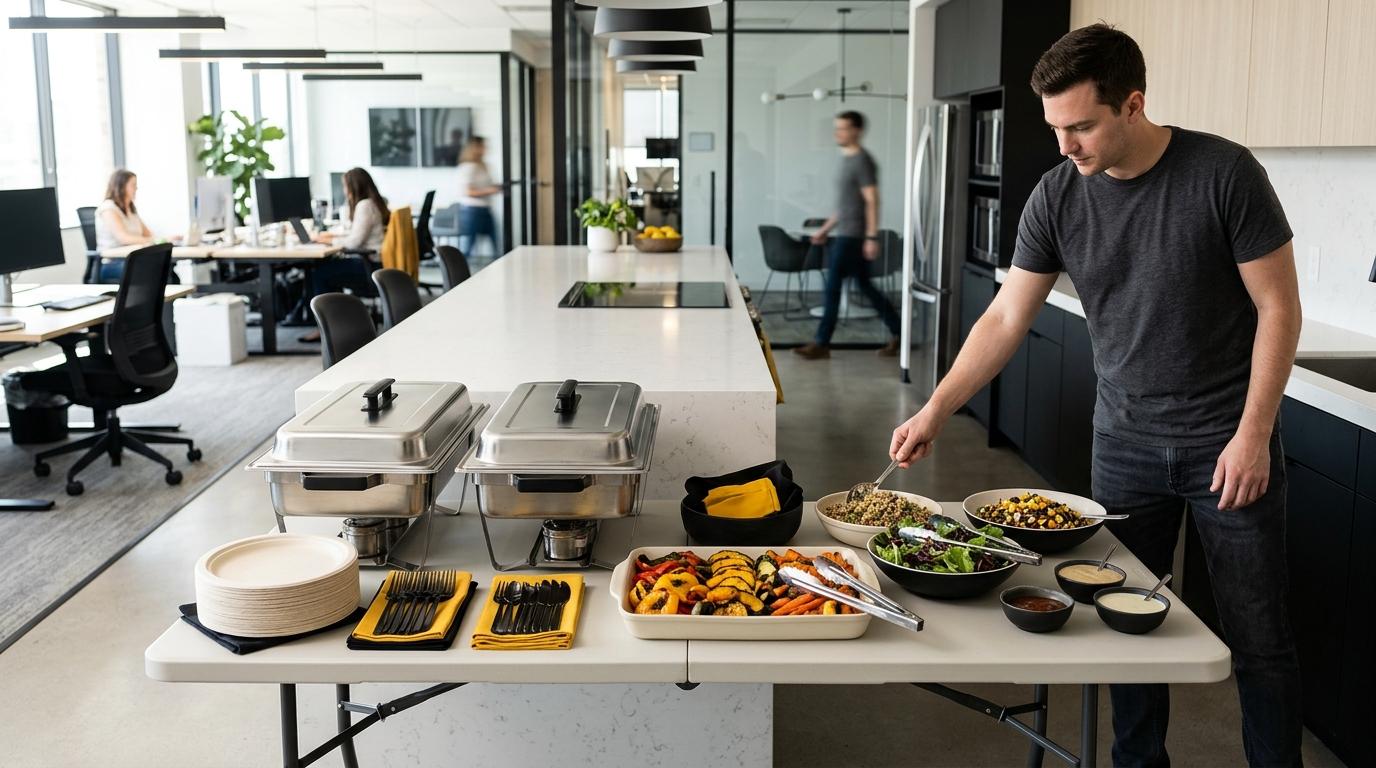
For offices that need variety, deli catering services in Philadelphia offer the most flexibility. A well-curated deli spread covers virtually every dietary need - gluten-free rolls, plant-based proteins, classic turkey and roast beef, and a rotating selection of sides. It's self-serve, easy to set up, and scales gracefully whether you're feeding 10 people or 100.
The best Philadelphia deli catering services offer customizable packages that let you lock in a weekly cadence without building a new menu from scratch every time. That consistency is what turns a one-time food event into a genuine office culture touchpoint.
Breakfast Catering vs. Lunch Catering vs. Snack Programs: A Direct Comparison
Option Best For Cost Per Head Cultural Impact Logistics Complexity Breakfast Catering Morning meetings, team kick-offs, client presentations Low Very High Low Lunch Catering All-hands meetings, working lunches, team bonding Medium High Medium Deli Catering Flexible team meals, mixed dietary needs, recurring orders Low–Medium High Low Snack Programs Day-to-day office presence, between-meal energy Very Low Moderate Very Low Full-Service Cafe Catering Large offices, daily service, premium culture investment High Very High Medium–HighWhat to Look for in a Philadelphia Catering Company for Your Office
Not every catering service built for weddings or events is the right fit for recurring business catering. When you're evaluating Philadelphia catering companies for your office program, look for these five qualities:
- Reliability over flash. A caterer who shows up on time with accurate orders, every single week, is worth more than one with an impressive menu who misses details.
- Dietary accommodation fluency. Your team includes people with allergies, religious dietary restrictions, and lifestyle preferences. Your caterer should handle this without making it a production.
- Scalability. Can they handle 15 people today and 60 people next quarter when you grow? Get that answer before you sign anything.
- Local sourcing and quality ingredients. Philadelphia has an exceptional food ecosystem. The best local deli catering services in Philadelphia source from local suppliers, which means fresher food and a story your team can feel good about.
- Simple ordering and billing. For business catering, the administrative experience matters as much as the food. You need a caterer with a straightforward process that doesn't eat your assistant's afternoon.
Making Food Part of Your Intentional Culture Strategy
Food works best as a culture tool when it's intentional, not accidental. That means deciding in advance what you want food to accomplish in your office. Are you trying to get hybrid workers to come in on specific days? Schedule catering for those days. Are you trying to improve cross-departmental communication? Set up shared tables rather than individualized boxed lunches. Are you onboarding new hires and want them to feel welcomed immediately? A catered first-day lunch with the whole team is one of the most effective onboarding moves you can make.
Philadelphia businesses catering to teams in Center City have a particular advantage: the city's food culture is rich, diverse, and deeply tied to neighborhood identity. Bringing that into your office - a classic Philly deli spread, locally roasted coffee, iconic baked goods - connects your team to the city they're working in and creates a sense of place that remote workers simply can't replicate.
Think of your catering program as a standing agenda item in your culture strategy. Revisit it quarterly. Ask your team what they love and what they'd change. Rotate vendors if the routine gets stale. The goal is for food to feel like a genuine expression of your company values - not just a line item on the expense report.
Office Culture Employee Engagement Food FAQ
How often should a business provide catered meals to meaningfully impact office culture?
At minimum, one catered meal per week creates enough consistency to build a genuine ritual. Two to three times per week delivers a measurable impact on in-office attendance and team morale. Daily catering, common among larger firms in Center City Philadelphia, produces the strongest culture outcomes but requires a higher budget commitment and a reliable catering partner.
Is breakfast catering or lunch catering better for improving employee engagement?
Breakfast catering delivers a higher return on investment for most businesses because it costs less per head, encourages earlier arrivals, and sets a positive tone before the workday's friction accumulates. Lunch catering creates longer shared meal windows and works exceptionally well for structured team-building moments. The best approach is to start with weekly breakfast catering and add lunch service as budget allows.
What dietary options should a Philadelphia office caterer always include?
A complete office catering spread includes gluten-free options, at least two plant-based protein choices, nut-free items clearly labeled, and low-sugar alternatives for beverages and pastries. The best Philadelphia business catering services treat dietary accommodation as standard practice, not a special request.
How does food impact hybrid office attendance specifically?
Catered meals are one of the top three reasons employees report choosing to come into the office on hybrid workdays, alongside in-person collaboration and avoiding commute costs on other days. Scheduling catering on designated in-office days - rather than offering it randomly - produces the most consistent attendance lift. Philadelphia companies that anchor their Tuesday or Thursday in-office days with a catered meal see measurably higher voluntary attendance on those days.
What's the difference between café catering and standard office catering in Philadelphia?
Standard office catering involves drop-off meals and spreads delivered on a scheduled basis - ideal for most businesses. Café catering in Philadelphia refers to a managed, on-site service where a catering provider operates a small café-style setup within your office, offering made-to-order or freshly prepared options throughout the day. Café catering philly style suits larger offices of 75 or more employees and commands a higher budget, but creates the deepest cultural impact by making quality food a constant, ambient feature of the workday rather than a scheduled event.