Provolone is a firm, aged Italian cheese with a tangy, slightly smoky flavor, while mozzarella is a fresh, mild cheese with a soft, milky texture - and knowing which to use can make or break your sandwich, charcuterie board, or catered spread. Both cheeses have a place in the deli case, but they serve very different purposes.
If you've ever stood at the deli counter wondering which cheese to order for a business lunch or a party tray, you're not alone. At our Philadelphia deli, we field this question constantly - along with questions about deli meat types, what mortadella actually is, and whether prosciutto or serrano ham belongs on a charcuterie board. This guide breaks it all down so you can order with confidence.
Provolone vs. Mozzarella: A Side-by-Side Comparison
Here's a direct look at how these two Italian cheeses stack up across the categories that matter most when you're building a sandwich or planning a catering order.
Category Provolone Mozzarella Texture Firm, sliceable, semi-hard Soft, moist, stretchy Flavor Tangy, sharp, mildly smoky (aged varieties) Mild, milky, lightly sweet Aging 2 months to 1+ year (Provolone Piccante) Fresh (days old) or low-moisture (weeks) Sodium content ~500 mg per 1 oz serving ~175 mg per 1 oz serving (fresh) Best use: sandwiches Excellent - holds up to bold meats Works with lighter fillings, caprese-style Best use: charcuterie boards Strong standalone cheese, pairs with cured meats Best with fresh fruit, light accompaniments Melt quality Melts well, holds shape Melts very quickly, becomes stringy Sliceability at deli Easy to slice thin or thick Best in fresh ball or block form; low-moisture slices wellWhen to Choose Provolone
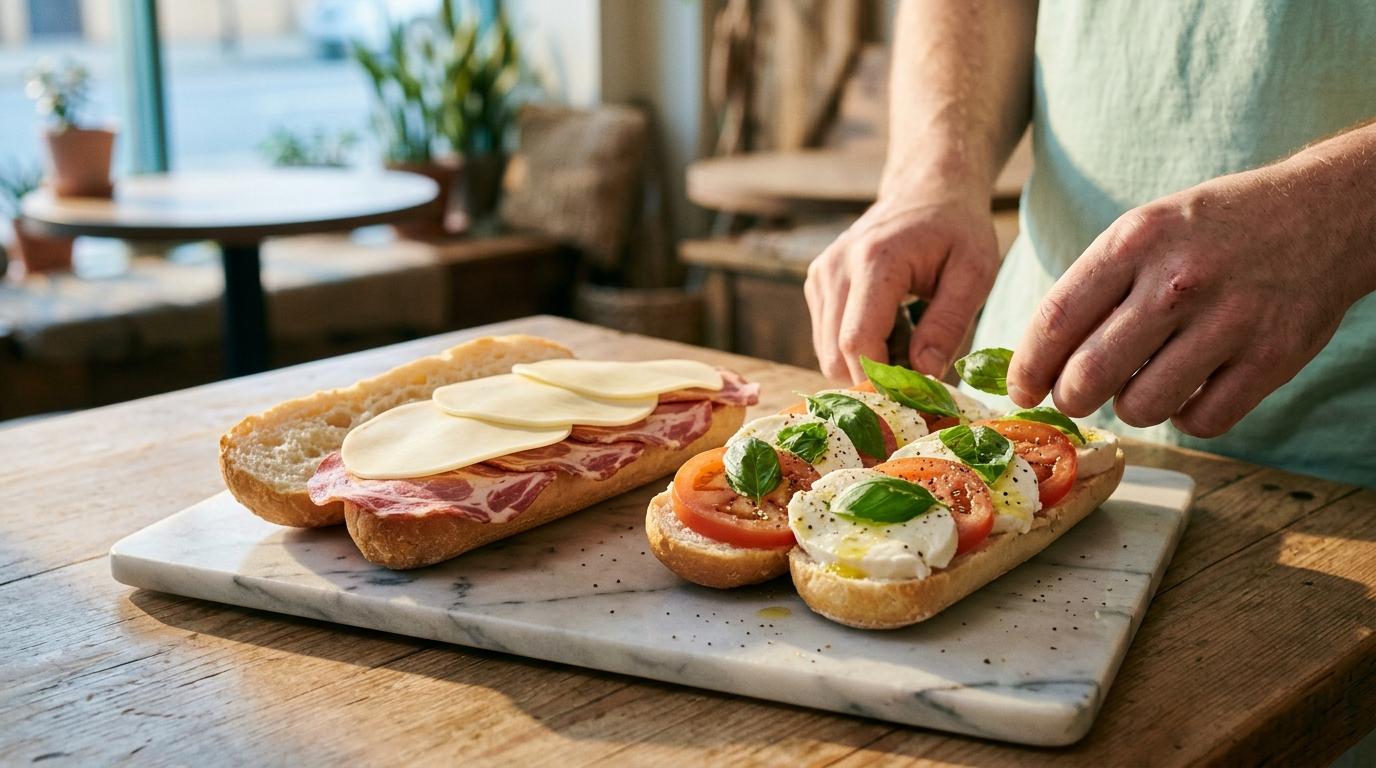
Provolone is the workhorse of the deli case. It's the cheese on a classic Italian hoagie - and for good reason. Its firm texture holds up to hearty deli meat types like capicola, salami, and roast beef without getting lost in the flavors. The slight sharpness cuts through the fat in cured meats, which is exactly what you want on a well-built sandwich.
If you're ordering deli catering services in Philadelphia for a business lunch or office event, provolone is the reliable choice for large sandwich trays. It slices cleanly, doesn't get soggy, and satisfies a crowd. Sharp provolone - aged closer to a year - adds even more complexity and works beautifully on a charcuterie board alongside olives, roasted peppers, and hard salamis.
Provolone also has a meaningful sodium content to be aware of. At roughly 500 mg per ounce, it's not the best pick if you're building a low sodium deli spread. For those situations, fresh mozzarella is the smarter call.
When to Choose Mozzarella
Fresh mozzarella shines in lighter, fresher applications - a caprese sandwich with tomato and basil, a breakfast spread with fruit and flatbread, or as a palate cleanser on a charcuterie board. Its mild, milky flavor won't compete with delicate ingredients, and at roughly 175 mg of sodium per ounce, it's one of the better low sodium deli options you'll find in a cheese case.
Low-moisture mozzarella (the drier, packaged kind) is a different beast - it slices more like provolone and works well on cold cut sandwiches when you want mild flavor without the moisture. It's a useful middle ground, especially for Philadelphia business catering where you need consistency across a large tray of sandwiches.
The Deli Meats That Belong Next to Each
Choosing the right cheese is only half the equation. The deli meat types you pair with each cheese matter just as much. Here's how to think about it:
- Provolone pairs best with: Capicola, Genoa salami, soppressata, roast beef, turkey, mortadella
- Mozzarella pairs best with: Prosciutto di Parma, bresaola, turkey breast, roasted vegetables, fresh basil
What Is Mortadella, Exactly?
Since mortadella keeps coming up on our catering menus and customers frequently ask about it - here's the short answer: mortadella is a cooked Italian sausage from Bologna made from finely ground pork, seasoned with black pepper, myrtle berries, and sometimes pistachios or olives. It's the original inspiration for American bologna, but the two products taste nothing alike.
Authentic mortadella has a silky, slightly fatty texture and a delicate, aromatic flavor. It pairs exceptionally well with provolone on a crusty Italian roll and is a standout option on any charcuterie board. Thinly sliced mortadella is also one of the more approachable deli meat options for guests who are unfamiliar with traditional Italian cured meats.
Prosciutto vs. Serrano: Which Cured Ham Should You Choose?
This is another question we hear often, especially from customers building a charcuterie spread for a corporate event or private party. Both are dry-cured hams, but they come from different traditions and taste noticeably different.
Category Prosciutto di Parma (Italian) Jamón Serrano (Spanish) Origin Parma, Italy (DOP protected) Spain (multiple regions) Curing time Minimum 12 months; premium up to 36 months 7 to 16 months typically Flavor Buttery, sweet, delicate, slightly nutty Saltier, firmer, more robust and earthy Texture Silky, melts on the tongue Firmer, drier, chewier Best cheese pairing Fresh mozzarella, burrata, mild brie Manchego, aged provolone, sharp cheddar Best use Charcuterie boards, light sandwiches, appetizers Hearty sandwiches, tapas, cooked dishes Sodium level ~550 mg per oz ~620 mg per ozFor most Philadelphia catering spreads, prosciutto di Parma is the crowd-pleaser - its approachable sweetness works for guests across a wide range of palates. Serrano ham is worth including when you want to add depth and variety to a board, especially alongside Spanish cheeses like manchego.
Tips for Ordering at the Deli Counter
- Ask for a taste before you commit. Any good deli will let you sample before buying, especially for aged cheeses and cured meats.
- Specify thickness. For sandwiches, thin-sliced provolone layers better. For a charcuterie board, paper-thin prosciutto drapes beautifully; medium-cut mortadella holds up well.
- Think about sodium if you're building a low sodium deli spread. Fresh mozzarella, bresaola, and sliced turkey breast are your best bets for a lower-sodium tray.
- Order by weight, not slices. Asking for "a quarter pound of provolone" gives you more consistent results than asking for a number of slices, which vary by thickness and machine setting.
- Plan on 2–3 oz of cheese per person for a catering tray, and 3–4 oz per person if the cheese is a centerpiece of the spread rather than a side component.
Building the Best Sandwich or Catering Tray
The best cheese for sandwiches isn't one cheese - it's the right cheese for the context. Provolone wins on a hearty Italian sub with capicola and soppressata. Fresh mozzarella wins on a lunch board paired with prosciutto and fresh basil. Low-moisture mozzarella wins when you need consistent, easy-to-slice coverage across a 30-person catering tray.
At our Philadelphia deli, we help businesses across Center City build catering spreads that actually impress - not just fill a table. Whether you're ordering breakfast catering for a morning meeting or a full deli catering spread for an afternoon event, the combination of the right cheese, the right cured meat, and the right bread makes all the difference.
What is the difference between provolone and mozzarella?
Provolone is a firm, aged Italian cheese with a tangy, slightly smoky flavor and about 500 mg of sodium per ounce. Mozzarella is a fresh, soft cheese with a mild, milky flavor and roughly 175 mg of sodium per ounce (fresh variety). Provolone holds up better in hearty sandwiches with bold deli meats; mozzarella suits lighter, fresher applications like caprese-style sandwiches or charcuterie boards with prosciutto and fruit.
What is mortadella and how is it different from bologna?
Mortadella is a cooked Italian sausage from Bologna made from finely ground pork, seasoned with black pepper and myrtle berries, and often studded with pistachios or green olives. American bologna is loosely based on mortadella but uses lower-quality cuts, different seasonings, and has a blander flavor profile. Authentic mortadella has a silky texture and aromatic, delicate flavor that makes it a standout option on charcuterie boards and Italian sandwiches.
Prosciutto vs. serrano ham - which should I use on a charcuterie board?
Prosciutto di Parma is buttery, sweet, and silky - it pairs best with mild cheeses like fresh mozzarella or burrata and appeals to a wide range of guests. Serrano ham is saltier, firmer, and earthier - it pairs well with aged cheeses like manchego or sharp provolone and adds depth to a board. For a general catering spread, start with prosciutto and add serrano for variety.
What are the best low sodium deli options?
Fresh mozzarella (about 175 mg per oz), bresaola (cured beef, typically lower in sodium than pork-based cured meats), and sliced turkey breast are among the best low sodium deli choices. Avoid high-sodium options like serrano ham (~620 mg per oz), aged provolone (~500 mg per oz), and most salamis when building a lower-sodium spread. Ask your deli counter staff about specific sodium counts, which can vary by brand and preparation method.
How much cheese should I order for a catering tray?
Plan on 2 to 3 ounces of cheese per person when cheese is part of a larger catering spread, and 3 to 4 ounces per person when the cheese and charcuterie board is the centerpiece of the event. For a mixed spread with multiple deli meat types and accompaniments, ordering two or three cheese varieties in smaller quantities - rather than a large amount of one cheese - gives guests more options and makes the tray more visually interesting.