The Art of the Catering Spread: How to Build a Table That Wows Every Guest
A great catering spread does three things at once: it feeds people efficiently, looks impressive from across the room, and reflects the personality of whoever is hosting. Whether you're planning a corporate breakfast in Center City Philadelphia or a full office lunch for a 50-person team, the difference between a forgettable buffet and a genuinely memorable spread comes down to a handful of deliberate decisions - on food selection, layout, timing, and presentation.
Philadelphia's business catering scene has matured significantly. Companies aren't just ordering trays of sandwiches anymore. They want curated, cohesive spreads that feel intentional - and the best Philadelphia catering companies have responded by offering more flexible, design-forward setups that work in conference rooms, open offices, and rooftop terraces alike.
Start with the Architecture of the Table
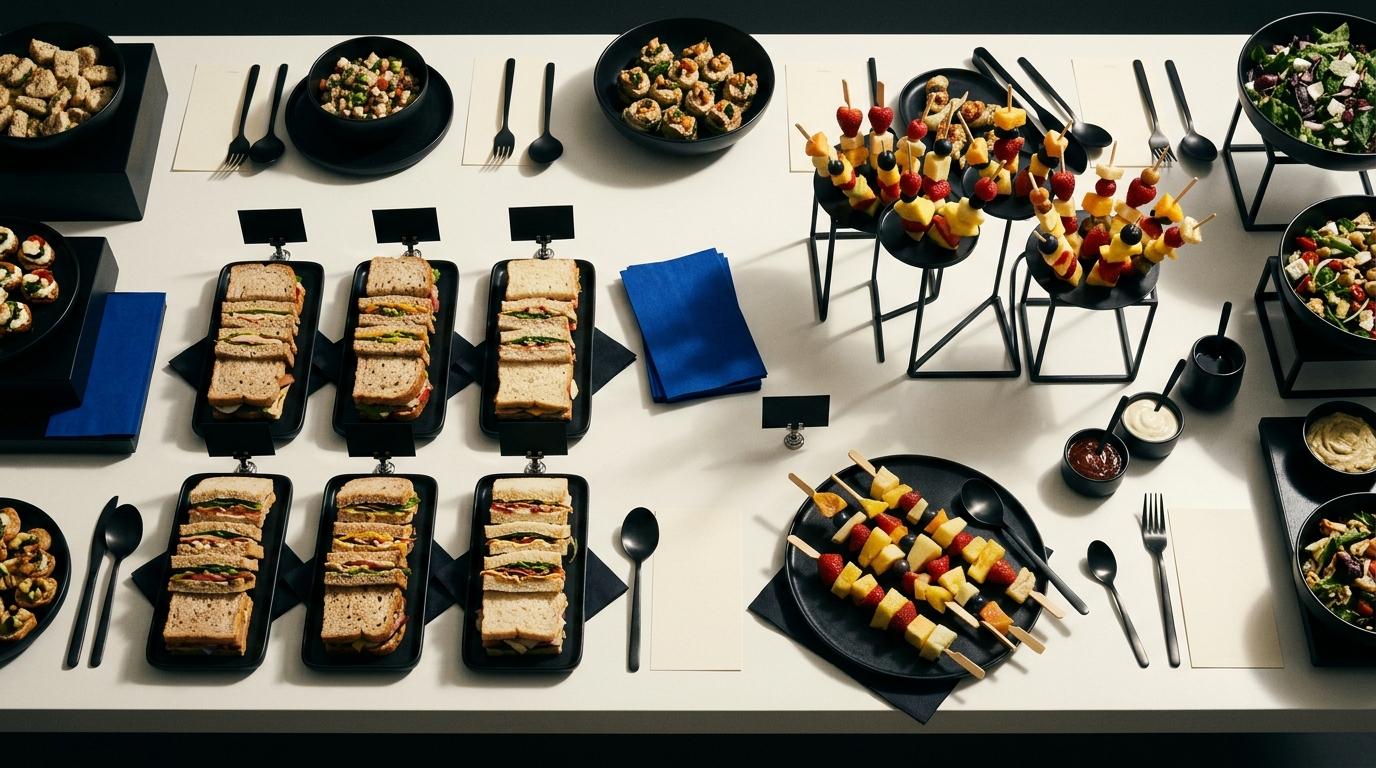
Before you think about a single food item, think about the physical structure of your spread. A flat table with equal-height trays is the amateur move. Professional caterers in Philly build visual elevation into every setup - using risers, tiered stands, slate boards, and even stacked wooden crates to create a landscape across the table rather than a flat grid.
The goal is a spread that draws the eye through the table from left to right, with anchor pieces (like a charcuterie centerpiece or a towering bagel tower) at the focal point and smaller accent items filling in around them. Guests naturally gravitate toward height, so your most shareable or crowd-pleasing items should be your tallest.
For a typical business catering setup in a conference room, a well-structured 8-foot table can accommodate:
- 1–2 anchor stations (the visual centerpiece - think a large deli board or a hot entrée chafing dish)
- 3–4 secondary stations (sides, salads, or themed bite stations)
- 2 beverage zones (one for hot drinks, one for cold)
- 1 dedicated dessert or sweet corner
That structure gives guests a logical flow through the table and prevents the bottleneck that kills most office catering setups - the dreaded single-file queue stalled at the entrée chafing dish.
The Philly Deli Spread: A Local Standard Worth Understanding
If you're working with deli catering services in Philadelphia, you're working with one of the city's strongest culinary traditions. Philly deli culture runs deep - from Italian hoagies to roast pork spreads - and the best business catering companies in the area know how to translate that into a professional setup that doesn't feel sloppy or casual.
A well-executed Philly deli spread for office catering typically includes:
- Sliced meats station- roast beef, turkey, prosciutto, or capicola arranged in overlapping fans on a wooden board
- Bread and roll basket- seeded hoagie rolls, sliced sourdough, and gluten-free options clearly labeled
- Condiment row- mustards, aioli, olive oil, and hot peppers in small ramekins, not squeeze bottles
- Cheese selection- at minimum three varieties covering mild, sharp, and soft (provolone, aged cheddar, brie)
- Pickles and accompaniments- cornichons, banana peppers, pickled red onions
- Seasonal salad or grain bowl- to give the spread nutritional balance and a visual color pop
The difference between a great deli spread and a mediocre one is almost entirely in the details: the quality of the meats, the variety of bread, and whether someone has actually thought about what someone with a dietary restriction will eat.
Breakfast Catering: The Spread That Has to Work Fast
Breakfast catering for Philadelphia businesses operates under a different set of constraints than lunch. People are arriving, grabbing food, and getting to a meeting - you have maybe 8–12 minutes of active service time before the room clears out. That means your spread has to be immediately accessible with zero learning curve.
The best breakfast catering spreads are built around fast-grab items with zero assembly required, plus one elevated station that rewards the people who have a few extra minutes to browse.
Fast-grab items (should be 70% of your breakfast spread):- Pre-wrapped or individually plated pastries - croissants, muffins, scones
- Whole fruit and pre-cut fruit cups
- Individual yogurt parfaits
- Grab-and-go breakfast sandwiches, labeled clearly
- A hot egg station with toppings - scrambled eggs with smoked salmon, avocado, and everything bagel seasoning
- A bagel board with cream cheese varieties, lox, capers, and red onion
- A smoothie station or fresh-pressed juice setup
For breakfast catering in Philadelphia, timing is everything. A spread that's set up 15 minutes before the first guest arrives, with hot items held at proper temperature, outperforms a rushed setup every single time - no matter how good the food is.
Café-Style Catering: When the Vibe Matters as Much as the Food
Café catering in Philly has become a popular choice for companies that want their office events to feel less like a corporate function and more like a comfortable, social moment. Think: smaller tables scattered through a space, a barista-style coffee setup, handwritten menu cards, and food served on wooden boards or in individual portions rather than chafing dishes.
This style works especially well for team recognition events, welcome lunches for new hires, and creative agency environments where aesthetics are part of the brand identity. The key shift in café-style catering is moving from volume-first thinking to experience-first thinking. You're not trying to feed 50 people as efficiently as possible - you're creating a 45-minute experience that happens to include food.
Comparison: Buffet Spread vs. Café-Style Catering for Business Events
Factor Buffet Spread Café-Style Catering Service speed High - designed for quick throughput Moderate - encourages lingering Setup footprint Centralized, usually 1–2 long tables Distributed, multiple small stations Visual impression Professional, organized Warm, curated, Instagram-friendly Best for Large teams, working lunches, training days Team events, client visits, office culture moments Dietary accommodation Easier to label and section off clearly Requires more intentional menu curation Staffing requirement Minimal - can be self-serve Higher - benefits from a dedicated server or baristaThe Details That Separate Good Catering from Great Catering
After the structure and the food selection, it's the small details that make a catering spread genuinely memorable. The best catering companies serving Center City Philadelphia get this right consistently:
- Labeling everything- not just for dietary reasons, but because guests shouldn't have to guess what they're eating
- Replenishment protocol- a spread that looks depleted by 12:15 PM for a 12:00 PM lunch is a presentation failure
- Napkin and utensil placement- at the end of the line, not the beginning, so guests aren't juggling silverware while they serve themselves
- Temperature discipline- hot food above 140°F, cold food below 40°F, maintained through the entire service window
- Color intentionality- a spread that's all beige is a missed opportunity; fresh herbs, colorful vegetables, and vibrant sauces make food look more appetizing before anyone takes a bite
None of these are complicated. But every one of them communicates that the person who planned this event paid attention - and that matters, whether you're hosting clients, employees, or executives.
---What's the right amount of food to order for a business catering spread?
A standard rule for Philadelphia business catering is 4–6 ounces of protein per person for lunch, 2–3 ounces for breakfast, and roughly 1.5x your expected headcount for sides and accompaniments. Always round up by 10–15% - running out of food at a corporate event is far more damaging than having modest leftovers.
How early should a catering spread be set up before guests arrive?
Professional caterers typically complete setup 20–30 minutes before the first guest arrives. For breakfast catering, this window is critical because hot items need to reach proper holding temperature before service begins. A rushed 5-minute setup always shows in the final presentation.
What's the biggest mistake businesses make when ordering catering in Philadelphia?
Underestimating dietary variety. In a 2025 workplace dining survey, more than 38% of employees reported having at least one dietary restriction or preference - gluten-free, vegetarian, dairy-free, or halal. A spread that doesn't account for this alienates a significant portion of your guests and reflects poorly on the host, not just the caterer.
Is café-style catering more expensive than traditional buffet catering?
Café-style catering from Philadelphia catering companies typically runs 15–25% higher than a comparable buffet setup, primarily due to higher staffing requirements and the added cost of individual plating and curated presentation. For client-facing events or culture-building moments, most companies find the premium worthwhile.
How do I find a reliable catering company for regular business catering in Center City Philadelphia?
Look for caterers with documented experience in corporate accounts, flexible minimum order sizes that work for teams of 10 to 100+, and a clear process for handling dietary accommodations. Ask specifically about their replenishment policy during service - it's one of the most revealing questions you can ask a potential catering partner.