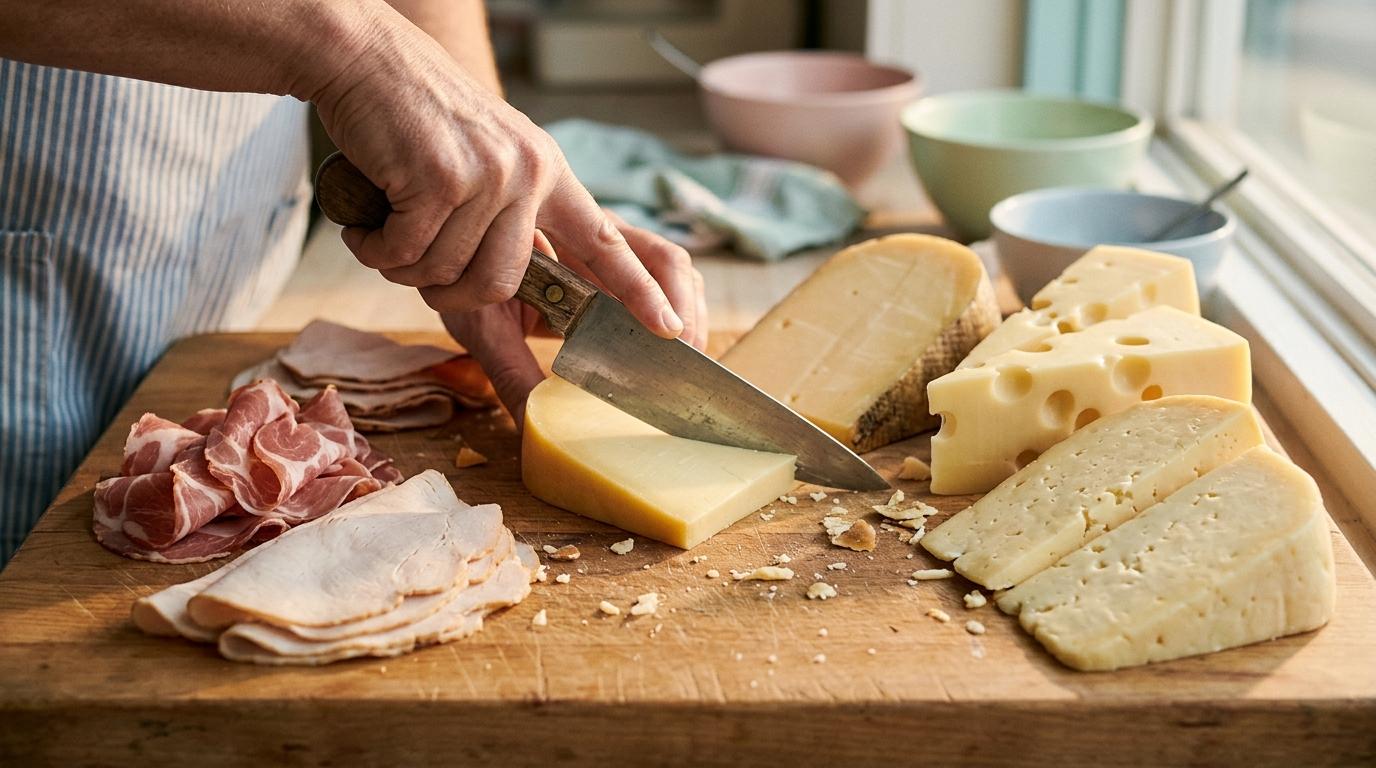
The best cheese for a sandwich depends on the protein beside it: sharp provolone pairs with Italian cured meats, Swiss anchors a classic turkey or ham build, and creamy Havarti softens spicy capicola. Walk into a well-stocked deli case and you'll face dozens of options - this guide cuts through the confusion so you can build a better sandwich every single time.
Whether you're ordering from a Philadelphia deli catering service for a corporate lunch or just stacking your own sub at home, knowing your cheeses - and which deli meat types belong beside them - is the difference between a forgettable sandwich and one people actually talk about.
Understanding the Deli Case: Cheese Families First
Before matching cheese to meat, it helps to understand the four broad families you'll encounter at any serious deli counter.
- Aged hard cheeses (Parmigiano-Reggiano, aged provolone, aged cheddar): sharp, complex, low moisture. Best with bold, salty cured meats.
- Semi-soft cheeses (Havarti, Muenster, Fontina): creamy, mild, excellent melters. Pair well with leaner deli meat types like turkey breast or low sodium deli meat options.
- Firm cheeses (Swiss, Gouda, Colby): nutty or buttery, versatile. The workhorses of the deli sandwich world.
- Fresh and spreadable cheeses (fresh mozzarella, ricotta, cream cheese): delicate flavor, high moisture. Best with lighter meats or as a base layer, not a main cheese.
A Practical Cheese-to-Meat Pairing Guide
Here's a structured breakdown of the most common deli meat types and the cheeses that make each one shine.
Pairing Chart: Deli Meats vs. Best Cheese Matches
Deli Meat Best Cheese Match Why It Works Prosciutto Fresh mozzarella or Parmigiano The delicate sweetness of prosciutto needs either a neutral, creamy counterpart or something aged enough to match its depth. Mortadella Provolone or Fontina Mortadella's buttery fat and pistachio notes love a mild but slightly tangy cheese that doesn't overpower. Capicola (Coppa) Havarti or Provolone Capicola's spice and fat call for a creamy, cooling cheese. Provolone also holds up to the heat. Turkey Breast Swiss, Havarti, or Muenster Lean turkey needs a cheese with its own flavor personality. Swiss adds nuttiness; Muenster adds creaminess. Roast Beef Aged cheddar or Horseradish Gouda Roast beef is bold. It needs a cheese bold enough to meet it - sharp, aged cheeses hold their own here. Ham Swiss or Gruyère The classic pairing exists for a reason. Ham's saltiness and mild sweetness balance beautifully with Swiss's nutty depth. Salami Provolone or Pepperoncini Asiago Salami is funky, fatty, and sharp. It needs a cheese that complements the fermented tang, not fights it.What Is Mortadella, Really?
Mortadella is a large-format Italian cooked sausage originating in Bologna, Italy - which is also why Americans started calling bologna "baloney." Authentic mortadella is made from finely ground pork, seasoned with black pepper, myrtle berries, and pistachios, then slow-cooked in a casing that can weigh anywhere from 2 to 200 pounds. The result is a silky, rich, slightly sweet sliced meat that bears almost no resemblance to the cheap processed bologna most people grew up with.
At a quality Philadelphia deli, mortadella is sliced paper-thin and served with provolone on a crusty roll - a combination that turns a simple sandwich into something genuinely memorable. For business catering in Center City Philadelphia, mortadella boards are increasingly a go-to for elevated lunch spreads that impress without going overboard on cost.
Prosciutto vs. Serrano: 5 Key Differences
These two dry-cured hams look similar in the case, but they're meaningfully different in flavor, texture, and ideal pairing.
- Origin: Prosciutto is Italian - specifically from regions like Parma or San Daniele. Serrano (Jamón Serrano) is Spanish, cured in the mountain air of Spain's interior regions.
- Cure time: Prosciutto di Parma is aged a minimum of 400 days under DOP regulations. Serrano is typically aged 7 to 16 months, making it slightly less complex.
- Flavor: Prosciutto is sweeter, more delicate, and butterier. Serrano is saltier, firmer, and more savory with a drier finish.
- Fat marbling: Prosciutto carries visible white fat that melts on the tongue. Serrano is leaner, with less visible intramuscular fat.
- Best cheese pairing: Prosciutto loves fresh mozzarella or light Parmigiano. Serrano stands up to Manchego - Spain's classic sheep's-milk cheese - or a firm aged Gouda.
If you're building a deli platter for a Philly catering order and want broad crowd appeal, prosciutto wins on versatility. Serrano is the choice when you want something a little more assertive and want to honor a Spanish-style spread.
Low Sodium Deli Meat: What to Know and Which Cheeses to Use
Low sodium deli meat is a growing category, and it matters both for health-conscious guests and for catering clients managing dietary needs. Most standard deli meats - including ham, salami, and regular turkey - carry 400 to 700mg of sodium per 2-ounce serving. Low sodium versions typically fall under 200mg per serving, achieved through reduced salt curing and different flavoring processes.
The tradeoff is flavor intensity. Low sodium deli meat tends to taste milder, which means your cheese selection carries more of the flavor load.
- Low sodium turkey: Pair with sharp white cheddar or smoked Gouda to compensate for the reduced seasoning in the meat.
- Low sodium ham: Aged Swiss or Gruyère add enough nuttiness to keep the sandwich interesting.
- Low sodium roast beef: Horseradish Havarti or aged provolone add a punch the meat alone can't provide.
For corporate breakfast catering or all-day meeting spreads in Philadelphia, offering a clearly labeled low sodium deli meat section alongside bolder options is a simple way to ensure every guest has something they can eat comfortably.
Quick Tips for Building a Better Deli Sandwich
- Match intensity to intensity. Bold meats need bold cheeses. Delicate meats need subtle cheeses. Mismatching the two is the most common deli mistake.
- Think about texture. A soft meat like mortadella benefits from a firm, sliceable cheese. A chewy cured meat like bresaola is better with something creamy.
- One cheese is almost always enough. Layering three cheeses doesn't add complexity - it usually just creates a muddy flavor.
- Temperature matters. Cheese straight from the refrigerator has muted flavor. If you're eating immediately, let sliced cheese sit for 5 to 10 minutes before assembling.
- The bread is part of the pairing. A crusty Italian roll handles moisture from fresh mozzarella. A softer hoagie roll is better with firmer, drier cheeses.
Why Philly Deli Culture Gets This Right
Philadelphia has one of the most serious deli traditions in the country, with deep roots in Italian, Jewish, and Eastern European food culture. The city's best deli catering services don't just slice meat and cheese - they think about how each component works together. That's the philosophy behind every breakfast catering and deli catering order in Philadelphia worth ordering: intentional pairing, quality ingredients, and actual expertise behind the counter.
Whether you're ordering a tray of sandwiches for a law firm lunch in Center City or stocking a corporate café for a week of meetings, working with a team that understands deli meat types and cheese pairing makes every bite noticeably better.
What is mortadella, and how is it different from bologna?
Mortadella is an authentic Italian cooked pork sausage from Bologna, made with whole pistachios, black pepper, and myrtle berries, then slow-cured in large formats. American bologna is a heavily processed imitation that uses different cuts, fillers, and far fewer seasonings. Real mortadella has a silky texture and complex flavor that bologna simply doesn't replicate.
What is the best cheese for a turkey sandwich?
Swiss, Havarti, and Muenster are the three best cheeses for a turkey sandwich. Swiss adds nuttiness, Havarti adds creaminess, and Muenster adds a mild tang. All three have enough flavor to complement lean turkey without overwhelming it.
What is the difference between prosciutto and serrano ham?
Prosciutto is an Italian dry-cured ham that is sweeter, fattier, and more delicate. Serrano is a Spanish dry-cured ham that is saltier, leaner, and more savory. Prosciutto pairs best with fresh mozzarella or Parmigiano; Serrano pairs best with Manchego or aged Gouda.
Is low sodium deli meat worth ordering for catering?
Yes - especially for office catering and corporate events where guests may have dietary restrictions or heart health considerations. Low sodium deli meat typically contains under 200mg of sodium per 2-ounce serving. To compensate for milder flavor, pair it with more assertive cheeses like sharp cheddar, smoked Gouda, or aged Swiss.
How many types of deli meat should a catering platter include?
A well-balanced deli catering platter for a group of 10 to 20 people should include 4 to 6 deli meat types: one poultry option (like turkey breast), one classic cured Italian meat (like mortadella or salami), one sliced roasted meat (like roast beef), and one specialty option (like prosciutto or capicola). Pairing each with its ideal cheese creates a cohesive, professional spread.