
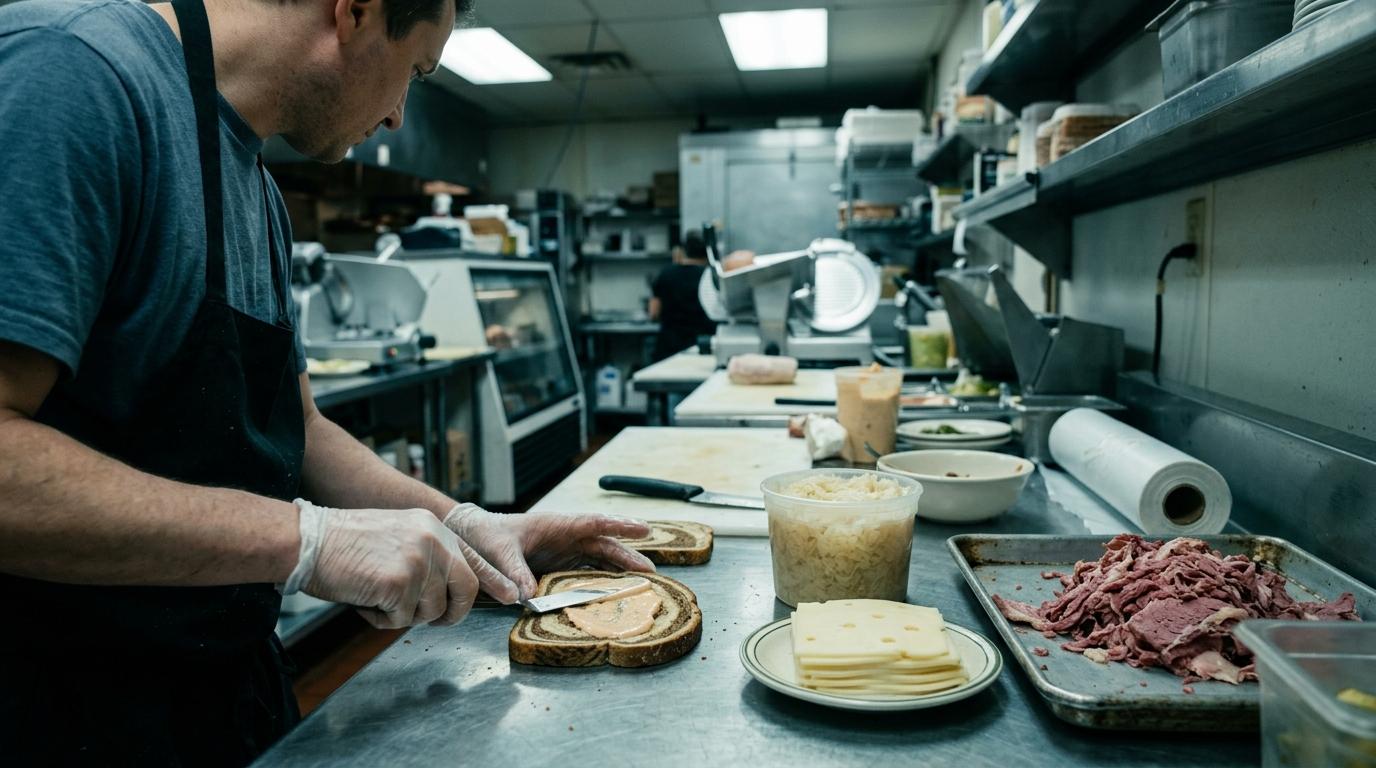
A classic Reuben sandwich contains four non-negotiable components: corned beef (or pastrami), Swiss cheese, sauerkraut, and Russian or Thousand Island dressing, all grilled between slices of rye bread. Get any one of those elements wrong, and the whole thing falls apart. Get them all right, and you've got one of the most satisfying sandwiches ever built.
We take that seriously at our deli. Whether you're ordering catering for a Center City Philadelphia office, grabbing lunch on your own, or searching for the best sandwiches near you, this breakdown will tell you exactly what makes a Reuben worth eating - and what makes ours different from the rest.
The Origin Story (The Short Version)
The Reuben's exact origin is genuinely disputed. Two credible stories exist. The first points to Reuben Kulakofsky, an Omaha grocer who reportedly invented the sandwich at a poker game in the 1920s. The second credits a New York deli owner named Arnold Reuben, who ran Reuben's Restaurant on Broadway in the early 20th century. Food historians have debated this for decades, and neither camp has definitively won.
What's not disputed: by the 1950s, the Reuben was a staple on deli menus across the country, and by the 1970s, it had become the benchmark by which deli culture was judged. Today, it's one of the most ordered sandwiches in Philadelphia's deli and café scene, and for good reason.
Breaking Down the Reuben: Every Ingredient Matters
The Meat: Corned Beef vs. Pastrami
This is the first decision - and the one that creates the most debate. Here's a clear side-by-side breakdown:
- Corned Beef: Brisket cured in a salt brine with pickling spices. Tender, mildly salty, and slightly pink throughout. Sliced thin and piled high, it has a softer, more yielding texture.
- Pastrami on Rye: Also made from brisket (or sometimes navel cut), but rubbed with black pepper, coriander, garlic, and other spices, then smoked. Bold, peppery, and deeply savory. The smoke adds a layer of complexity that corned beef simply doesn't have.
A traditional Reuben uses corned beef. A pastrami on rye variation - sometimes called a "Rachel" or just a pastrami Reuben - swaps in pastrami. Both are legitimate. Both are delicious. At our shop, we let you choose.
The Bread: Rye Is Not Optional
Rye bread isn't just a vehicle - it's structural and flavorful. Its slightly earthy, tangy bite balances the richness of the meat and cheese. Marble rye (a swirl of light and dark rye) is a popular variation that adds a visual appeal without significantly changing the flavor profile. Seeded rye adds a subtle nuttiness.
Using white bread or a hoagie roll on a Reuben is a mistake. The fat content of the dressing and the acidity of the sauerkraut need the rye's density to hold everything together. Compare this to an Italian hoagie, where a soft, airy roll is ideal for layering cured meats and oil. Different sandwich, different rules.
The Cheese: Swiss, and Only Swiss
Swiss cheese melts evenly, has a mild nuttiness, and doesn't overpower the meat or kraut. Provolone is a reasonable substitute in a pinch (it's a staple on a good Italian hoagie), but on a Reuben, Swiss is the correct call. Its low moisture content means it melts without making the bread soggy - critical on a grilled sandwich.
The Sauerkraut: The Ingredient People Get Wrong
Bad sauerkraut ruins a Reuben. The most common mistake is using sauerkraut straight from the can without draining it. Excess liquid soaks through the bread before the sandwich even hits the grill. Properly prepared sauerkraut is thoroughly drained, warmed through, and added in proportion - enough to give every bite a sharp, fermented contrast, not so much that it drowns the meat.
The acidity of sauerkraut is what makes the Reuben work as a flavor system. It cuts through the fat of the beef and cheese, resets your palate, and makes the next bite just as satisfying as the first.
The Dressing: Russian vs. Thousand Island
These two are close cousins but not identical:
- Russian Dressing: Mayo base, ketchup or chili sauce, horseradish, and spices. Has a slight heat and a sharper flavor profile.
- Thousand Island: Mayo base, ketchup, sweet pickle relish. Sweeter and milder.
Purists prefer Russian dressing on a Reuben because the horseradish adds a bite that complements the sauerkraut's acidity. We use a house-made Russian dressing that leans into that heat without being aggressive about it.
How We Build Ours
Our Reuben starts with a quarter-pound of house-sliced corned beef- or pastrami if you prefer the corned beef special variation with smoked meat. The bread is seeded rye, buttered on the outside and grilled on a flat-top until the crust is golden and the interior is warm throughout.
We layer the Swiss cheese directly on the meat inside the sandwich before it goes on the grill, so the cheese melts from the heat of the beef. The sauerkraut is drained and warmed separately, then added after the first flip so it doesn't steam the bread. The Russian dressing goes on both inner faces of the rye - not too thick, not too thin.
The result is a sandwich where every component is present in every bite. No dry corners, no soggy center, no single ingredient dominating the others.
How the Reuben Fits Into Catering in Philadelphia
The Reuben is one of our most requested items for Philadelphia business catering- particularly for office lunches and breakfast-to-lunch spread orders in Center City. It travels well when wrapped properly, holds its structure for up to 45 minutes after preparation, and satisfies a wide range of preferences because of its familiar, well-known flavor profile.
For larger catering orders, we also offer a deconstructed deli tray version: sliced corned beef and pastrami, rye bread, Swiss cheese, sauerkraut, and dressing served separately so guests can build their own. This format works well for meetings and events where dietary preferences vary, and it keeps the bread from getting soggy during transport - a common complaint with pre-built catering sandwiches.
Our deli catering services in Philadelphia cover everything from small office drops of 10 to 15 people to full-scale corporate events. The Reuben, alongside our Italian hoagie, is consistently one of the top two requested sandwiches across every order size.
Why the Reuben Works: The Flavor Science
The Reuben hits five distinct flavor notes in a single bite:
- Salt- from the cured beef
- Fat- from the Swiss cheese and dressing
- Acid- from the sauerkraut
- Heat- from the Russian dressing's horseradish
- Earthiness- from the rye bread
That balance is why the Reuben has stayed on menus for over a century without needing reinvention. It's not trendy. It doesn't need to be. The architecture of the sandwich is already complete.
Frequently Asked Questions About the Reuben Sandwich
What is the difference between a Reuben and a Rachel sandwich?
A Rachel sandwich substitutes turkey or pastrami for corned beef and swaps sauerkraut for coleslaw. It uses the same rye bread, Swiss cheese, and Thousand Island or Russian dressing. The Rachel is milder in flavor and slightly sweeter due to the coleslaw, making it a popular alternative for people who find sauerkraut too sharp.
Is a Reuben always made with corned beef, or can pastrami be used?
The traditional Reuben uses corned beef. A pastrami Reuben is a widely accepted variation - sometimes called a "pastrami on rye Reuben" - and many delis, including ours, offer both. Pastrami delivers a smokier, spicier flavor, while corned beef is milder and more tender. Both are correct choices; it comes down to personal preference.
What bread should be used for a Reuben sandwich?
Rye bread - seeded or marble - is the standard for a Reuben. Its density holds up to the moisture from the sauerkraut and dressing, and its earthy flavor complements the cured meat. Substituting softer breads like sourdough or white sandwich bread will result in a soggier sandwich with less structural integrity.
Can Reuben sandwiches be ordered as part of a catering package in Philadelphia?
Yes. We offer Reuben sandwiches as part of our Philadelphia business catering and café catering packages. They can be ordered pre-built and wrapped, or as a deli tray with components served separately - ideal for larger office events where guests build their own plates. Contact us directly for pricing and minimum order details for Center City Philadelphia deliveries.
How is Russian dressing different from Thousand Island on a Reuben?
Russian dressing contains horseradish and sometimes hot sauce, giving it a sharper, slightly spicy edge. Thousand Island dressing uses sweet pickle relish and skews sweeter and milder. On a Reuben, Russian dressing is the more traditional choice because its acidity and heat reinforce the sauerkraut's tang, creating a more balanced and complex flavor profile overall.