
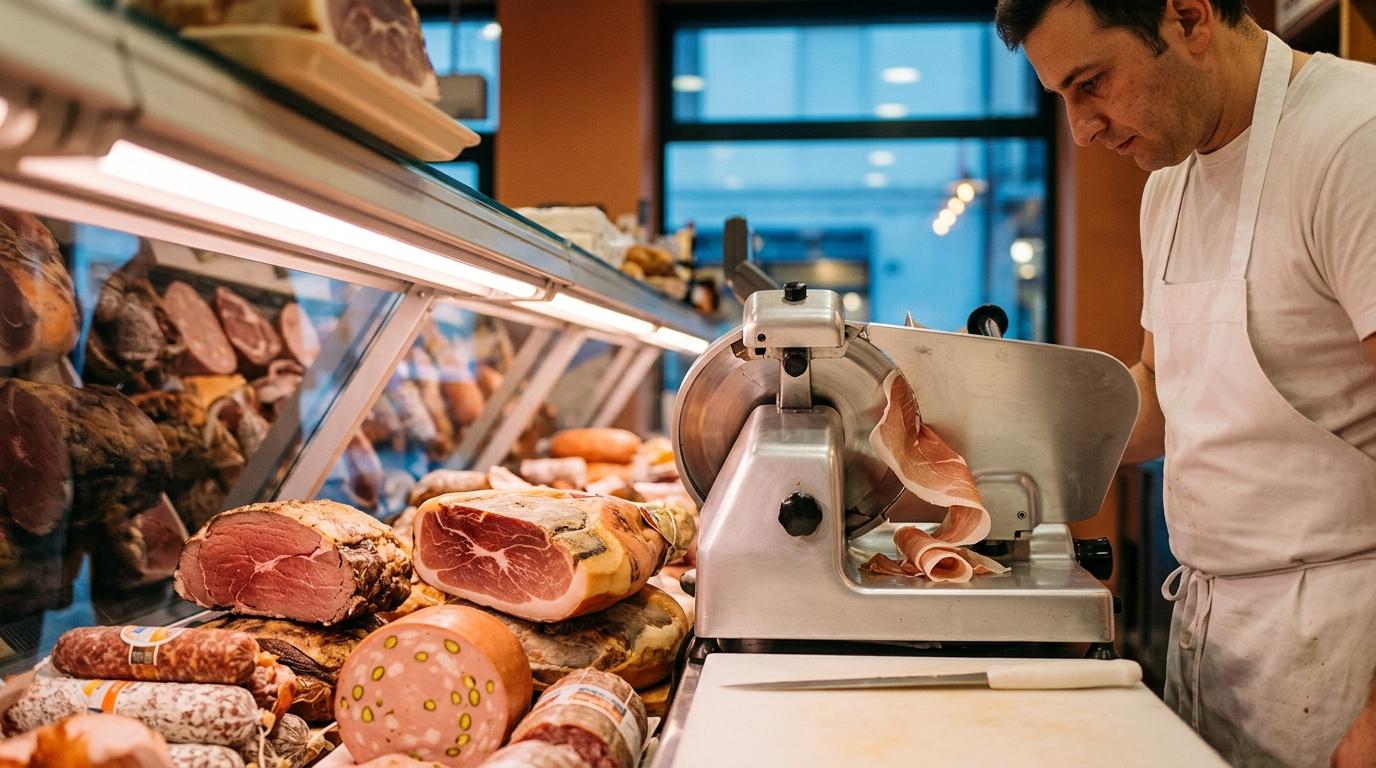
Deli meats fall into five core categories - whole muscle cuts, cured hams, emulsified sausages, fermented salami, and cooked poultry - each with distinct production methods, flavor profiles, and best uses. Whether you're building a weekday sandwich or assembling a charcuterie board, knowing the difference between prosciutto and serrano, or which cheese pairs with mortadella, makes every bite better.
The 5 Core Categories of Deli Meat Types
Walk up to any deli case and the variety is staggering. Here's how to decode it fast.
- Whole Muscle Cuts- Roast beef, turkey breast, and honey ham. These are actual cuts of meat, roasted or smoked and sliced to order. Roast beef is typically 0% added fillers; what you see is what you get.
- Cured Hams- Prosciutto di Parma, Serrano, Jamón Ibérico, and Black Forest ham. Salt-cured and often air-dried for months or years.
- Emulsified Sausages- Bologna, mortadella, and hot dogs. Ground meat blended with fat and spices, stuffed into casings, and cooked. Smooth, consistent texture.
- Fermented and Dry-Cured Salami- Genoa salami, soppressata, and pepperoni. Naturally fermented, aged at controlled humidity. Sharp, tangy, shelf-stable.
- Cooked Poultry- Oven-roasted turkey, smoked chicken breast, and rotisserie-style chicken loaf. Generally the leanest option by protein-to-fat ratio.
Prosciutto vs. Serrano: 6 Key Differences
Both are dry-cured hams made from a single hind leg of pork, but prosciutto and serrano are distinct products with different origins, flavor profiles, and price points.
Feature Prosciutto di Parma (Italy) Jamón Serrano (Spain) Curing time 12–36 months minimum 7–24 months Pig breed Large White, Landrace, or Duroc White pig (vs. Ibérico black pig) Flavor profile Buttery, delicate, slightly sweet Saltier, firmer, nuttier Fat marbling Silky white fat, soft texture Less fat, drier texture Protected designation DOP (Denominazione di Origine Protetta) ETG (Especialidad Tradicional Garantizada) Average retail price (per lb) $18–$30 $12–$20Bottom line: Prosciutto di Parma is the go-to for silky, melt-on-the-tongue charcuterie boards. Serrano is the better value when you need bold, salty flavor in a cooked application like a bocadillo or flatbread.
What Is Mortadella?
Mortadella is a cooked, emulsified pork sausage from Bologna, Italy - which is exactly why Americans call bologna "bologna." True mortadella, produced under the IGP (Indicazione Geografica Protetta) designation, contains at least 15% visible cubes of pork fat distributed evenly throughout the sausage, plus whole or crushed pistachios in the premium versions. It's seasoned with black pepper, myrtle berries, and sometimes coriander. The texture is silkier than American bologna, and the flavor is more complex - savory, lightly spiced, with a rich pork sweetness. Sliced thin, it's exceptional on a ciabatta with provolone and a drizzle of olive oil.
Whole Muscle Roast Beef: The Deli Anchor
Roast beef is the benchmark whole-muscle deli meat. A quality deli roast beef starts with a top round or eye of round, seasoned simply, and cooked to an internal temperature of 145°F. The result is lean - a typical 2-ounce serving delivers 12–15 grams of protein and only 2–4 grams of fat. Look for roast beef sliced to order from a whole piece, not a restructured loaf. The color should be rosy pink to deep red, never gray or oxidized brown. Pair it with sharp cheddar and horseradish on a toasted rye for a sandwich that needs no improvement.
Low Sodium Deli Meat: What to Look For
Standard deli meat is a sodium heavyweight. A 2-ounce serving of regular deli turkey can carry 400–600 mg of sodium - that's 17–26% of the FDA's recommended daily limit of 2,300 mg in a single sandwich slice. Low sodium deli meat is federally defined as containing 140 mg or less of sodium per serving. Here's how the major categories compare:
- Low sodium roast turkey breast: 65–90 mg sodium per 2 oz
- Low sodium roast beef: 50–75 mg sodium per 2 oz
- Low sodium ham: 150–300 mg per 2 oz (harder to reduce due to curing requirements)
- Prosciutto (uncured, no added nitrates): 480–550 mg per oz - high by nature; moderation matters
- Applegate Naturals No Salt Added Turkey: 55 mg sodium per 2 oz - one of the lowest on the market
When choosing low sodium deli meat, also check for phosphate additives (sodium phosphate, sodium erythorbate), which add hidden sodium beyond the curing salt. Ask your deli counter to show you the ingredient label on the whole piece before slicing.
Best Cheese for Sandwiches: Pairing by Deli Meat
The best cheese for a sandwich depends entirely on the meat's fat content, salt level, and texture. Here are the pairings that work every time:
- Prosciutto → Fresh mozzarella (fior di latte) or burrata. Fat meets fat; salt meets cream. The classic Italian pairing exists because it's perfect.
- Roast beef → Sharp white cheddar or aged Swiss (Gruyère). The sharpness cuts through the beef's richness without overwhelming it.
- Mortadella → Provolone dolce or fresh pecorino. Both let the pistachio and pork flavors stay center stage.
- Genoa salami → Aged provolone or fontina. The tang of the salami needs a mellow, slightly sweet counterpart.
- Turkey breast → Havarti or mild Swiss. Neutral, creamy cheeses let herb-seasoned turkey shine without a flavor clash.
- Ham → Gouda (smoked or aged) or Brie. The sweetness of ham and the nuttiness of Gouda are a natural match.
- Capicola → Fresh mozzarella or scamorza. Spiced, firm cured meats need soft, milky cheese to balance the heat.
How to Order at the Deli Counter Like a Pro
Three rules that separate a great sandwich from a mediocre one:
- Specify thickness. Prosciutto and coppa should be sliced paper-thin (setting 1–2 on most slicers). Roast beef and turkey can go to a 3–4 for sandwiches, thicker for carpaccio-style boards.
- Ask for a taste. Any reputable deli counter will let you sample before you buy. The flavor difference between a house-roasted turkey and a pre-formed loaf is unmistakable.
- Buy less, more often. Sliced deli meat stays fresh for 3–5 days maximum in the refrigerator. A quarter-pound, sliced fresh, beats a half-pound bought on Monday and eaten on Friday.
Deli Meat Types FAQ
What is mortadella made of?
Mortadella is made from finely ground pork - including shoulder, cheek, and trimmings - emulsified into a smooth paste, mixed with at least 15% cubed pork fat, seasoned with black pepper and myrtle berries, and slow-cooked in a casing. IGP-certified mortadella from Bologna, Italy must follow strict ingredient and production standards. Pistachios are added in premium varieties.
Is prosciutto healthier than regular ham?
Prosciutto contains no added sugars and no fillers, which gives it a cleaner ingredient list than most deli hams. However, prosciutto averages 480–550 mg of sodium per ounce - significantly higher than low-sodium deli ham. Calorie-for-calorie, a 1-ounce slice of prosciutto has about 60 calories and 4 g fat, comparable to lean deli ham. "Healthier" depends on your priority: ingredient quality favors prosciutto; sodium reduction favors low-sodium ham.
What is the difference between prosciutto and serrano ham?
Prosciutto di Parma comes from Italy, is cured 12–36 months, and has a buttery, delicate flavor with soft white fat. Serrano comes from Spain, is cured 7–24 months, and delivers a saltier, firmer, nuttier profile with less marbling. Prosciutto carries DOP protection; Serrano carries ETG status. Prosciutto costs $18–$30 per pound at retail versus $12–$20 for Serrano.
What is the best low sodium deli meat?
The lowest-sodium options available at most deli counters are no-salt-added roast turkey breast (55–90 mg sodium per 2 oz) and natural roast beef (50–75 mg per 2 oz). Applegate Naturals, Boar's Head Low Sodium line, and Dietz & Watson Reduced Sodium products are the three brands consistently meeting the FDA's 140 mg-per-serving threshold. Avoid all cured hams if sodium is a primary concern - even "reduced sodium" ham rarely drops below 300 mg per serving.
Which cheese goes best with prosciutto?
Fresh mozzarella (fior di latte) is the definitive pairing for prosciutto. The high moisture content and mild cream flavor of fresh mozzarella balance prosciutto's salt intensity without masking its complexity. Burrata works equally well for boards. For a cooked application like a flatbread or panino, scamorza or low-moisture mozzarella holds up better under heat.