
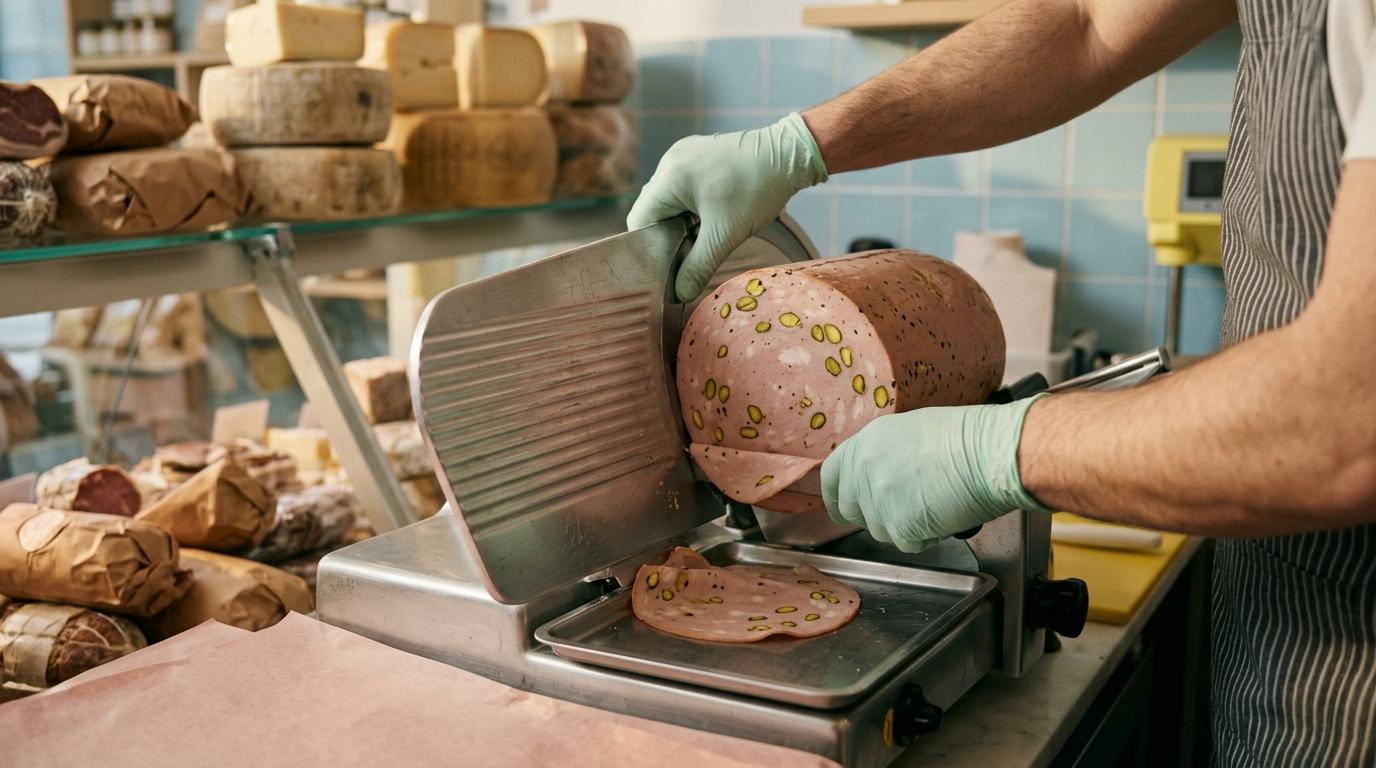
The best sandwich starts with one rule: match intensity to intensity. Bold, fatty meats need assertive cheeses; delicate, lean cuts need something subtle and creamy. Master that principle and the deli case stops being overwhelming and starts being a playground.
Below you'll find a full breakdown of deli meat types, cheese recommendations for each, sodium comparisons, and answers to the questions customers ask us most - including what mortadella actually is and how prosciutto stacks up against serrano ham.
Know Your Deli Meat Types Before You Order
The deli case divides into four broad families. Understanding which family a meat belongs to tells you almost everything about how it will behave in a sandwich.
- Whole-muscle cured meats- prosciutto, serrano ham, bresaola, coppa. Aged and salt-cured without cooking. Concentrated flavor, silky texture.
- Cooked whole-muscle meats- roast beef, turkey breast, honey ham. Milder, moister, versatile. The everyday workhorse of the sandwich world.
- Emulsified or ground meats- mortadella, bologna, liverwurst. Ground fine, seasoned heavily, then cooked. Rich, smooth, and often underrated.
- Dry-cured sausages- soppressata, genoa salami, pepperoni. Fermented and dried. Tangy, spiced, high fat. Built to be sliced thin.
The Definitive Meat-and-Cheese Pairing Guide
Use this table as your starting point. Every pairing below is based on contrasting or complementing fat content, salt level, and texture.
Deli Meat Flavor Profile Best Cheese Pairing Why It Works Prosciutto di Parma Sweet, nutty, delicate Fresh mozzarella or Taleggio Mild, milky fat matches the ham's sweetness without fighting it Serrano Ham Earthy, slightly funky, drier Manchego (aged 6–12 months) Both are Spanish, both have a grassy, lanolin note - natural harmony Mortadella Fatty, peppery, subtly spiced Provolone or Burrata Creamy cheese tames the fat; provolone's mild tang gives contrast Genoa Salami Tangy, garlicky, peppery Aged provolone or sharp Asiago Sharpness cuts through fat; acid mirrors the ferment tang Roast Beef Savory, beefy, mild Horseradish cheddar or Gruyère Nutty, slightly pungent cheese amplifies the meat's umami Turkey Breast Lean, mild, neutral Havarti or Muenster Buttery, semi-soft cheeses add richness turkey lacks on its own Bresaola Lean, beefy, slightly tangy Shaved Parmigiano-Reggiano Salty, crystalline Parmesan echoes bresaola's mineral finish Coppa Spiced, rich, porky Fontina or smoked scamorza Melty, mild cheeses cushion the spice without disappearingWhat Is Mortadella - And Why Are People Obsessed With It?
Mortadella is a cooked, emulsified pork sausage from Bologna, Italy - which is exactly why Americans started calling bologna "baloney." Real mortadella is nothing like the pale lunch meat you remember from childhood. Authentic mortadella, protected under IGP (Indicazione Geografica Protetta) status since 1998, is made from finely ground pork shoulder, studded with cubes of pork fat and whole black peppercorns, and seasoned with myrtle berries, coriander, and pistachios in some versions.
Slice it paper-thin on crusty bread with fresh mozzarella and a drizzle of olive oil and you have what Romans eat for lunch every day. Slice it thick, pile it on focaccia with giardiniera, and you have the best sandwich you'll eat this year. Mortadella pairs beautifully with mild, fatty cheeses precisely because its own fat content - roughly 25–28% - needs a dairy counterpoint that is creamy rather than sharp.
Prosciutto vs. Serrano Ham: 5 Key Differences
Both are whole-muscle, dry-cured hams. Both are sliced thin. Both are expensive compared to cooked deli meats. But they are not interchangeable.
- Origin: Prosciutto di Parma comes from Parma, Italy, and carries DOP (Denominazione di Origine Protetta) status. Jamón Serrano comes from Spain, primarily the interior mountain regions.
- Pig breed: Prosciutto di Parma uses Large White, Landrace, or Duroc pigs fed a whey-based diet. Serrano uses white pigs (not the Ibérico breed - that's a separate, more expensive product).
- Cure time: Prosciutto di Parma ages a minimum of 12 months, often 18–24. Serrano ages 7–16 months on average.
- Flavor: Prosciutto is sweeter, more delicate, and fattier with a silkier mouthfeel. Serrano is drier, more pronounced, and earthier - closer to a nutty, mineral quality.
- Best use: Prosciutto shines raw, draped over melon or on a sandwich with fresh cheese. Serrano handles heat slightly better and pairs brilliantly with aged Manchego on pan con tomate.
Low Sodium Deli Meat: What to Look For and What to Avoid
Standard deli meat is one of the saltiest foods in the American diet. A 2-ounce serving of regular bologna delivers around 590 mg of sodium. Regular salami clocks in at 480–600 mg per 2-ounce serving. The FDA defines "low sodium" as 140 mg or less per serving - a threshold almost no traditional cured meat meets, because salt is both preservative and flavor.
Your best strategies for reducing sodium without sacrificing quality:
- Choose whole-muscle roasted meats over processed ones. Sliced roast turkey breast from a whole bird averages 200–350 mg per 2-ounce serving - significantly lower than emulsified products.
- Look for "lower sodium" or "reduced sodium" labels, which legally require 25% less sodium than the original product.
- Ask the deli counter to slice fresh. Pre-packaged meats often contain additional sodium from preservation brine. Fresh-sliced from whole roasted cuts skips that step.
- Balance with low-sodium cheese. Fresh mozzarella has about 85 mg sodium per ounce versus 180 mg for processed American cheese.
- Use bresaola strategically. At roughly 300–350 mg per 2 ounces, air-dried beef bresaola is one of the lower-sodium options in the cured meat category.
If sodium is a genuine medical concern, focus your sandwich on thick-cut roasted turkey, fresh vegetables for texture, and fresh mozzarella - you can build enormous flavor with herbs, good olive oil, and acid from pickled vegetables without touching the salt shaker.
The Best Cheese for Sandwiches: Ranked by Versatility
Not every cheese belongs on a sandwich. Aged cheddar crumbles, very runny bries soak through bread, and heavily smoked cheeses can overpower everything. These five cheeses are the most versatile performers at the deli counter:
- Provolone- works cold or melted, pairs with everything from turkey to salami, mild enough not to compete but present enough to matter.
- Havarti- creamy and buttery with a gentle tang, exceptional with turkey, chicken, and mild ham.
- Aged Manchego (6 months)- firm, slightly sharp, nutty. Elevates any cured meat and holds its own against bold flavors.
- Fresh mozzarella- the cleanest dairy flavor available; essential for prosciutto, mortadella, and any sandwich where you want brightness.
- Gruyère- the dark horse. Its nutty complexity makes roast beef and ham sandwiches taste like they came from a Parisian brasserie.
Build the Sandwich: A Simple Framework
Pair one meat from the bold category (salami, coppa, prosciutto) with one neutral element (roasted turkey, mild ham) for layered complexity without overload. Choose a cheese that matches the dominant meat's intensity. Add acid - pickled peppers, cornichons, or good mustard - to cut fat. Use a bread with structural integrity: ciabatta, a dense sourdough, or a seeded rye rather than soft sandwich bread that compresses under the weight of good ingredients.
That's the entire framework. Every great sandwich in the world follows it.
What is the difference between prosciutto and serrano ham?
Prosciutto is an Italian DOP-certified dry-cured ham aged 12–24 months with a sweet, delicate, fatty flavor. Serrano ham is a Spanish dry-cured ham aged 7–16 months with a drier texture and earthier, more mineral flavor. They use different pig breeds, different aging environments, and taste noticeably distinct side by side.
What is mortadella made of?
Mortadella is a cooked Italian sausage made from finely ground pork shoulder, cubed pork fat, whole black peppercorns, and spices including myrtle berries and coriander. Authentic mortadella from Bologna carries IGP protected status. Some versions include pistachios. It is not the same as American bologna.
What is the best cheese to put on a sandwich?
Provolone is the single most versatile sandwich cheese because it works both cold and melted, pairs with virtually every deli meat, and has a balanced mild-to-medium flavor. Fresh mozzarella, Havarti, aged Manchego, and Gruyère round out the top five based on flavor range and compatibility with cured meats.
Which deli meat is lowest in sodium?
Fresh-sliced roasted turkey breast is among the lowest-sodium deli options at roughly 200–350 mg per 2-ounce serving. Bresaola (air-dried beef) runs 300–350 mg per 2 ounces. Processed meats like bologna and salami range from 480–600 mg per 2-ounce serving. Choosing whole-muscle roasted cuts over emulsified or heavily cured products is the most reliable way to reduce sodium intake from deli meat.
Can you mix different deli meats on one sandwich?
Yes - pairing one bold cured meat like salami or coppa with one milder cooked meat like turkey or roast ham creates layered flavor without any single component overwhelming the rest. The Italian sub (genoa salami, capicola, and ham together) is the classic example of this technique done right. Keep the total meat weight around 3–4 ounces for a standard sandwich so the bread and cheese can still register.