To handle dietary restrictions for a large office catering order, collect restrictions with a short form 5–7 business days before the event, plan for roughly 25–35% of your headcount needing a non-standard option, label every item, and order individually packaged meals for anyone with an allergy. That approach keeps people safe, keeps the budget predictable, and keeps the office manager out of last-minute scrambles.
This guide walks through the full process for office catering management, from collecting responses to portioning food, matching the menu to the meeting type, and working with a Philadelphia caterer who can actually execute it.
Start With a Dietary Survey, Not a Guess
The most common mistake in catering for large office groups is assuming a "vegetarian option" covers everyone. It doesn't. A 40-person lunch can easily include a vegan, a person with celiac disease, someone who keeps halal, and two people with tree nut allergies. Those are five different needs, and one veggie wrap solves maybe one of them.
Send a survey at least five business days out. Keep it to four questions:
- Do you have a food allergy? If yes, which one, and is it severe (anaphylactic) or an intolerance?
- Do you follow a dietary pattern? Vegetarian, vegan, halal, kosher, gluten-free, dairy-free, low-sodium.
- Anything you simply won't eat? This catches preferences that aren't medical but still matter.
- May we share your name with the caterer? This lets the caterer label or pre-pack meals by person for severe allergies.
Separate allergies from preferences in your tally. An allergy requires strict ingredient and cross-contact controls. A preference only requires a good option. Your caterer will price and prepare them differently.
How Many Special Meals to Order
Survey responses are your best data, but not everyone answers. A reliable rule for business meeting food planning: order special meals for the number of confirmed responses, then add a 15% buffer of the most common restriction types.
For an office with no survey data, use these planning ratios:
- Vegetarian: 15–20% of headcount
- Vegan: 5–8%
- Gluten-free: 8–10%
- Dairy-free: 5%
- Halal or kosher: 3–5% in most Philadelphia offices, higher if your team skews that way
These overlap, so total special meals usually land at 25–35% of the group. For 60 people, that means about 15–21 meals outside the standard menu. A smart workaround is choosing a menu where most dishes are naturally vegan or gluten-free, such as grain bowls, salads with protein on the side, or build-your-own stations. That shrinks the number of separate meals you need.
Match the Menu to the Meeting Type
How much food to order for an office lunch depends on the format as much as the headcount. Dietary planning also changes depending on whether people eat at a desk, standing, or seated.
| Meeting Type | Best Format | Food Per Person | Dietary Strategy |
|---|---|---|---|
| Breakfast meeting | Pastries, fruit, yogurt, egg sandwiches | 1.5 items plus a drink | Add fruit, gluten-free muffins, and a vegan spread |
| Working lunch | Individually boxed meals | 1 full meal | Label each box by name or restriction |
| Training or all-hands | Buffet or stations | 1.1 meals (10% buffer) | Separate serving utensils and a labeled allergen-free section |
| Client presentation | Platters and finger food | 8–12 pieces | Mark each platter clearly and keep a separate vegan platter |
| Afternoon snack | Light bites | 3–5 pieces | Offer nut-free options by default |
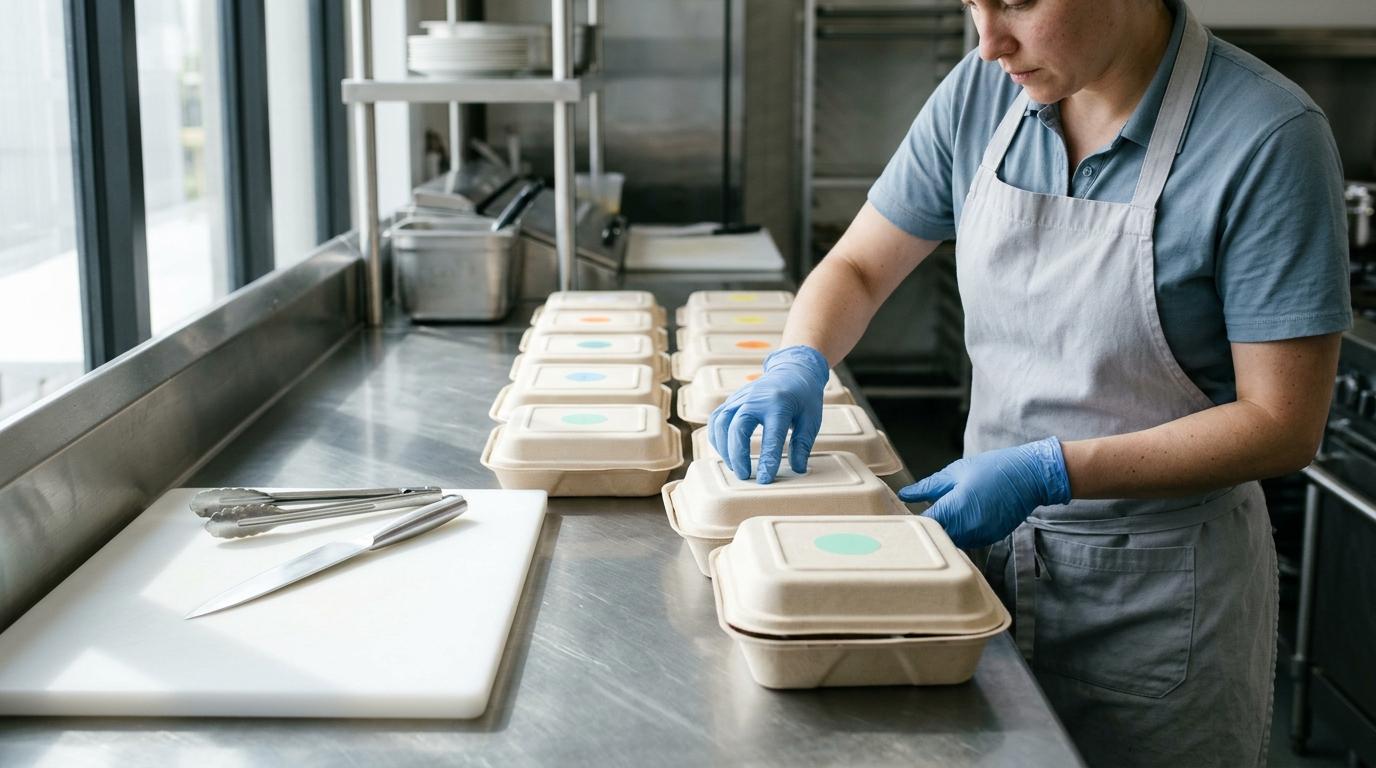
Boxed lunches are the safest format for dietary restrictions. Each meal is sealed, labeled, and kept away from shared utensils. Buffets are cheaper per head and more social, but they carry cross-contact risk, because one serving spoon moving from the shrimp salad to the vegan pasta undoes the labeling.
Handle Severe Allergies Differently
An intolerance causes discomfort. An allergy can send someone to the hospital. Treat them as separate categories.
For anyone with a severe allergy, ask your caterer these specific questions:
- Is the meal prepared on separate surfaces with clean equipment?
- Will it be packaged individually and sealed?
- Can they provide a full ingredient list, including sauces and dressings?
- Do they handle the allergen in the same kitchen (for example, a bakery that uses tree nuts)?
Request that these meals be wrapped, labeled with the person's name, and delivered separately from the main order. Get the ingredient list in writing. If a caterer cannot answer these questions clearly, that is a signal to choose a different vendor for that event.
The "big nine" allergens in the US are milk, eggs, fish, shellfish, tree nuts, peanuts, wheat, soy, and sesame. A good caterer tracks all nine by dish and can tell you which items contain them.
Label Everything, Then Label It Again
Labels are the cheapest safety tool available. Ask your caterer for printed cards on every dish that name the item and flag major allergens plus dietary tags (V for vegan, GF for gluten-free, DF for dairy-free, H for halal). If the caterer doesn't provide them, print your own from the menu they send.
For boxed meals, use a sticker on the lid with the person's name and the restriction. Then place special meals at the front of the delivery or in a marked bag so the restricted eaters get their food first, before the standard meals are picked over.
Budget for Dietary Needs Without Overspending
Special meals often cost more per plate, since gluten-free breads, vegan proteins, and individual packaging add expense. For corporate lunch catering in Philadelphia, standard per-person pricing commonly runs in the $15–$25 range for boxed lunches, and special-diet meals can add $2–$6 each depending on the caterer and ingredients.
Ways to control cost:
- Choose inclusive base dishes. A rice bowl bar with toppings serves vegan, gluten-free, and dairy-free guests from the same ingredients.
- Order exact counts for special meals. Pad standard meals by 5–10%, but order restricted meals close to confirmed numbers.
- Skip rarely used categories. If the survey shows no kosher requests, don't pay for a kosher option.
- Bundle drinks and sides. Whole fruit, chips, and bottled water are universally safe and cheap.
Choose a Caterer Built for Business Orders
Not every restaurant that offers catering manages dietary requests well. When comparing Philadelphia business catering options, look for a caterer that offers a dietary-tagged menu, accepts a guest list with restrictions, delivers on a set window to Center City office buildings, and can describe its allergen process in plain terms. Cafes and delis that run daily lunch service often handle volume and variety well because they already prepare vegetarian, vegan, and gluten-free items every day.
Confirm the order 48–72 hours ahead, ask for a delivery contact number, and send the caterer your final restriction list in writing so nothing relies on a phone call.
Office Catering Dietary Restrictions FAQ
How far in advance should I collect dietary restrictions for an office lunch?
Collect them 5–7 business days before the event and confirm the final list with your caterer 48–72 hours ahead. That window gives the kitchen time to source ingredients for special meals.
How much food should I order for an office lunch?
Order one full meal per person for boxed lunches and 1.1 meals per person for buffets. For finger food and platters, plan 8–12 pieces per person for a meal replacement.
What percentage of my office will need special dietary meals?
Plan for 25–35% of attendees to need a vegetarian, vegan, gluten-free, dairy-free, or religious-diet option. Use survey responses when you have them and the planning ratios when you don't.
Is a buffet or boxed lunch better for dietary restrictions?
Boxed lunches are safer because each meal is sealed and labeled, which prevents cross-contact. Buffets work for groups without severe allergies when each dish has its own utensil and a clear label.
What should I ask a caterer about severe allergies?
Ask whether the meal is prepared on clean surfaces, packaged individually, and supported by a written ingredient list. Also ask whether the kitchen handles the allergen elsewhere in its production.