The best breakfast catering for a morning meeting is a mix of one protein, one carb, and one fruit option, ordered at roughly 1.25 items per person for meetings under 90 minutes. Skip heavy hot buffets before 9 a.m. sessions, and choose food people can eat in under 10 minutes without losing focus. Here are five breakfast catering ideas that work for Philadelphia offices, plus the ordering math, dietary planning, and budget guidance to run them well.
1. The Grab-and-Go Breakfast Box
Individually packed boxes are the most dependable format for meetings of 10 to 50 people. Each box typically holds a breakfast sandwich or wrap, a piece of whole fruit or a fruit cup, and a small snack such as yogurt or a granola bar. Nobody queues, nobody touches shared tongs, and the meeting starts on time.
Why it boosts productivity: The biggest time loss at a catered meeting is the line. A buffet for 30 people takes 12 to 15 minutes to clear. Boxes can be distributed in under 3 minutes, or left on a side table for people to take as they arrive.
Trade-offs: Boxes cost $2 to $4 more per person than family-style trays because of packaging and labor. They also lock in each person's choice, so label every box clearly (for example, "V" for vegetarian, "GF" for gluten-free) and order dietary boxes separately rather than mixing them into the general count.
2. The Cafe-Style Spread: Bagels, Pastries, and Fruit
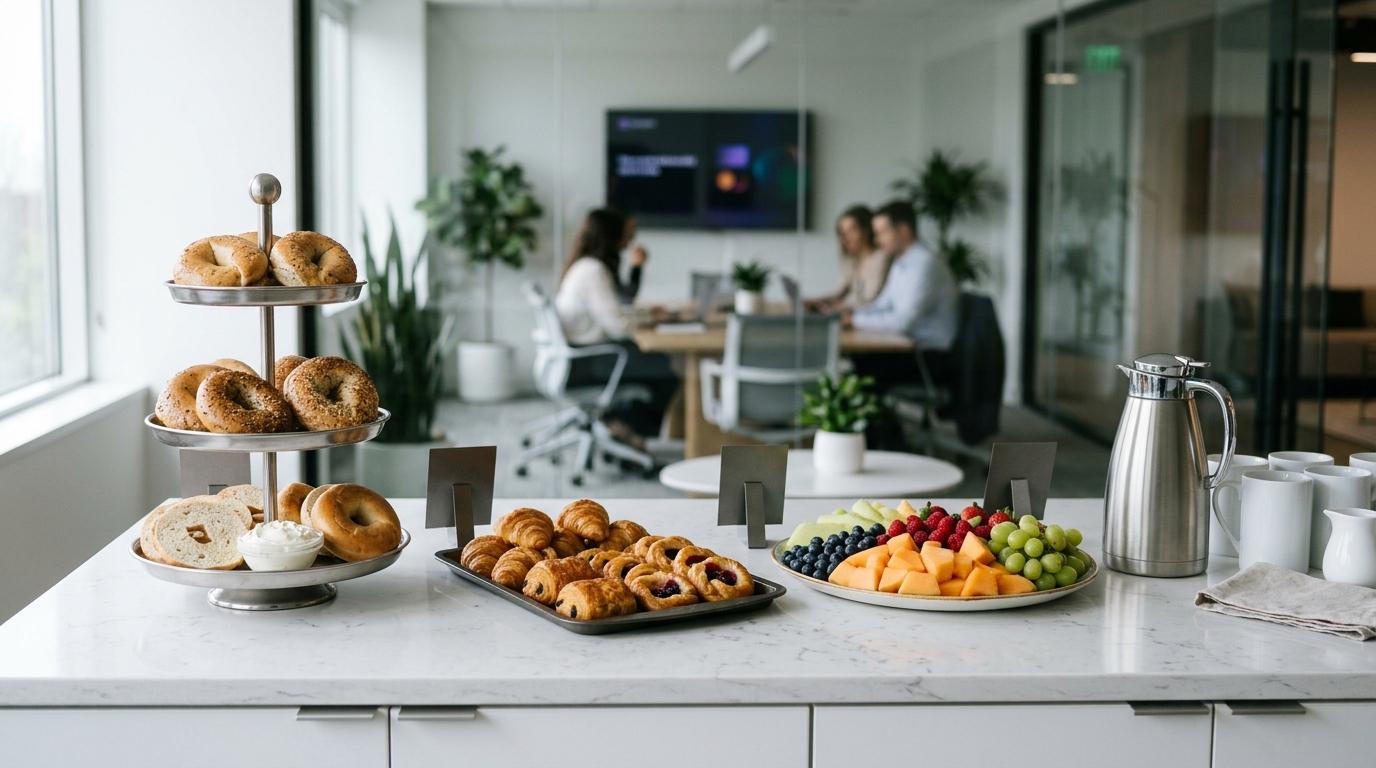
For a casual team meeting or a client visit, a cafe-style spread covers the most ground for the least planning. Think assorted bagels with cream cheese and butter, mini muffins, croissants, and a large fruit platter. Cafe catering in Philly often adds a coffee service, which is where much of the value sits.
Ordering math: Plan on 1.5 pastry or bagel pieces per person if this is the only food, or 1 piece per person if you add a protein. Cut bagels in half so people can sample, which reduces waste by roughly 15 to 20 percent.
Trade-offs: This format is carb-heavy. A sugar-forward spread can cause a mid-meeting energy dip around the 60-minute mark. Add Greek yogurt cups or hard-boiled eggs so attendees have protein to balance it out.
3. The Protein-Forward Hot Breakfast
For all-morning sessions, training days, and board meetings that start at 8 a.m., a hot breakfast keeps people satisfied until lunch. A standard hot setup includes scrambled eggs, breakfast potatoes, bacon or turkey sausage, and a vegetarian option such as a veggie frittata.
Why it works: Protein-rich breakfasts slow digestion and reduce the late-morning slump. If your meeting runs past 2 hours, this is the format that prevents the 10:30 a.m. snack run.
What to ask your caterer:
- Whether the food is delivered hot in insulated carriers or needs chafing dishes and fuel (many Center City office buildings restrict open flame, so ask about electric warmers).
- How long the food holds safely. Eggs should stay above 140°F and are best eaten within 60 to 90 minutes of delivery.
- Whether serving utensils, plates, and napkins are included in the per-person price.
4. The Build-Your-Own Yogurt and Oatmeal Bar
A parfait and oatmeal bar is the strongest option for health-minded teams and the easiest way to cover multiple dietary needs at once. Set out Greek yogurt, hot or overnight oats, granola, fresh berries, sliced banana, nuts, seeds, and honey. One setup serves vegetarian, gluten-free (with certified GF oats), and dairy-free guests if you add a plant-based yogurt.
Ordering math: Plan for 6 ounces of yogurt or 1 cup of oatmeal per person, with about 2 ounces of combined toppings.
Trade-offs: A bar needs table space and a few minutes of guest assembly, so it suits groups of 8 to 30 better than 100-person events. It is also less filling for people who skip dinner or commute long distances, so pair it with a small savory item like mini quiches.
5. The Mini Sandwich and Savory Tray
Mini breakfast sandwiches on biscuits, croissants, or slider rolls bring deli-style catering to the morning. Egg and cheese, turkey and egg white, and a vegetarian option with spinach and tomato cover most preferences. Philadelphia deli catering services often offer these in trays of 12 to 24, which makes them easy to scale.
Why it works for large groups: Mini sandwiches are easy to eat while standing, stay good at room temperature longer than scrambled eggs, and let people take one or two based on appetite. That flexibility keeps over-ordering in check.
Breakfast Catering Formats Compared
| Format | Best group size | Approx. cost per person | Best for |
|---|---|---|---|
| Grab-and-go box | 10–50 | $14–$22 | Tight schedules, hybrid teams |
| Cafe-style spread | 10–100 | $10–$16 | Client visits, casual meetings |
| Hot breakfast | 20–100 | $16–$26 | Training days, board meetings |
| Yogurt and oatmeal bar | 8–30 | $9–$15 | Wellness-focused teams, mixed diets |
| Mini sandwich tray | 15–150 | $11–$18 | Large groups, standing events |
Prices vary by caterer, delivery distance, and add-ons, so treat these as planning ranges and confirm with a written quote.
How Much Food to Order for an Office Meeting
Use these rules as your baseline for business meeting food planning:
- Meetings under 60 minutes: 1 item per person plus fruit.
- Meetings of 60 to 120 minutes: 1.25 to 1.5 items per person plus fruit.
- Half-day sessions: a full hot breakfast plus a mid-morning snack refresh.
- Coffee: 1 gallon serves about 10 people. Order 12 to 16 ounces per person if the meeting starts before 9 a.m.
Adjust the headcount, not just the portions. Plan for 85 to 90 percent of RSVPs to show up for internal meetings, and 95 percent for client-facing events. For large office groups of 50 or more, order for 90 percent attendance and add a 10 percent buffer of your most popular item.
Managing Dietary Restrictions Without Slowing Anyone Down
Collect restrictions when you send the calendar invite, not the morning of. A one-question form ("Any dietary needs we should plan for?") gets better responses than a reply-all thread. Then plan for these common categories:
- Vegetarian: roughly 10 to 15 percent of a typical office group.
- Gluten-free: 5 to 8 percent. Ask whether items are made in a gluten-free environment or only ingredient-based, since this matters for celiac guests.
- Vegan and dairy-free: 3 to 5 percent. Fruit and oatmeal with plant milk are the easiest fix.
- Allergies (nuts, eggs, sesame): ask for ingredient lists in writing and keep allergen-free items packaged separately.
- Halal and kosher: require certified sourcing. Order these from a certified provider rather than relying on a general caterer's substitutions.
Label every item with a card listing the name and main allergens. It prevents dozens of individual questions and protects the host.
Office Catering Management: Budget and Logistics
Good office catering management comes down to a repeatable process. Set a per-person budget by meeting type, such as $12 for internal standups and $20 for client meetings, and keep a standing order with one or two vetted Philadelphia business catering vendors. A standing relationship usually earns faster confirmations and sometimes volume pricing.
Build this checklist into every order:
- Confirm the delivery window 15 to 20 minutes before the meeting starts, not at the start time.
- Check building rules for Center City offices, including loading dock hours, freight elevator access, and front-desk check-in.
- Place orders at least 48 hours ahead for groups under 30, and 5 to 7 days ahead for groups over 50.
- Ask about delivery fees, service charges, and gratuity upfront. These can add 15 to 25 percent to a quote.
- Request compostable or recyclable serviceware if your building has sustainability requirements.
Track what is left over after each event. Two or three meetings of data will show you where you consistently over-order, and trimming 10 percent often covers the cost of a better coffee service.
Breakfast Catering FAQ
How much breakfast should I order for 20 people?
Order 25 to 30 items total for a 60 to 90 minute meeting, such as 15 bagel halves or pastries, 10 mini sandwiches, one large fruit platter, and 2 gallons of coffee. Add 2 to 3 dietary-specific options on top.
How far in advance should I book Philadelphia business catering?
Book 48 hours ahead for groups under 30 and 5 to 7 days ahead for groups over 50. Mondays, Tuesdays, and the weeks around holidays fill up fastest, so give extra lead time then.
What is the cheapest breakfast catering option that still works?
A cafe-style spread of bagels, fruit, and coffee is usually the lowest cost at $10 to $16 per person. Adding Greek yogurt cups or hard-boiled eggs improves satiety for a few extra dollars per head.
What breakfast foods keep people focused during meetings?
Foods that combine protein and fiber work best: eggs, Greek yogurt, oatmeal, fruit, and whole-grain items. Heavy pastries and sugary items alone often lead to an energy dip within an hour.
How do I handle dietary restrictions for a large office group?
Collect restrictions with the meeting invite, order dedicated labeled meals for each category, and request written ingredient lists from the caterer. Plan about 10 to 15 percent vegetarian and 5 to 8 percent gluten-free for a typical group.