Catering Operations and Client Management: What Philadelphia Businesses Need to Know
Effective catering operations come down to two non-negotiables: airtight logistics and consistent client communication. Whether you're running a breakfast catering order for 15 executives in Center City or a full deli spread for a 200-person corporate event in Midtown Philadelphia, the gap between a great experience and a forgettable one is almost always operational. This guide breaks down exactly how Philadelphia catering companies manage the moving parts - and what clients should expect from a professional partner.
Why Operations Are the Backbone of Any Catering Business
The food gets the attention. The operations keep the business alive. Every successful philly catering business runs on a set of repeatable systems that cover ordering, prep, delivery, setup, and post-event follow-up. Without those systems, even the best chef produces an inconsistent product - and inconsistency is the fastest way to lose a corporate account.
In Philadelphia's competitive catering market, businesses servicing the Center City corridor handle dozens of simultaneous orders on any given weekday. That volume demands structured workflows. The best catering for businesses in Center City Philadelphia runs on documented processes, not improvisation.
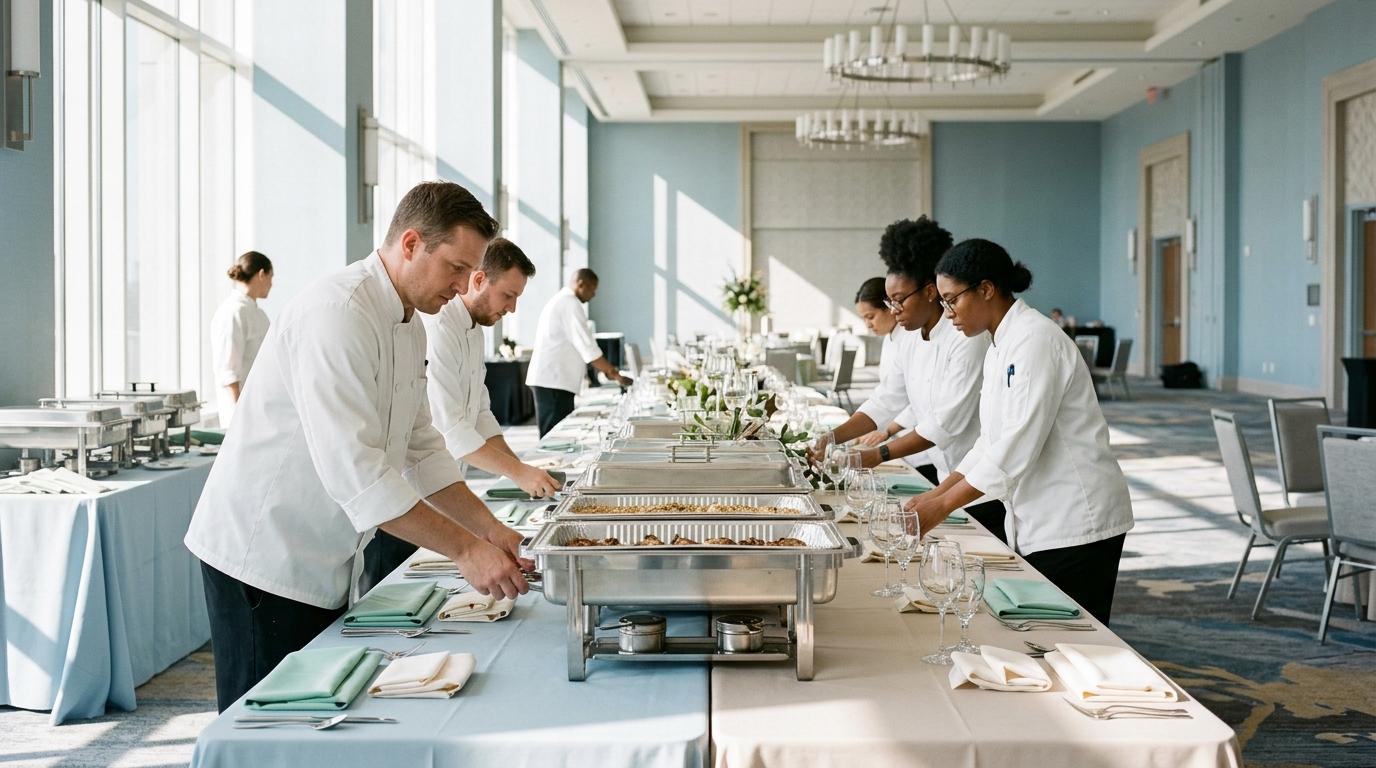
Here's what a professional catering operation structure looks like in practice:
- Order intake: Standardized forms or digital ordering platforms that capture headcount, dietary restrictions, delivery time, and location specifics
- Kitchen scheduling: Prep timelines built backward from delivery windows, not forward from order receipt
- Delivery coordination: Named drivers assigned to specific routes with GPS tracking and check-in protocols
- Setup standards: Written setup guides for each menu type so presentation is consistent regardless of who handles the delivery
- Post-event review: A structured process for gathering client feedback within 24 hours
Client Management: The Part Most Catering Companies Get Wrong
Philadelphia businesses ordering regular catering - weekly team lunches, monthly board breakfasts, quarterly all-hands events - need a catering partner that treats them like an account, not a transaction. The difference shows up in three specific ways:
1. Proactive Communication vs. Reactive Communication
Reactive catering companies wait for clients to call when something goes wrong. Proactive ones send confirmation emails 48 hours before delivery, flag potential menu substitutions in advance, and check in after large orders. For corporate deli catering services in Philadelphia, where office managers are juggling 20 other responsibilities, proactive communication is not a nice-to-have - it's what earns repeat business.
2. Dedicated Account Contacts
When a client calls to modify an order, they should speak to someone who knows their account. A dedicated contact - even a shared one across a small team - reduces errors dramatically. Companies that route every call through a generic phone queue consistently produce more order mistakes than those with named account managers.
3. Preference Tracking
The best cafe catering companies in Philly maintain client profiles that record dietary preferences, past orders, preferred delivery windows, and even specific building access instructions. This isn't just a convenience - it's a risk management tool. An allergy note buried in an email chain that never makes it to the kitchen is a liability. A structured client profile prevents that.
Operations vs. Client Management: How They Work Together
These two functions are often treated as separate departments, but in a well-run catering operation they feed each other directly. Here's a side-by-side comparison of how strong versus weak operations impact the client experience:
Operations Area Weak Execution Strong Execution Order intake Phone calls with handwritten notes Digital forms with automatic confirmations Dietary tracking Noted in email, not in prep system Flagged in client profile and on prep tickets Delivery timing Estimated windows with frequent delays Confirmed windows with real-time updates Client communication Client initiates all contact Caterer sends proactive confirmations and follow-ups Issue resolution Credit offered after complaint escalation Issue identified and addressed before client calls Repeat order management Client re-specifies preferences every order Standing order templates pulled from client profileBreakfast Catering: A Category That Demands Operational Precision
Breakfast catering for Philadelphia businesses is one of the most operationally demanding catering categories. Delivery windows are narrow - typically 7:30 to 9:00 AM - food quality degrades fast once prepared, and corporate buildings in Center City have strict loading dock schedules and security sign-in procedures that add 10 to 15 minutes to any delivery.
Catering companies that excel at breakfast service build their entire morning operation around a single principle: food arrives hot, on time, the first time. That means prep starts no later than 5:30 AM for a 7:30 AM delivery, drivers know building access procedures before they leave the kitchen, and setup takes under 10 minutes so the client's team can eat on schedule.
For clients evaluating breakfast catering services in Philadelphia, ask these three questions before committing to a provider:
- What is your latest accepted order time for same-day breakfast delivery?
- How do you handle building access and loading dock restrictions?
- What is your process if a delivery is delayed by more than 15 minutes?
A provider who answers these specifically and confidently has operations in place. A provider who answers vaguely does not.
Deli Catering: Managing Volume Without Sacrificing Customization
Deli catering services in Philadelphia are a staple for working lunches, training sessions, and team meetings. The operational challenge with deli catering is volume customization - serving 40 people with 8 different dietary requirements while keeping setup clean and food fresh for a 90-minute window.
The best Philadelphia deli catering operations solve this by:
- Labeling every tray and platter with contents and allergen flags
- Packaging dietary-specific items separately with clear client-facing labels
- Using insulated packaging that maintains food temperature for at least 90 minutes post-delivery
- Providing serving utensils, napkins, and condiments as part of the standard delivery - not as an add-on request
These details sound minor. To a client managing a 40-person working lunch, they're the difference between a smooth meeting and a chaotic one.
What Corporate Clients Should Expect From a Philadelphia Catering Partner
If your business orders catering more than twice a month, you deserve more than a vendor - you need a partner. Here's the baseline standard for any professional catering for businesses in Center City Philadelphia:
- Written order confirmations sent within 2 hours of booking
- 48-hour reminder with final order details and delivery window
- Real-time delivery tracking or proactive notification when the driver is en route
- Post-delivery check-in within 24 hours for first-time or large orders
- Dedicated contact reachable by phone and email during business hours
- Flexible cancellation window of at least 24 hours for standard orders
If a catering company can't commit to these standards in writing, your account will always be managed reactively - and that means problems are guaranteed.
Catering Operations And Client Management FAQ
How far in advance should I book corporate catering in Philadelphia?
For standard orders under 50 people, 48 hours is the minimum lead time most professional Philadelphia catering companies require. For large events over 100 people or catering that requires custom menu development, book at least 5 to 7 business days in advance. Same-day orders are possible at some cafe catering operations in Philly, but availability is limited and menu options are typically restricted to pre-set packages.
What information does a caterer need to process a corporate order accurately?
A complete order requires: headcount, event date and time, full delivery address with floor and suite number, building access instructions, dietary restrictions for all attendees, budget per person, and a named on-site contact with a direct phone number. Missing any of these details increases the likelihood of a delivery error or delay.
How do deli catering services in Philadelphia handle large dietary restriction lists?
Professional deli catering services use individually labeled packaging for dietary-specific items and flag allergens on every tray. When submitting an order, provide a written list of restrictions - not a verbal summary - and confirm with your caterer that the information has been added to the prep ticket, not just the order file.
What's the standard cancellation policy for Philadelphia business catering?
Most Philadelphia catering companies require cancellation at least 24 hours before delivery for orders under 50 people. Larger orders or those requiring custom preparation may have a 48- to 72-hour cancellation window. Always confirm the cancellation policy in writing before placing a recurring or large order to avoid unexpected charges.
How do I evaluate whether a catering company is a good fit for ongoing corporate orders?
Place a test order before committing to a recurring account. Evaluate the confirmation process, delivery timing accuracy, food quality on arrival, presentation standards, and how quickly the company responds if you raise a question or concern. A catering partner that handles a single order with precision will scale that precision to a long-term relationship. One that struggles on the first order will not improve without systemic changes.