Every slice of meat and wedge of cheese at our Philadelphia deli counter starts with a sourcing decision made weeks before it reaches your plate. We source from named regional farms and artisan producers within 150 miles of Center City Philadelphia, prioritizing animals raised without routine antibiotics and cheeses aged by creameries that can tell you the cow's diet. Here's exactly how that process works.
Most people never think about where deli meat comes from- and most deli operations prefer it that way. Industrial supply chains are efficient but opaque. We've taken a different approach, and we think you deserve to know the specifics.
Why Sourcing Transparency Matters More Than Ever
Philadelphia's food culture has shifted significantly. Consumers increasingly want to know not just what they're eating, but who raised it and how. A 2025 Food Trust survey found that 68% of Philadelphia-area consumers rated ingredient origin as "very important" when choosing a workplace lunch or catering order - up from 51% in 2022. That's not a trend we're chasing; it's a value we've held since day one.
When businesses in Center City Philadelphia book breakfast catering or a full deli spread for a corporate event, they're serving that food to employees and clients who notice the difference between industrially processed cold cuts and something made with actual craft and care. The flavor difference is real. The nutritional difference is real. And the story behind the food matters for building a culture around shared meals.
Our Meat Sourcing: The Specific Standards We Use
We don't use a single corporate meat distributor. Instead, we work with a rotating roster of regional producers, each evaluated against five non-negotiable criteria:
- No routine antibiotic use. Animals may receive antibiotics to treat illness, but we don't accept meat from operations that use antibiotics as a growth promoter or standard prevention protocol.
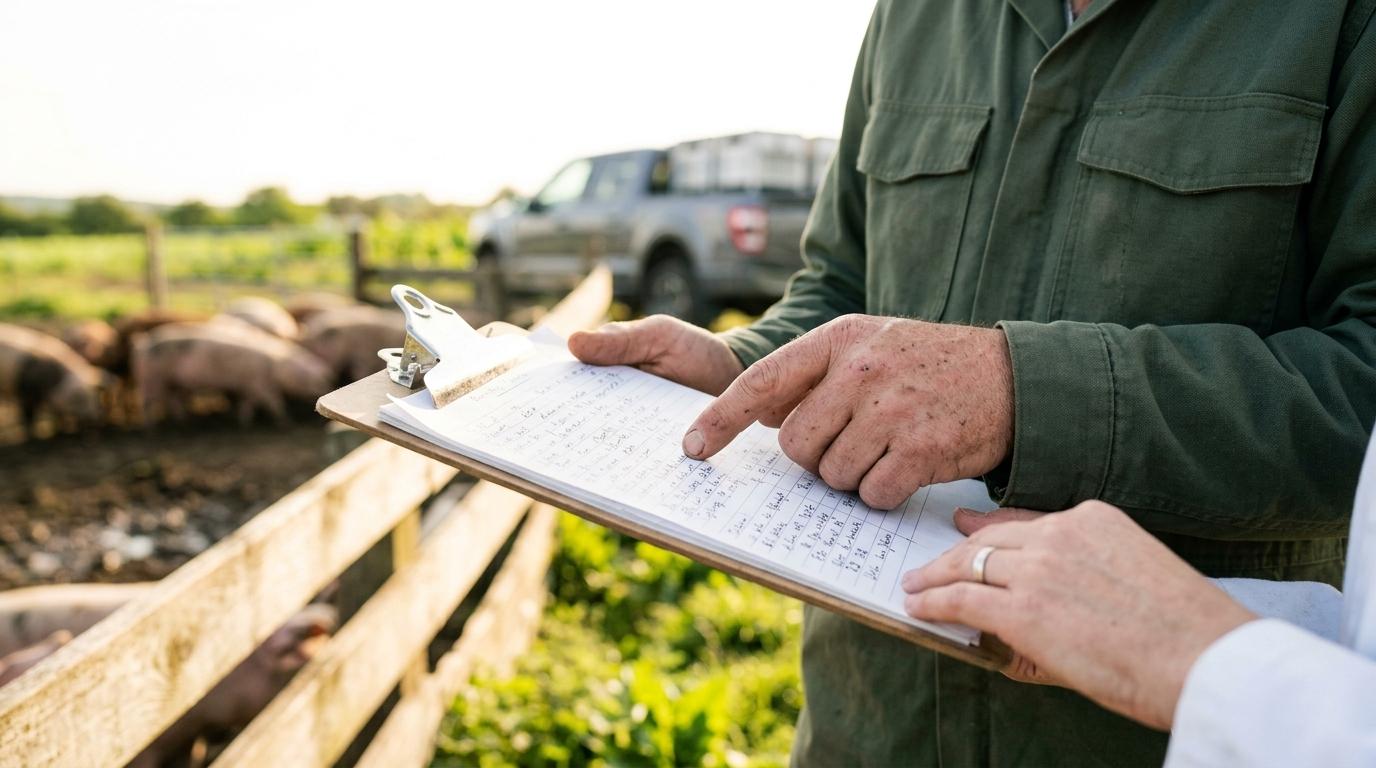
- Pasture access for at least 120 days per year. This isn't a marketing claim - we ask for documentation and visit farms when a new relationship begins.
- Within 150 miles of Philadelphia. This boundary keeps our supply chain visible and supports the regional agricultural economy.
- Small to mid-scale operations. We define this as fewer than 500 head of cattle or 2,000 pigs on a single operation. Scale affects animal welfare outcomes and flavor in measurable ways.
- Transparent processing. We know which USDA-inspected facility handles the slaughter and butchering for every producer we work with.
Current regional partners include farms in Lancaster County, Chester County, and the Lehigh Valley - areas with strong agricultural infrastructure and a tradition of mixed-use farming that supports healthy soil and animal welfare simultaneously.
Our Cheese Sourcing: What "Artisan" Actually Means Here
The word "artisan" gets applied to nearly everything in food marketing, so let's define it precisely the way we use it: a cheese is artisan in our context when it is made in batches of fewer than 5,000 pounds per week by a cheesemaker who controls the entire process from milk intake to aging. That's a meaningful constraint. It rules out most national brands and most regional cooperatives.
Our cheese selection focuses on three categories:
- Aged cow's milk cheeses from Pennsylvania and New York creameries, typically aged 60 to 18 months depending on the style
- Fresh and soft cheeses made within 48 hours of delivery, sourced from creameries in New Jersey and Maryland
- Specialty imports where no domestic equivalent exists - specifically certain Alpine styles and aged sheep's milk cheeses - purchased through importers who work directly with the producing farm, not through wholesale commodity brokers
Every cheese on our counter has a flavor profile card written by our team after a tasting session. We update these quarterly because aged cheeses genuinely taste different as seasons change the milk composition.
Farm to Counter: The Actual Supply Chain in Plain Language
Here's how a turkey breast goes from a Lancaster County farm to a corporate catering tray in Center City Philadelphia:
- Farm raising (16–20 weeks): Heritage breed turkeys raised on pasture with supplemental grain feed, no growth promoters.
- Processing (Day 0): USDA-inspected facility within 90 miles. Birds are processed to order in our volume, not stockpiled in a warehouse.
- Delivery to us (Day 1–2): Refrigerated transport, temperature-logged. We check internal temp on arrival and reject any delivery that shows a gap in the cold chain.
- In-house preparation (Day 2–3): We roast and prepare turkey breast in our kitchen. We don't receive pre-sliced, pre-packaged deli meat from a processor. Slicing happens here, to order.
- Catering assembly and delivery (Day 3–4): Plated, packaged, and transported to your office or event space in Center City or anywhere in the Philadelphia metro area.
Total time from farm to your counter: 3 to 4 days. Comparable industrial product: often 30 to 60 days from processing to plate, with multiple cold-storage transfers in between.
Farm-to-Deli vs. Industrial Deli: A Direct Comparison
Factor Our Farm-to-Counter Approach Industrial Deli Model Farm origin Named farms within 150 miles Blended commodity supply, origin unknown Time from processing to plate 3–4 days 30–60 days Antibiotic use Treatment only, documented Routine prophylactic use common Slicing In-house, to order Pre-sliced at processing facility Additives and preservatives Minimal; salt, natural cure agents Sodium phosphates, carrageenan, multiple stabilizers Price point Higher, reflects true cost of quality Lower, externalized costs to environment and healthWhat This Means for Business Catering in Philadelphia
When you're ordering deli catering services in Philadelphia for a board meeting, a team lunch, or a company-wide event, the quality of the food signals something about how you value the people eating it. Businesses that book our catering for Center City Philadelphia offices regularly tell us that employees notice - and comment on - the difference. It's not a subtle thing. Fresh-roasted turkey breast sliced in-house that morning tastes categorically different from pre-packaged industrial cold cuts.
Our locally sourced approach also means our menu changes with the seasons. We don't force year-round uniformity by pulling from a national distribution warehouse. Some cheeses peak in summer when pastures are lush. Some cured meats are better in fall. We lean into that, and it keeps every catering spread genuinely interesting rather than predictably identical.
How We Evaluate New Suppliers
Adding a new meat or cheese producer to our roster involves a four-step process:
- Documentation review: Farm records, USDA inspection history, any third-party certifications (Certified Humane, Animal Welfare Approved, etc.)
- Site visit: At least one in-person visit before the first order. We look at living conditions, feed storage, and processing logistics.
- Blind tasting: The product goes through a team tasting without label information to ensure the quality standard holds up on its own merits.
- Trial period: 90 days of orders before a supplier becomes a confirmed partner. We track consistency, delivery reliability, and customer feedback during this window.
This process means we turn down suppliers regularly - including some with impressive marketing and well-known certifications. A certification is a floor, not a ceiling.
---Where does deli meat come from when you order from a local Philadelphia deli?
At our deli, all meat comes from named farms within 150 miles of Philadelphia, primarily in Lancaster County, Chester County, and the Lehigh Valley. Unlike industrial deli operations that source from national commodity suppliers with opaque supply chains, we work directly with small to mid-scale farms, visit them before placing orders, and receive fresh deliveries processed 1–2 days prior to arrival.
What makes deli meat "locally sourced"?
Locally sourced deli meat means the animals were raised within a defined regional radius - in our case, 150 miles of Center City Philadelphia - and that we have a direct, documented relationship with the farm. It also means processing happens at a regional USDA-inspected facility rather than a national industrial plant, keeping total transit time under 48 hours from processing to our kitchen.
Are artisan deli ingredients more expensive, and is the cost worth it?
Yes, artisan deli ingredients cost more than industrial alternatives - typically 30 to 60% more at the supplier level. That cost reflects antibiotic-free raising practices, smaller-scale production, and shorter supply chains. For business catering in Philadelphia, most clients find the investment worthwhile because the flavor difference is noticeable, the ingredient story adds value to workplace culture, and the absence of common additives like carrageenan and sodium phosphates matters to health-conscious employees.
How do Philadelphia catering companies handle fresh deli ingredients for large orders?
Reputable Philadelphia catering companies that prioritize fresh deli ingredients place orders based on confirmed event dates, receive product 1–2 days before the event, prepare and slice in-house on the day of or morning before delivery, and transport in temperature-controlled containers. We don't pre-make large catering orders days in advance or hold sliced meat in bulk storage, which is a common shortcut in high-volume industrial catering operations.
Can I request information about specific farms or producers before booking catering?
Yes. We provide full producer information for any meat or cheese on our menu upon request. This includes the farm name, location, raising practices, and the processing facility used. For corporate catering clients in Center City Philadelphia who need this information for dietary, ethical, or procurement compliance reasons, we supply it in writing before the order is finalized.