A hoagie, a sub, and a hero are all the same sandwich structure: a long roll split lengthwise and filled with deli meats, cheese, and toppings. The difference is regional naming, not recipe. In Philadelphia, it's a hoagie. In New York, it's a hero. In most of New England and the rest of the country, it's a sub. Same build, different zip code.
But here in Philly, we take the hoagie seriously enough that the name alone carries real expectation: a specific roll (soft inside, slight chew on the outside), cold cuts layered generously, sharp provolone, oil, oregano, and shredded iceberg. If you hand someone a hoagie on a baguette with no oil, you'll hear about it. That cultural specificity is what makes deli knowledge matter, and it's what separates a great catering spread from a forgettable one.
So let's go deeper than the name. Here's what you actually need to know about the meats, cheeses, and choices inside the sandwich, especially if you're ordering deli catering services in Philadelphia for your office or event.
Deli Meat Types: What You're Actually Ordering
The deli case can feel overwhelming if you don't know what separates one product from another. These are the most common categories and what makes each one distinct.
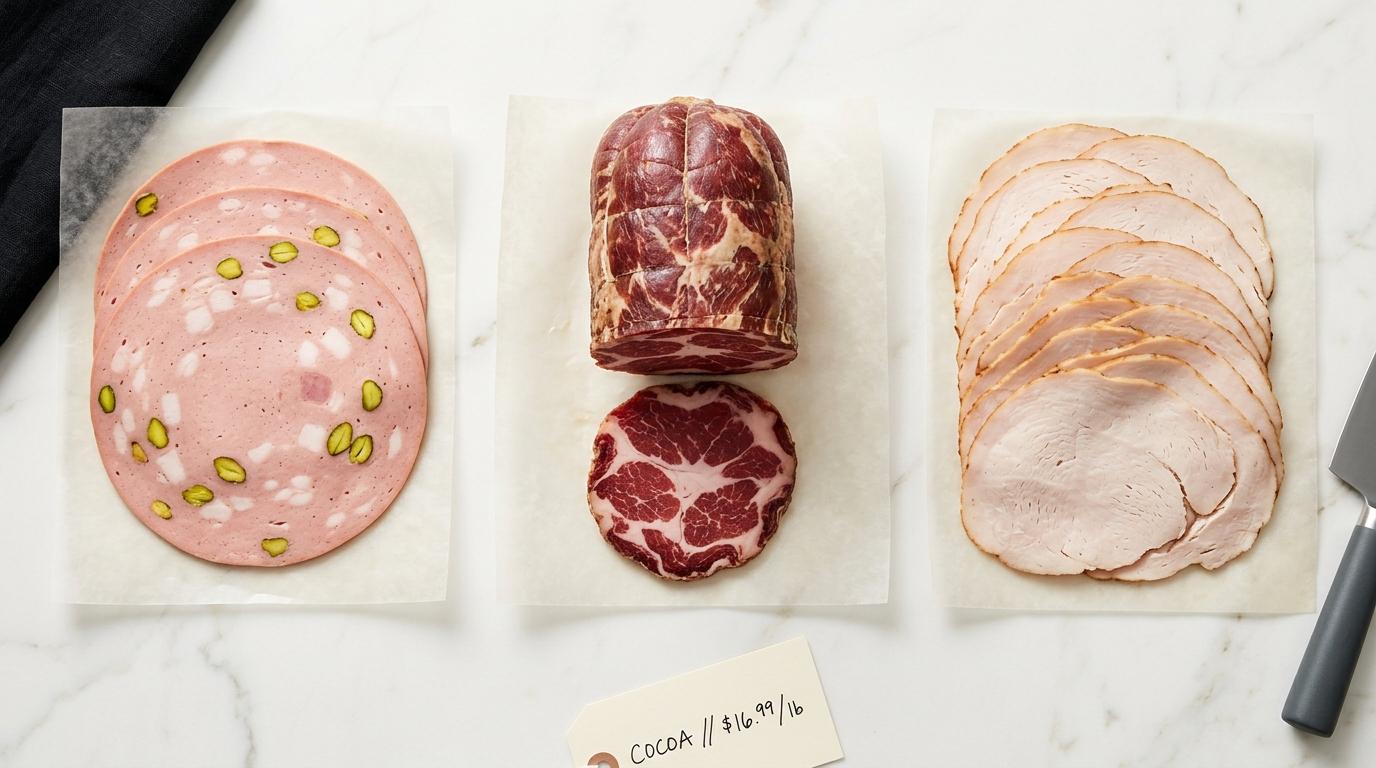
Cured whole-muscle cuts are sliced directly from a single piece of meat, usually pork. Prosciutto di Parma is the benchmark: dry-cured for a minimum of 400 days, paper-thin when sliced correctly, and sweet rather than aggressively salty. It needs no cooking and no heat. Capicola (or coppa) comes from the neck and shoulder, is rubbed with spices, and has a firmer texture than prosciutto with more visible fat marbling.
Cured and cooked meats include classic Italian-American staples like ham, roast beef, and turkey breast. These are fully cooked, sliced to order, and make up the bulk of a traditional hoagie build. Quality varies enormously: look for whole-muscle versions rather than "formed" products, which are made from meat scraps pressed together. A good deli counter will tell you exactly which it is.
Emulsified sausages are where mortadella lives. More on that below. Bologna also falls here, as does hot dog-style products. These are finely ground, emulsified with fat, stuffed into casings, and cooked. The texture is smooth and uniform by design.
Dry sausages include Genoa salami, hard salami, and pepperoni. These are fermented, dried, and not cooked. The fat content is high, which is why they slice cleanly and hold their shape. They're shelf-stable and intensely flavored, making them efficient on a sandwich where you need punchy flavor from a thin layer.
What Is Mortadella? The Most Misunderstood Deli Meat
Mortadella is a cooked, emulsified pork sausage from Bologna, Italy, protected under European PDO (Protected Designation of Origin) status. Authentic mortadella contains at least 15% cubed pork fat by law, along with whole or crushed pistachios in most versions, black pepper, and spices like myrtle berries and coriander.
It's frequently dismissed as fancy bologna, which undersells it significantly. The fat distribution is the key difference: in mortadella, the fat cubes are suspended intact through the meat, giving each slice a distinct texture contrast. Bologna is smoother and more uniform. Mortadella sliced thin and layered on a roll with fresh mozzarella and a drizzle of olive oil is one of the best sandwiches in the Italian tradition, and it's underused on American deli menus compared to its actual quality.
If you're building a catering tray for a Philadelphia business event and want something that reads as both approachable and elevated, mortadella is a strong choice. It's crowd-friendly in flavor (mild, slightly sweet, savory) and visually distinctive on a board.
Prosciutto vs. Serrano: A Direct Comparison
Both are dry-cured whole legs of pork. Both are sliced thin. But the flavor, aging process, and regional style differ enough to matter when you're choosing one for a sandwich or charcuterie spread.
| Factor | Prosciutto di Parma | Jamón Serrano |
|---|---|---|
| Origin | Emilia-Romagna, Italy | Spain (various regions) |
| Minimum aging | 400 days (PDO standard) | 7 months (standard); 12+ months for reserva |
| Flavor profile | Sweet, delicate, buttery | Drier, slightly more savory, less sweet |
| Fat content | High; fat is pale and creamy | Moderate; leaner overall texture |
| Best pairing | Melon, fig, fresh mozzarella, mild bread | Manchego, olives, crusty bread, tomato |
| Typical price point | Higher (PDO certification costs) | Lower to moderate depending on grade |
For a Philly hoagie build, prosciutto is the more traditional choice and holds up better against sharp provolone. Serrano shines on a Spanish-style board alongside Manchego and marcona almonds. Neither is wrong; they just serve different flavor directions.
The Best Cheese for Sandwiches: Cutting Through the Options
Cheese selection changes the entire character of a sandwich. Here's how the main options actually perform in a deli context.
Sharp provolone is the standard for a proper Philly hoagie. It's firm enough to slice cleanly, has enough acid and salt to cut through fatty meats, and doesn't overwhelm. Aged provolone (provolone piccante) is significantly sharper and better for anyone who wants a bolder cheese note.
Fresh mozzarella works best on Italian-style builds with prosciutto or mortadella. Its high moisture content means it softens quickly, so it belongs on sandwiches eaten within an hour of assembly, not on a catering tray that's sitting out for two hours.
Aged cheddar pairs well with roast beef and turkey because its sharpness provides contrast to the meat's more neutral flavor. It also holds up structurally in a sandwich better than softer cheeses.
Swiss and Gruyère are the right choice for ham-based builds. The slight nuttiness of Gruyère in particular elevates a basic ham sandwich into something worth talking about. Standard deli Swiss is milder and more crowd-neutral, which makes it a safe default for large catering orders where preferences vary.
Pepper jack adds heat without requiring condiments, which makes it useful in corporate catering situations where you want variety without managing a condiment station. It works best with turkey or chicken-based fillings.
Low Sodium Deli Meat: What to Actually Look For
Deli meats are inherently high in sodium: curing is a salt-based preservation process, and most whole-muscle products contain 400–600mg of sodium per two-ounce serving. "Low sodium" labeled products generally contain 35% less sodium than the standard version of the same product, per FDA guidelines. That typically brings a two-ounce serving down to roughly 270–350mg, which is meaningful if sodium is a dietary concern.
The trade-off is flavor and preservation. Sodium suppresses bitterness and amplifies savory notes, so low-sodium versions of the same product taste noticeably flatter to most people. They also have a shorter shelf life once opened because salt is doing preservation work.
Practical guidance for low-sodium ordering at a deli counter:
- Ask specifically for low-sodium turkey breast or chicken breast, which are the easiest products to reformulate without dramatic flavor loss.
- Avoid low-sodium versions of heavily cured products like salami or prosciutto. The curing process is integral to what those products are, and the low-sodium versions rarely taste right.
- Compensate with higher-flavor additions: strong mustard, pickled vegetables, or a cheese with sharp character. These build flavor without adding significant sodium relative to the meat.
- If you're ordering catering for a group with mixed dietary needs, labeling the low-sodium options clearly matters more than the selection itself.
How This Applies to Catering in Philadelphia
When you're ordering breakfast catering in Philadelphia or a full lunch spread for a Center City office, these distinctions have real consequences for how your spread lands. A platter built around mortadella, sharp provolone, and fresh-baked hoagie rolls reads as intentional. A random mix of deli meat with no thought given to flavor contrast reads as filler.
The best approach is to think in flavor categories: one mild (turkey, fresh mozzarella), one savory and fatty (Genoa salami or mortadella, sharp provolone), and one lean and smoky (roast beef or capicola, aged cheddar). That covers most palates, accommodates different dietary preferences within a non-vegetarian group, and creates visual variety on the tray.
If you're working with a Philadelphia catering company that knows its deli counter, they should be asking you these questions before they build your order, not just defaulting to the same turkey-and-American platter every time.
Hoagie, Sub, and Hero Sandwich FAQ
Is there actually a difference between a hoagie and a sub?
No meaningful difference in structure or ingredients: both are long rolls filled with deli meat, cheese, and toppings. The difference is regional. Philadelphia says hoagie, most of the country says sub, and New York says hero. Some regions also say grinder (particularly New England, where it typically refers to a hot version).
What is mortadella made of?
Mortadella is a cooked, emulsified pork sausage from Bologna, Italy. Authentic versions under PDO rules must contain at least 15% cubed pork fat and are flavored with spices including black pepper, myrtle berries, and typically pistachios. It is cooked in large cylindrical molds, not dried or fermented like salami.
What's the best low-sodium deli meat for sandwiches?
Low-sodium turkey breast and chicken breast are the most successful low-sodium deli products because those meats have a mild base flavor that isn't dramatically altered by reducing salt. Low-sodium versions of cured products like salami or prosciutto are generally not worth ordering: the curing process depends on salt in ways that can't be easily replicated at lower sodium levels.
What cheese goes best on a classic Philly hoagie?
Sharp provolone is the traditional and correct choice for a Philly hoagie. It has enough acid and firmness to hold up against fatty meats like Genoa salami or capicola without becoming greasy or disappearing into the sandwich. Aged provolone piccante is a stronger version for people who want more bite from the cheese.
What is the difference between prosciutto and serrano ham?
Both are dry-cured whole pork legs, but prosciutto di Parma is Italian, aged a minimum of 400 days, and has a sweeter, more delicate flavor with creamy fat. Jamón serrano is Spanish, available in various aging grades starting at 7 months, and tastes drier and slightly more savory. Prosciutto pairs well with mild, fresh ingredients; serrano works better with bold, salty accompaniments like Manchego and olives.