Dietary-friendly breakfast catering in Philadelphia works best when you plan for roughly 25–30% of your guests needing a gluten-free, dairy-free, vegetarian, or high-protein option, label every item, and order dedicated individually wrapped meals for anyone with an allergy. For most Center City meetings, that means ordering 10–15 days ahead for groups over 50 and 3–5 days ahead for smaller client meetings.
This guide covers how to build a breakfast menu that works for conferences, client meetings, seminars, and early-morning private events, without overspending or leaving half the room eating fruit salad.
How Many Dietary-Friendly Meals Should You Order?
Collect dietary needs in the invitation or registration form, not the week of the event. Ask one simple question: "Do you have any food allergies or dietary requirements?" with checkboxes for gluten-free, dairy-free, vegetarian, vegan, nut allergy, halal, and kosher, plus a free-text box.
If you cannot survey guests, use these planning ratios for a mixed professional group:
- Vegetarian: 15–20% of guests
- Gluten-free: 8–12%
- Dairy-free or vegan: 8–10%
- High-protein or low-carb requests: 10–15%
- Serious allergies (nuts, shellfish, celiac): 2–5%
These overlap, so a 40-person seminar typically needs 8–10 non-standard meals, not 40% of the order. Add one or two extra dietary meals as a buffer, since late registrants are the most common source of surprises.
Gluten-Free Breakfast Catering: Preference vs. Celiac
There is a real difference between a guest who avoids gluten and a guest with celiac disease. A tray of gluten-free muffins sitting next to regular bagels is fine for the first guest. For the second, shared tongs and crumbs can cause a reaction.
Practical ways to handle both:
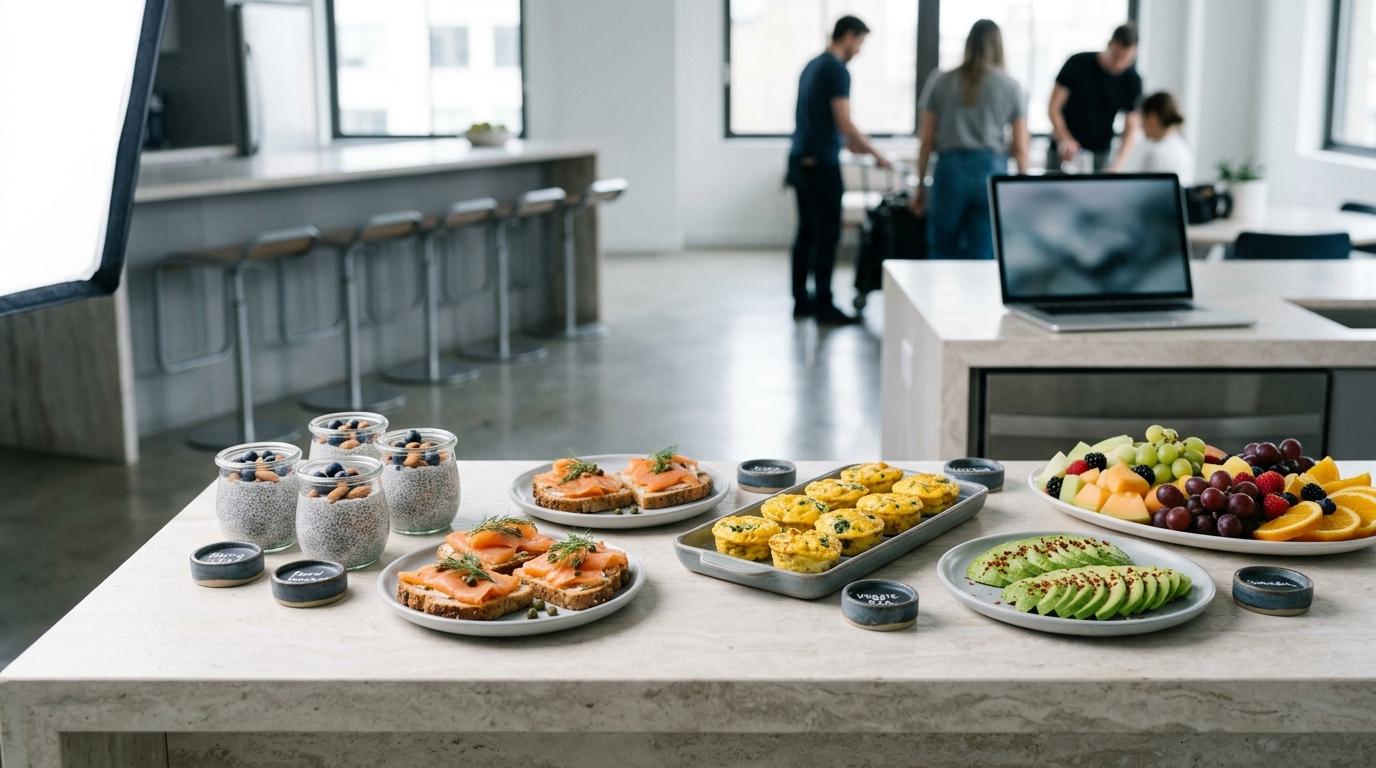
- Naturally gluten-free items first. Egg bites, frittatas, yogurt parfaits with certified gluten-free granola, fresh fruit, and breakfast potatoes cost less than specialty baked goods and carry lower risk.
- Individually wrapped meals for celiac guests. Ask your caterer to pack these separately, sealed, and labeled with the guest's name.
- Watch the hidden sources. Oats are often cross-contaminated unless labeled gluten-free, and some sausages, seasoned potatoes, and sauces contain wheat fillers.
- Separate serving utensils. Every dish gets its own spoon or tongs.
Ask the caterer directly whether they prepare gluten-free items on separate surfaces. A good caterer will answer plainly, and tell you if they cannot guarantee it.
Dairy-Free and Vegan Options That Don't Feel Like an Afterthought
Breakfast is dairy-heavy: cream cheese, butter, yogurt, cheese in every egg dish, milk in the coffee. Dairy-free guests often end up with black coffee and a banana.
Fix that with a few deliberate choices:
- Offer oat or almond milk alongside dairy creamer, and label it at the coffee station.
- Add hummus or avocado spread to the bagel board instead of only cream cheese.
- Include a tofu scramble or a vegetable frittata made without cheese.
- Provide coconut or soy yogurt parfaits with berries and seeds.
- Choose oil-based pastries or fruit-forward baked goods rather than all-butter croissants only.
Dairy-free is not the same as vegan. Egg-based dishes are dairy-free but not vegan, so label both categories separately.
High-Protein Breakfast Catering for Meetings
High-protein breakfasts keep a morning meeting alert past 10:30 a.m., when a pastry-only spread leads to a crash. A good target is 15–25 grams of protein per person across the plate.
Strong options include:
- Egg white or whole-egg bites (about 6–8 grams each, so serve two)
- Greek yogurt parfaits (12–17 grams per cup)
- Turkey sausage or chicken sausage
- Smoked salmon platters for bagel boards
- Breakfast burritos or wraps with eggs, black beans, and turkey
- Nut and seed boxes (check allergy lists first)
For a lean option, pair egg bites with fruit and skip the potatoes. For a vegetarian version, black beans, tofu scramble, and Greek yogurt cover the protein.
Choosing a Format: Continental, Hot Buffet, or Boxed Breakfast
Format affects dietary safety as much as menu does. Here is how the three common options compare for a Center City event:
| Format | Best for | Dietary control | Typical lead time |
|---|---|---|---|
| Continental breakfast | Short meetings, 10–40 guests, tight budgets | Moderate; shared trays risk cross-contact | 2–5 days |
| Hot buffet | Conferences, seminars, 40–200 guests | Moderate; needs labels and separate utensils | 7–14 days |
| Individually boxed breakfast | Client meetings, offices with limited space | High; each box is sealed and labeled | 3–7 days |
A continental breakfast of pastries, bagels, fruit, yogurt, and coffee is the most common order for morning meetings in Philadelphia. It is easy to adapt: swap one pastry tray for egg bites and a gluten-free option and you cover most needs. Boxed breakfasts cost a bit more per head but remove serving lines and make allergy management far simpler.
Logistics for Center City Morning Events
Dietary planning falls apart if delivery fails. A few Philadelphia-specific points:
- Building access. Many Center City towers require delivery through a loading dock or freight elevator, often with a certificate of insurance. Ask your building manager before the event.
- Delivery window. Aim for 30–45 minutes before guests arrive. Rush-hour traffic on Market Street and around Broad can add 15–20 minutes.
- Setup vs. drop-off. Drop-off with disposable chafing fuel works for small meetings. For events over 50, request staffed setup so labels, utensils, and dietary items are placed correctly.
- Coffee quantity. Plan for one 96-ounce coffee box per 8–10 guests, plus a decaf and a hot water option for tea.
Labeling and Communication Checklist
Good labeling is the cheapest way to improve a dietary-friendly breakfast. Ask your caterer for printed cards, or make your own, covering:
- The dish name in plain language
- Dietary tags: GF, DF, V, VG, contains nuts
- A "contains" line for the top allergens (milk, egg, wheat, soy, tree nuts, peanuts, fish, shellfish, sesame)
- Separate sealed meals marked with guest names
Send the final headcount and dietary counts to your caterer at least 72 hours out, and confirm in writing. Most caterers lock quantities at that point.
Budgeting for Dietary-Friendly Breakfast Catering
Expect continental breakfasts for corporate groups in Philadelphia to run roughly $12–$20 per person, hot buffets $18–$32, and boxed breakfasts $14–$26, depending on menu and service level. Dietary substitutions usually add $1–$4 per person for the affected guests, mostly from gluten-free baked goods and plant-based proteins. Naturally compliant dishes like egg bites, fruit, and yogurt cost little extra, so build the base menu around them and keep specialty items to small quantities.
Dietary-Friendly Breakfast Catering FAQ
How far in advance should I order breakfast catering in Philadelphia?
Order 3–5 days ahead for small meetings under 25 guests and 10–15 days ahead for conferences or events over 50. Dietary-specific items such as gluten-free pastries often need the longer window.
What percentage of guests need special dietary meals?
Plan for 25–30% of a mixed professional group to need a vegetarian, gluten-free, dairy-free, or similar option. Serious allergies usually account for 2–5%.
Is a continental breakfast enough for a morning meeting?
Yes for meetings under two hours, as long as you add protein such as egg bites or Greek yogurt. For half-day sessions or conferences, add a hot item to keep energy steady.
How do I keep allergen cross-contact low at a buffet?
Use separate utensils for each dish, place allergen-free items at the front of the line, and order sealed individual meals for guests with celiac disease or severe allergies.
How much coffee should I order for a breakfast event?
Order one 96-ounce box per 8–10 guests, with a decaf box and hot water for every 30 guests. Add plant-based milk for dairy-free guests.