To set up a recurring lunch catering account for your Philadelphia office, pick one caterer, share your headcount and dietary needs, set a fixed delivery schedule (weekly or monthly), and agree on a standing order with a cutoff for changes. Most Center City caterers can start an account within a week and want 48–72 hours' notice for adjustments.
This guide walks through each step, from choosing a format to handling building access, so your Tuesday team lunch and your quarterly client meeting both run without a scramble.
Start With What Your Office Actually Needs
Before you call any Philadelphia catering company, write down four numbers: average headcount, number of lunches per week, per-person budget, and how many people have dietary restrictions. These drive every quote you will get.
- Headcount range, not a single number. If attendance swings between 12 and 25 depending on in-office days, tell the caterer. Many will build a base order for 12 with a flex option up to 25.
- Frequency. One lunch a week is a very different account than five. Daily programs usually qualify for volume pricing or a dedicated account manager.
- Budget per person. Casual deli-style office lunches in Philadelphia commonly land around $14–$22 per person, while plated or premium hot-entree service for client meetings often runs $28–$45 or more. Get written quotes, since prices vary by caterer and menu.
- Restrictions. Count vegetarian, vegan, gluten-free, halal, kosher, and nut-allergy needs. Ask the caterer to label every item individually.
Match the Format to the Occasion
A recurring account rarely covers just one type of meal. Decide up front which formats you will rotate, because each has different logistics.
| Format | Best for | Typical lead time | Trade-off |
|---|---|---|---|
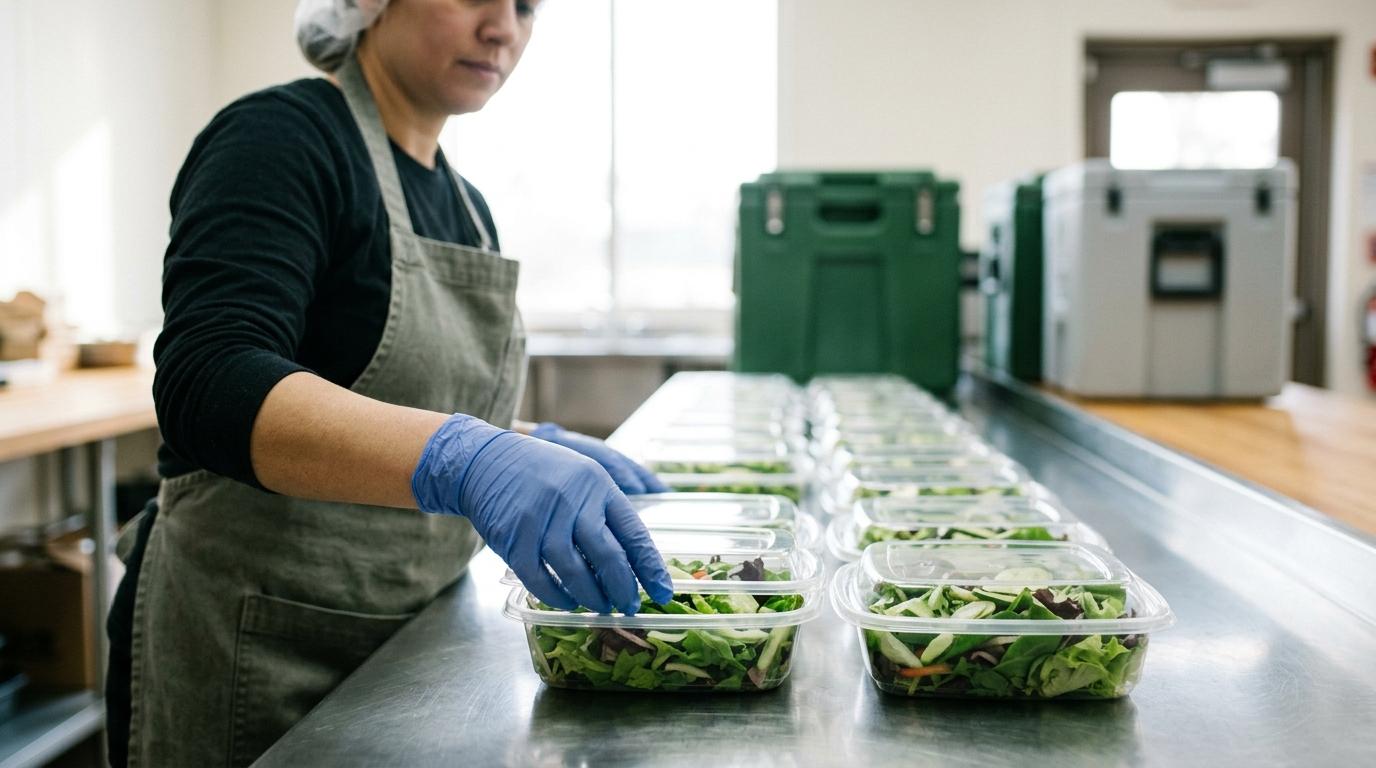
| Boxed lunches | Daily or weekly team lunches, working meetings | 24–48 hours | Less variety, but no serving setup and easy allergen labeling |
| Deli platters and sandwich trays | Standing weekly lunches, all-hands | 48 hours | Cost-efficient, but needs a table and someone to put it out |
| Hot buffet | Client lunches, trainings, larger events | 3–5 business days | Higher cost, and often needs chafing fuel and staff or setup time |
| Cafe-style or salad bar spread | Wellness days, hybrid-office lunches | 48–72 hours | Fresh and flexible, but more food waste if headcount shifts |
| Breakfast add-on | Early meetings, onboarding days | 48 hours | Pairs well with lunch on the same account to simplify billing |
For most offices, boxed lunches handle the weekly rhythm, and a buffet or platter package covers the occasional client meeting. Ask the caterer whether both can live under one account so you only manage one invoice.
Vet Caterers for Center City Delivery
Delivering in Center City is different from delivering in the suburbs. Parking is limited, loading zones are tight, and many office towers have strict receiving rules. When comparing Philadelphia business catering options, ask these questions:
- Do you deliver to my building regularly? A caterer who already knows your lobby, freight elevator, and security desk saves you headaches.
- What is your delivery window? Ask for a 15-minute window, not a vague "around noon." Aim for arrival 20–30 minutes before the meal starts.
- What happens if a driver is late or an item is wrong? Get the remedy in writing, such as a credit or a replacement within a set time.
- Can you provide a tasting? Many caterers will do a sample box for a prospective recurring client. Use it to test packaging, not just flavor.
- Are you licensed and insured? Philadelphia food businesses should hold a valid health license from the Philadelphia Department of Public Health. Some buildings also require a certificate of insurance (COI) before a vendor can deliver.
Prioritize caterers with their own delivery staff over those who rely entirely on third-party couriers. Consistency matters more than a slightly lower price when the same order shows up every week.
Set Up the Account Terms
This is the step most offices skip, and it is where recurring programs go wrong. Put the following in writing, even if it is just an email thread both sides confirm.
- Standing order. Define the default: for example, 15 boxed lunches every Tuesday and Thursday, delivered between 11:30 and 11:45 a.m.
- Change cutoff. Agree on a deadline, commonly 48 hours before delivery for headcount changes and 72 hours for menu swaps.
- Minimums and fees. Ask about delivery fees, minimum order size, and whether recurring accounts waive either. Many caterers reduce or remove delivery fees for scheduled weekly orders.
- Billing. Choose between card on file, weekly invoicing, or monthly net-30 terms. Net-30 usually requires a short credit application, which is worth doing for larger programs.
- Single point of contact. Name one person on each side. Whether it is an office manager or executive assistant, one owner prevents duplicate orders and conflicting changes.
- Cancellation policy. Learn the penalty for last-minute cancellations, especially around snow days and holidays.
Build a Rotating Menu So Lunch Does Not Get Stale
Menu fatigue is the top reason employees stop caring about office lunch. Ask the caterer to set up a four-week rotation with a different theme or protein lineup each week, such as Italian hoagies one week, Mediterranean bowls the next, then a salad and soup week, and a build-your-own sandwich week.
Run a simple two-question survey after the first month: what did you like, and what did you skip? Share the results with the caterer. A good partner will adjust portions and drop low performers. Also keep a standing vegetarian and gluten-free count, usually 15–25% of a typical office, so those meals are not an afterthought.
Plan for Client Meetings Separately
Client-facing catering has a different bar than the Tuesday team lunch. Use your recurring account for the baseline, but treat important meetings as a custom order under the same account.
- Order 5–10% above your confirmed headcount for client meetings, since late additions are common.
- Choose food that is easy to eat while talking: avoid messy sauces and anything that needs a knife.
- Ask for disposable-free service (real plates, flatware) if the budget allows. It signals care.
- Confirm setup time and who will receive the delivery if your coordinator is in the meeting.
Handle Building Access and Day-of Logistics
Send the caterer a one-page delivery sheet: building address, suite and floor, lobby or freight entrance, security check-in steps, and a cell phone number for the day-of contact. Tell your front desk to expect the delivery and share the caterer's name. If your building requires a COI, request it early, since processing can take several days.
Designate a drop spot, such as a kitchen or conference room, and set a reminder to put food out within 15 minutes of arrival. Hot food should stay above 135°F and cold food below 41°F, which are standard food safety guidelines. If lunch will sit longer than two hours, ask for insulated packaging or staggered delivery.
Review the Account Every Quarter
Set a calendar reminder every three months. Check on-time delivery rate, order accuracy, cost per head, and employee feedback. If the caterer missed more than one delivery in a quarter, raise it directly and ask for a corrective plan. Renegotiate pricing once your volume grows, and revisit the contract when your office changes its in-office schedule.
Recurring Office Catering FAQ
How far in advance should I set up a recurring lunch account?
Start two weeks before your first delivery. This leaves time for a tasting, building access paperwork, and a trial order. Most Philadelphia caterers can begin standing orders within five to seven business days once terms are agreed.
How much does office lunch catering cost per person in Philadelphia?
Expect roughly $14–$22 per person for boxed or deli-style lunches and $28–$45 or more for hot buffets or premium client meals. Delivery fees, service charges, and gratuity add to the total, so request an itemized quote.
Can I change my headcount after the order is set?
Yes, within the caterer's cutoff. Most require 48 hours' notice for headcount changes. Ask whether they offer a flex range, such as a base of 12 with room to add up to 6 more.
What dietary options should a corporate caterer offer?
At minimum, vegetarian, vegan, and gluten-free options, with individual labeling for allergens like nuts, dairy, and shellfish. Ask whether the kitchen can accommodate halal or kosher requests, as these often require advance notice or a specialty partner.
Should I use one caterer or several?
One primary caterer is simpler and often cheaper because of volume pricing and consistent service. Keep a second vendor on file as a backup for large events, holidays, or a missed delivery.